
In an increasingly screen-filled world, the simple act of playing outside is more vital than ever for our youngest children. Far from just an opportunity to let off steam, outdoor learning is a fundamental component of a rich early years education. It is a dynamic, living classroom that stimulates every aspect of a child’s growth, from physical strength and coordination to cognitive flexibility and emotional resilience.
This article details the powerful benefits of outdoor learning in early years, offering practical insights for parents in Northwood, Pinner, and beyond. We will explore seven key areas where nature-based play makes a profound difference, supported by practical examples and age-specific impacts. You will discover how this approach boosts everything from problem-solving and social skills to language development and sensory integration.
This guide is designed to give you actionable ideas and a deeper appreciation for how the great outdoors can build a foundation for your child’s lifelong curiosity, confidence, and well-being. Prepare to see the local park, playground, and even your own garden as the ultimate classroom.
1. Physical Development and Motor Skills
Outdoor learning in early childhood significantly enhances physical development. Outdoor environments allow for large-scale movements that indoor spaces often limit. Varied terrains, natural obstacles, and versatile equipment encourage activities such as running, jumping, climbing, and balancing, which help strengthen muscles and improve core stability.
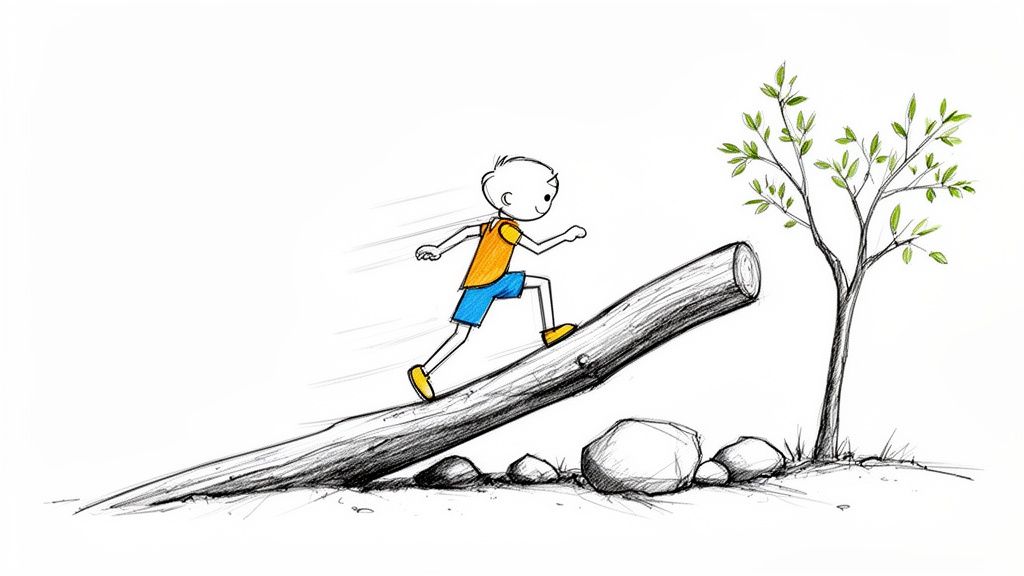
Unlike flat, predictable indoor flooring, the outdoors offers a dynamic sensory experience. A grassy slope, a collection of logs, or a muddy patch challenges a child’s coordination and body awareness in a way that manufactured environments cannot. This constant, almost subconscious, adaptation builds the foundations for gross motor skills, which are essential for everything from participating in sports to simply navigating the world with confidence.
Tips for Parents to Encourage Physical Skills:
-
Provide Loose Parts: Offer items like small logs, planks, and large stones in your garden. This allows children to create their own challenges, from simple stepping stones to elaborate balance beams.
-
Embrace All Weathers: Investing in good-quality waterproofs and wellies means a rainy day doesn’t stop play. Splashing in puddles and running in the wind are excellent physical and sensory activities.
2. Cognitive Development, Attention Restoration and Problem-Solving
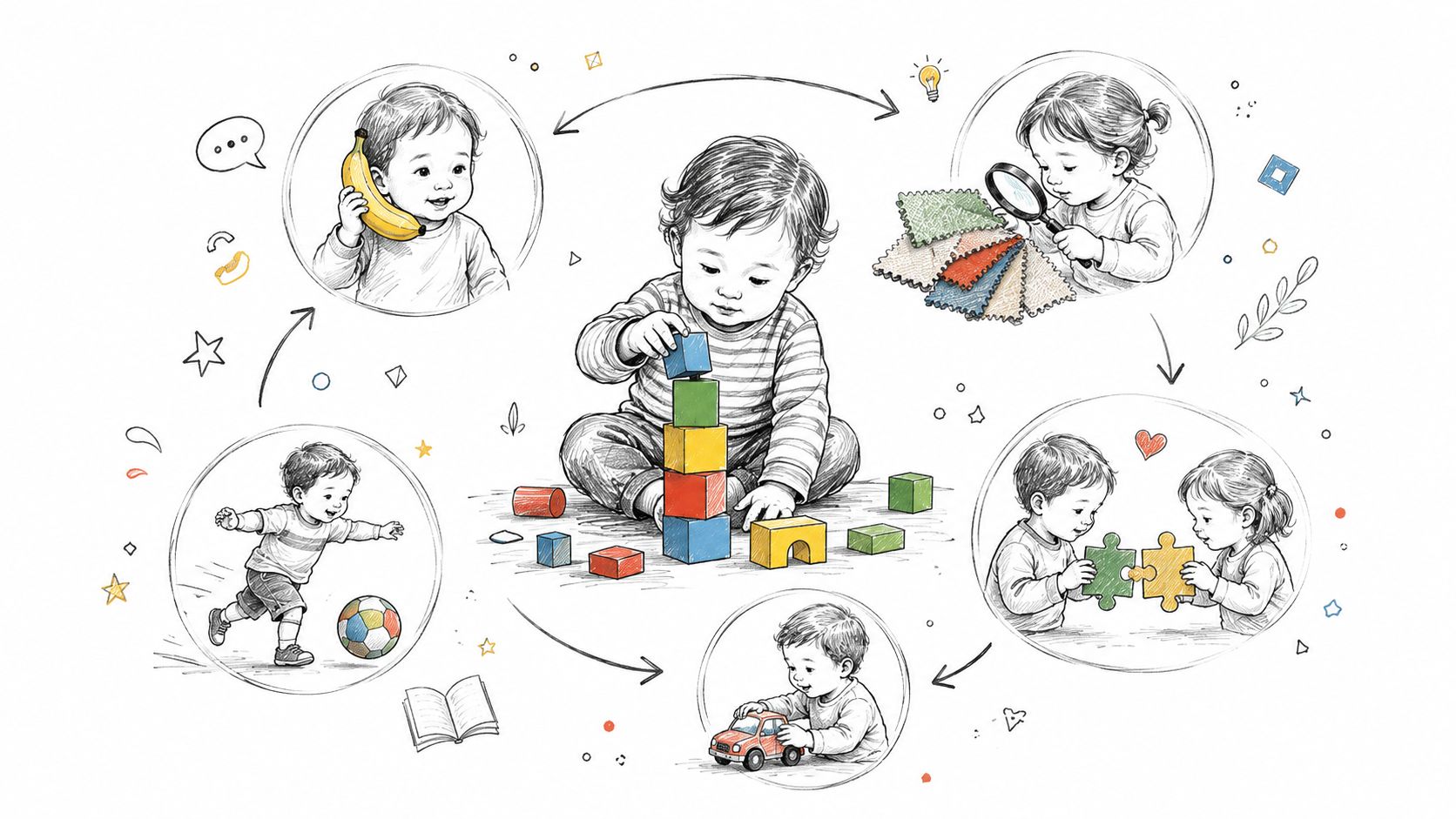
Beyond physical growth, one of the most profound benefits of outdoor learning in early years is its impact on a child’s cognitive development. The natural world is an ever-changing, dynamic laboratory that presents children with real-world problems. It sparks curiosity and encourages scientific thinking through observation and experimentation in a way that structured indoor activities often cannot.
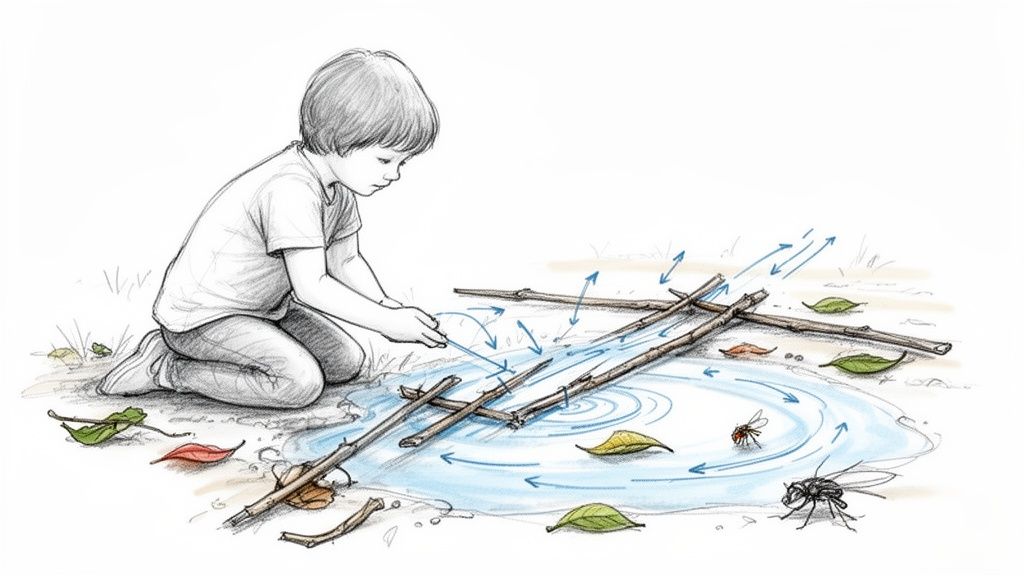
Natural environments also play a crucial role in attention restoration. The gentle, engaging stimuli of nature, such as rustling leaves or a passing insect, provide ‘soft fascination’ that allows a child’s directed attention to recover. Research shows that time spent in nature can enhance memory, executive function, and the ability to focus, meaning that children often return to indoor tasks with a renewed sense of calm and concentration.
Outdoor play is an invaluable learning environment, nurturing curiosity and teaching problem-solving in real-world contexts. It also aids in improving concentration, laying the groundwork for lifelong learning.
Tips for Parents to Encourage Cognitive Skills:
-
Ask Open-Ended Questions: Instead of asking “What colour is that flower?”, try “What do you notice about this plant?”. This encourages observation and deeper thinking.
-
Allow for Uninterrupted Exploration: Give your child long periods to simply explore and investigate. The cognitive benefits of nature increase with the duration of the engagement.
-
Document Their Discoveries: Take a photo of the ‘dam’ they built or help them draw the bug they found. Discussing it later reinforces their learning and shows you value their investigations.
3. Social and Emotional Development
Beyond physical growth, one of the profound benefits of outdoor learning in early years is how it nurtures a child’s social and emotional wellbeing. Outdoor environments provide a unique canvas for social interaction, cooperation, and emotional regulation. The sheer sense of freedom and open space reduces the feeling of being crowded, which can lower conflicts and encourage positive peer interactions.
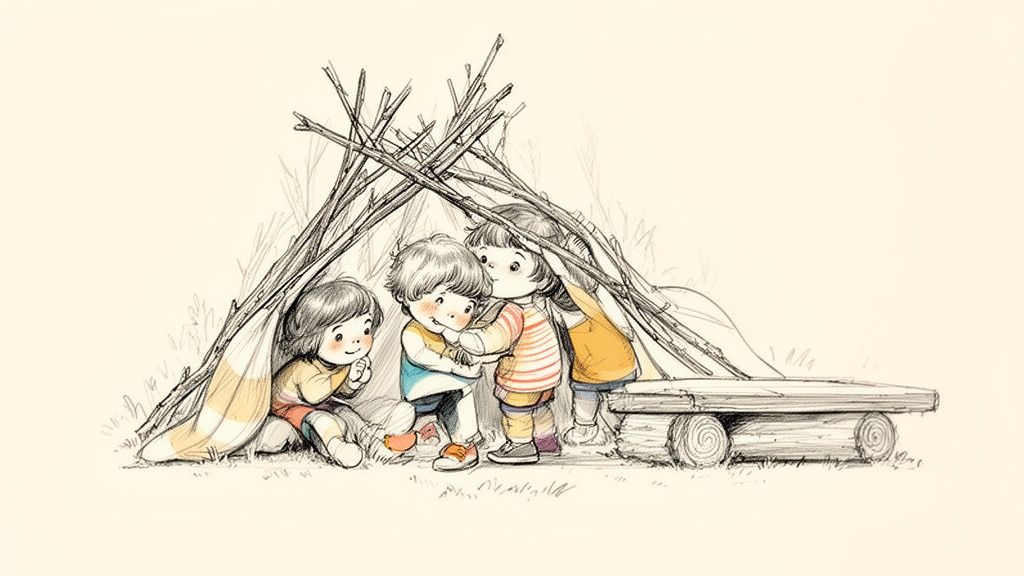
This less structured setting allows children to form friendships more naturally. Whether they are working together to build a den from branches, negotiating roles in a mud kitchen, or simply sharing a moment of wonder at a passing butterfly, children learn vital social skills like turn-taking, sharing, and empathy. The sensory richness of nature also has a calming effect, helping children to manage their feelings, reduce anxiety, and find moments of quiet reflection.
Tips for Parents to Encourage Social and Emotional Skills:
-
Create Group Challenges: Suggest small-group activities like building a fairy house or creating a nature art collage. This encourages collaboration and communication.
-
Use ‘Emotion Coaching’: When a child expresses frustration or excitement, use the opportunity to name the feeling. “You sound really proud that you balanced on that log!” This builds their emotional vocabulary.
-
Allow for Messy Play: Mud kitchens and sandpits are fantastic outlets for emotional expression. There are no “right” or “wrong” ways to play, which liberates children to be themselves.
-
Model Quiet Observation: Spend time simply sitting and watching the clouds or listening to the birds with your child. This teaches them that it’s okay to be calm and still, fostering self-regulation.
4. Language and Communication Development
The outdoors is an endlessly stimulating environment that naturally encourages conversation and expands a child’s vocabulary. Unlike a classroom with familiar objects, nature provides a constant stream of new, multisensory experiences that generate authentic questions and rich descriptive language. Discovering a ladybird, noticing the changing colours of the leaves, or feeling the texture of bark all provide meaningful contexts for communication.
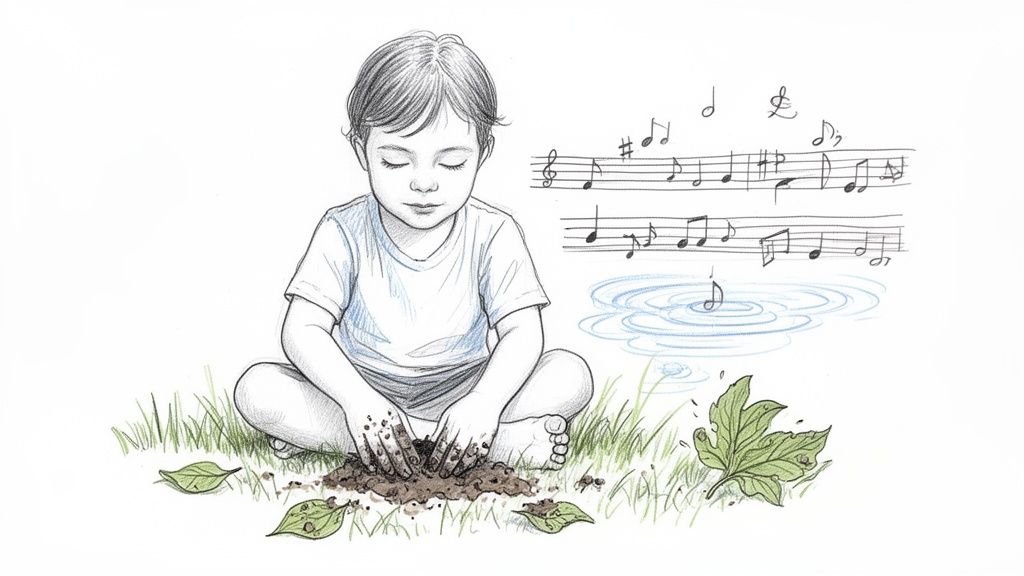
This dynamic setting is a powerful tool for one of the key benefits of outdoor learning in early years: language development. Children are prompted to ask ‘why’ and ‘how’ as they encounter new phenomena. They learn to negotiate with peers while building a den, tell stories about their discoveries, and use complex vocabulary to describe what they see, hear, and feel. This process supports all children, including those learning English as an additional language, by grounding new words in tangible, memorable experiences.
Tips for Parents to Encourage Communication Skills:
-
Model Rich Vocabulary: When you’re outdoors, talk about what you see using descriptive words. Instead of “look at the flower,” try “look at that bright yellow daffodil with the long green stem.”
-
Ask Open-Ended Questions: Encourage longer responses by asking questions that can’t be answered with a simple ‘yes’ or ‘no’. Try “What do you think that beetle is doing?” or “How could we make this pile of sticks stronger?”.
-
Use Experiences for Stories: After a trip to the park or a walk in the woods, encourage your child to retell the story of what they did. This builds narrative skills and helps consolidate their memories and new vocabulary.
5. Sensory Integration and Regulation
The outdoors is a rich, multi-sensory environment that provides a powerful foundation for sensory integration. Unlike the often-controlled sensory input of an indoor classroom, nature offers a dynamic and constantly changing tapestry of textures, sounds, sights, and scents. This constant stream of authentic sensory information is crucial for helping a child’s brain learn to process, organise, and respond appropriately to the world around them.
For many children, particularly those with sensory processing sensitivities, this natural environment can have a profoundly calming and organising effect. Activities like squelching in mud, feeling the texture of bark, or listening to the rustle of leaves provide deep proprioceptive and tactile input that helps with self-regulation. These experiences build adaptive responses, teaching children how to manage sensory information and regulate their emotional and physical reactions.
Tips for Parents to Encourage Sensory Skills:
-
Create a Mud Kitchen: You don’t need anything fancy. A few old pots, pans, and utensils in a corner of the garden will provide endless opportunities for tactile and imaginative play.
-
Go on a ‘Sensing Walk’: Encourage your child to focus on one sense at a time. What can they hear? What can they smell? What different textures can they feel on a single tree?
-
Embrace Barefoot Time: In a safe, familiar outdoor space like your garden, allow your child to go barefoot. This provides invaluable sensory feedback through the soles of their feet, which supports balance and proprioception.
6. Environmental Awareness and Sustainability Learning
Connecting children with nature from an early age is fundamental to nurturing a lifelong sense of environmental stewardship. This is a core benefit of outdoor learning in early years, as it moves ecological concepts from abstract ideas to tangible, lived experiences. By regularly interacting with the natural world, children develop a deep-seated respect for their environment, learning firsthand about ecosystems, life cycles, and the importance of conservation.
This awareness is built through simple, everyday activities. When a child helps to water the garden, places vegetable scraps in a compost bin, or watches a spider spin its web, they are learning about systems and consequences. They begin to understand that their actions have an impact and that they play a role in caring for the world around them. This early foundation in sustainable thinking is crucial for building responsible future citizens.
Tips for Parents to Encourage Environmental Awareness:
-
Start a Small Garden: Even a pot on a windowsill can teach powerful lessons. Grow herbs, cress, or simple flowers to show your child the magic of the life cycle.
-
Involve Them in Recycling: Create clear, child-friendly sorting bins. Let your child be the ‘Recycling Manager’ who helps separate paper, plastic, and food waste for compost.
-
Create a Nature Journal: Use a simple notebook to draw or write about what you see on walks. Note the changing colours of the leaves, the birds you spot, or interesting insects to track the seasons together.
7. Imagination, Creativity, Confidence and Risk-Taking
The outdoors is a vast, unscripted stage where children’s imaginations can truly take flight. Unlike toys with a single, defined purpose, natural materials like sticks, leaves, and mud are open-ended, promoting divergent thinking and complex, child-led creative play. This freedom also presents managed opportunities for risk-taking, which is essential for building confidence, resilience, and self-awareness.
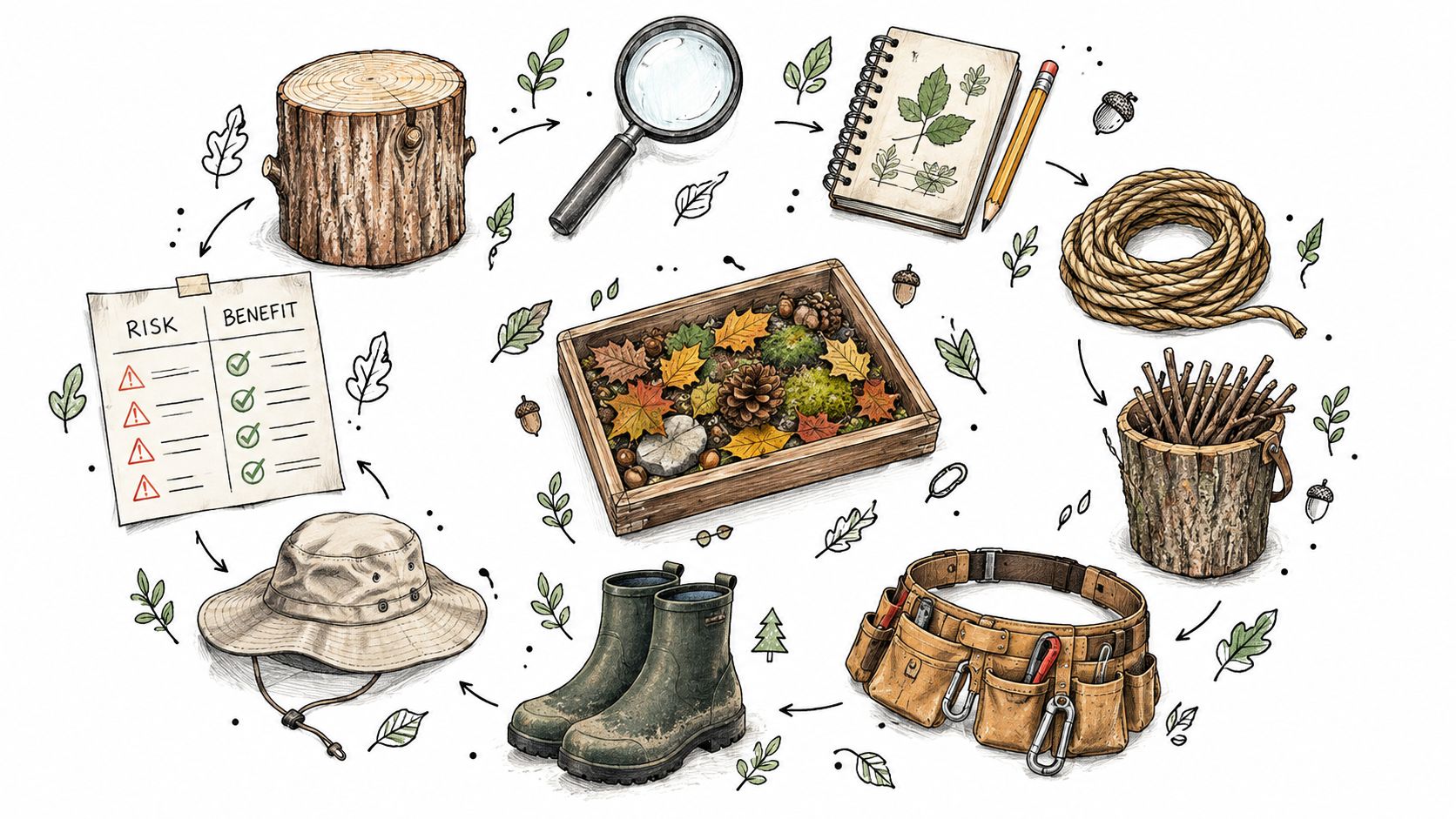
When a child decides a stick is a magic wand, a log is a pirate ship, or a collection of pebbles are ingredients for a potion, they are exercising their creative muscles. As they test their physical limits by balancing on a log or climbing a small, sturdy tree, they are learning to assess challenges, manage their fears, and experience the profound satisfaction of mastery. These experiences teach them that they are capable and competent individuals.
Tips for Parents to Encourage Creativity and Confidence:
-
Provide Loose Parts: Organise baskets of natural treasures like shells, pinecones, sticks, and stones. This encourages children to see the creative potential in everyday objects.
-
Follow Their Lead: Resist the urge to direct play or correct their imaginative ideas. If a pinecone is a telephone, embrace the conversation. This validates their creativity.
-
Talk About Risk: Instead of saying “Be careful!”, try asking questions like, “Does that branch feel strong?” or “What’s your plan for getting down?”. This encourages them to think critically and develop their own sense of judgment.
7-Point Comparison: Benefits of Outdoor Learning in Early Years
| Area | Implementation complexity | Resource requirements | Expected outcomes | Ideal use cases | Key advantages |
|---|---|---|---|---|---|
| Physical Development and Motor Skills | Low–Medium — needs supervision and routine planning | Natural terrain, loose parts, all‑weather clothing, basic supervision | Improved gross/fine motor skills, balance, strength, fitness | Daily outdoor play, gross‑motor sessions, Forest School activities | Natural, progressive challenges; low cost; builds resilience and health |
| Cognitive Development, Attention Restoration and Problem‑Solving | Medium–High — staff facilitate open inquiry and reflection | Diverse natural materials, trained facilitators, extended time | Enhanced attention, executive function, problem‑solving, scientific thinking | Inquiry projects, water/earth experiments, pre‑lesson attention boosts | Intrinsic motivation, real‑world learning, attention restoration |
| Social and Emotional Development | Medium — requires guidance for peer conflict and grouping | Safe outdoor space, supervision, zones for quiet and group play | Better cooperation, emotional regulation, confidence, resilience | Cooperative builds, mixed‑age play, emotional‑coaching moments | Stress reduction, autonomy, inclusive peer interaction |
| Language and Communication Development | Medium — staff must model and scaffold language | Natural prompts, story tools, recording/observation materials | Richer vocabulary, narrative skills, conversational competence | Storytelling, nature walks, small‑group negotiations | Authentic language contexts, supports EAL, encourages talk |
| Sensory Integration and Regulation | Medium — needs careful facilitation for sensitivities | Sensory stations (mud, water), safe terrain, knowledgeable staff | Improved sensory processing, proprioception, self‑regulation | Sensory sessions, transition activities, support for SEN/autism | Multisensory grounding, calming effects, builds body awareness |
| Environmental Awareness and Sustainability Learning | Medium — best with long‑term planning and curriculum links | Garden/planters, composting tools, environmental resources, staff expertise | Stewardship, systems thinking, sustainable habits and values | Gardening, composting, seasonal studies, place‑based learning | Fosters lifelong environmental care; hands‑on conservation |
| Imagination, Creativity, Confidence and Risk‑Taking | Low–Medium — requires staff restraint and risk‑benefit skills | Loose parts, open space, staff trained in managed risk | Greater creativity, confidence, resilience, divergent thinking | Open‑ended play, nature art, managed climbing/balancing activities | Free, variable materials; child‑directed play; builds coping skills |