Planning meals for babies and preschoolers can feel like a daily balancing act. You're thinking about nutrition, texture, allergies, appetite and the time available for preparation, often while trying to make one meal suitable for children at different stages.
These nursery food ideas focus on adaptable, family-style dishes rather than rigid menus. Each option can be adjusted for age and development, helping children explore different flavours, practise self-feeding and enjoy a balanced routine without making every meal complicated. In England, the EYFS nutrition guidance says early years providers must offer meals, snacks and drinks that are healthy, balanced and nutritious, with foods from the four main food groups offered every day.
Textures, portions and ingredients should always suit the individual child. Babies and toddlers also need close supervision while eating, and carers should follow current allergy, food-safety and choking-prevention guidance.
1. Rainbow Vegetable Pasta with Hidden Nutrients
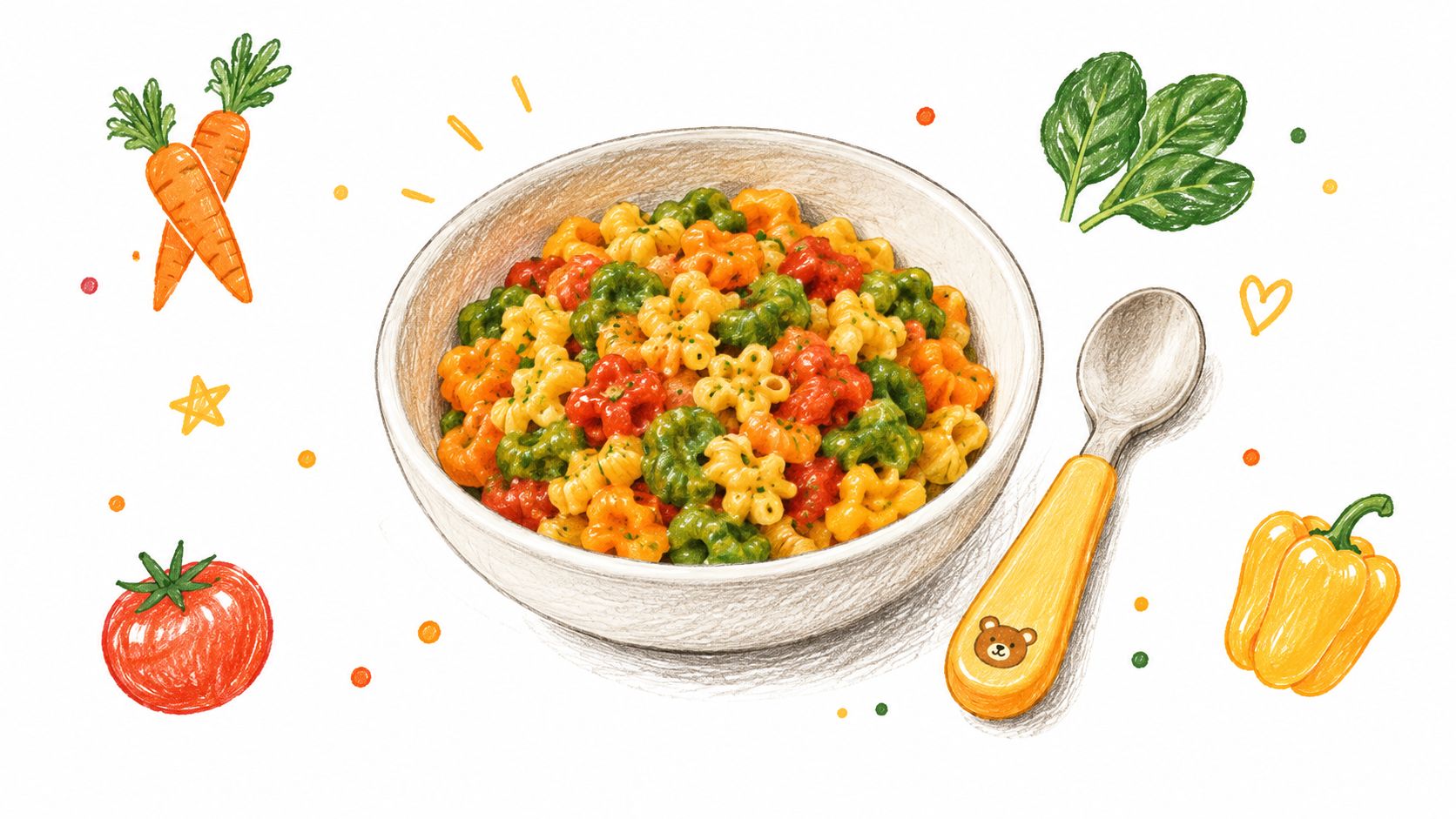
A colourful pasta dish can make vegetables feel familiar without turning mealtime into a negotiation. A gentle tomato sauce blended with carrot, butternut squash and spinach creates a smooth base, while finely chopped vegetables can be left visible as a child becomes more comfortable with different textures.
For a meal suitable for children around 12 months and older, cook the pasta until it's soft enough to manage comfortably. Wholemeal penne, small shapes or lentil pasta can provide variety, although the most suitable choice depends on the child's chewing skills and what they already eat confidently.
Try one of these combinations:
- Tomato and root vegetables: Blend cooked tomato, carrot and butternut squash into a smooth sauce.
- Roasted vegetable purée: Combine soft peppers, courgettes and mushrooms with wholemeal pasta.
- Broccoli and sweet potato: Stir finely chopped broccoli into a mild cheese and sweet potato sauce.
Practical rule: Introduce a new vegetable gradually, while keeping at least one familiar ingredient in the bowl.
Cook vegetables until they're very soft, and allow the finished meal to cool before serving. If the sauce contains cheese, avoid adding extra salt. A small portion of plain yoghurt or fresh fruit alongside the pasta can add another food group without making the meal feel too large.
The official example menus for early years settings in England are designed for children from 6 months to 4 years, and they show how adaptable meals can support balanced eating across different stages. Pasta can be mashed or served in softer, smaller pieces for a child moving from purées, then offered in more recognisable family-style portions as confidence grows.
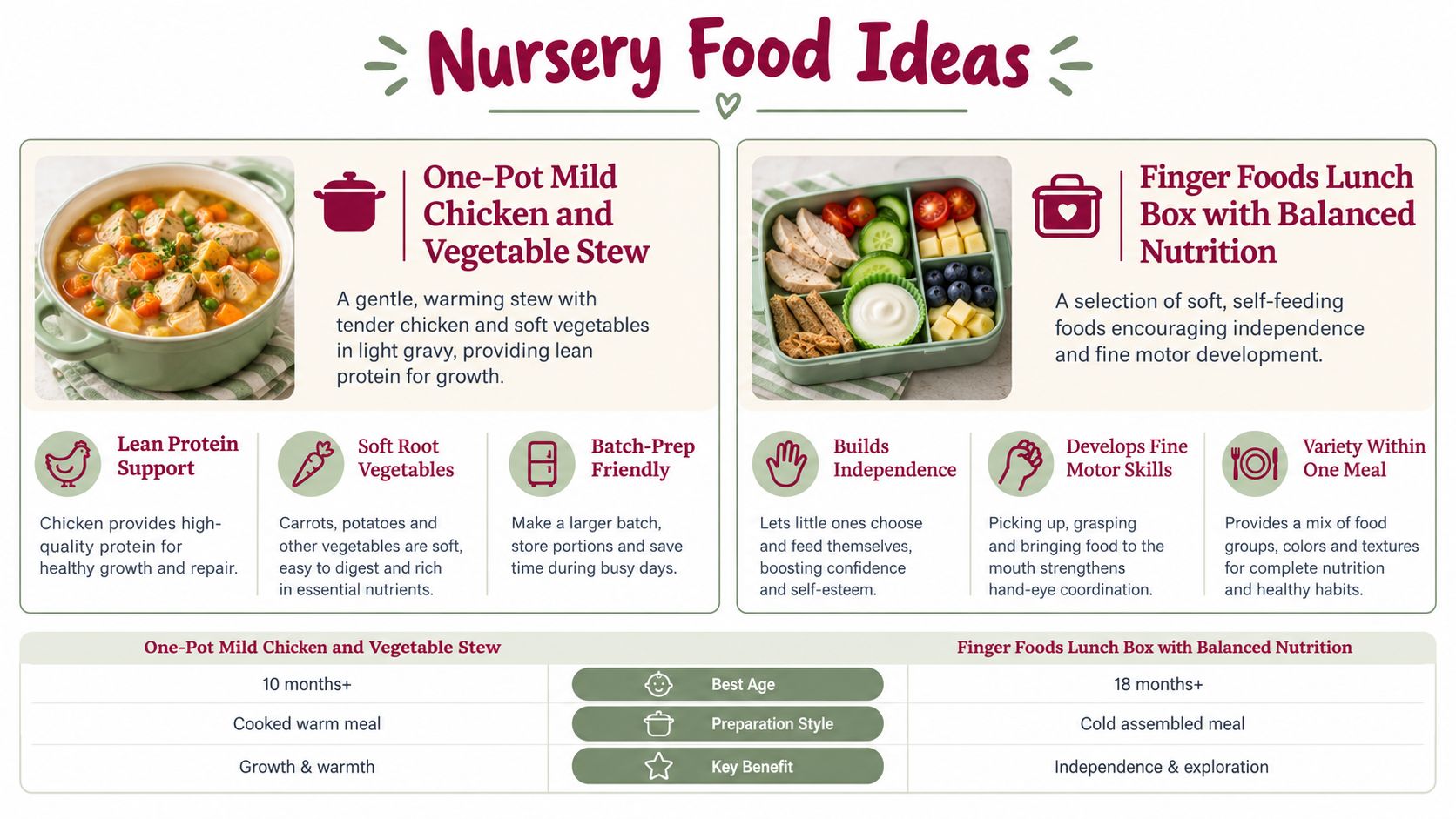
2. One-Pot Mild Chicken and Vegetable Stew
A mild chicken stew gives toddlers a soft, warming meal with a familiar texture and plenty of opportunity to practise picking up small pieces. Tender chicken, potato and vegetables simmered in a light gravy can be served together or separated on the plate if a child finds mixed textures overwhelming.
For a gentle family version, combine chicken with carrot, celery, potato and peas. Another option is tender chicken with butternut squash, leeks and a little thyme. Sweet potato, green beans and mild herbs also work well in a simple casserole.
Cut the chicken into pieces that match the child's abilities. Younger toddlers may manage small, soft cubes more easily than larger chunks, while older preschoolers may be ready to use a spoon more independently. Always check that the chicken is fully cooked and that the vegetables are soft before serving.
- Keep the flavour gentle: Use herbs such as thyme rather than strong seasoning.
- Limit added salt: Choose unsalted or low-sodium stock and don't add salt at the table.
- Protect the texture: Cook vegetables until soft but not so overcooked that they completely disappear.
- Cool before eating: Warm food should be checked carefully to prevent mouth burns.
Stew is useful for busy households because it can be prepared in a larger batch and divided into portions for later meals. Reheat food thoroughly, stir it well and check the temperature before offering it to a child. Don't rely on reheating to soften pieces that were originally too large. Cut or mash them as needed once the food is safe to handle.
Chicken contributes protein, while potato and vegetables provide energy and variety. If appetite is small, serve a modest amount first and offer more if the child remains interested. A child doesn't need to finish every part of the bowl to have a positive food experience.
3. Finger Foods Lunch Box with Balanced Nutrition
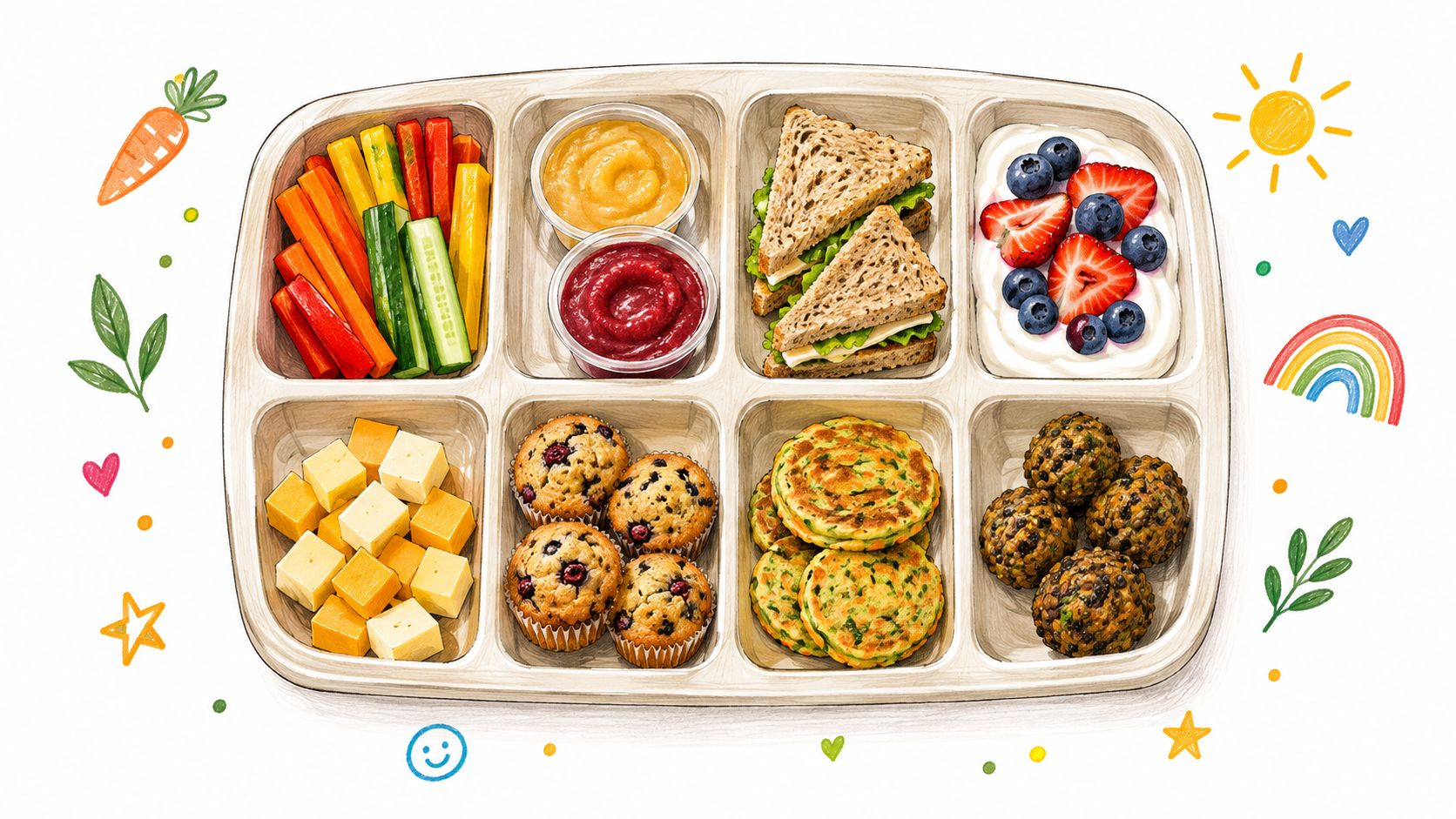
Finger foods can turn lunch into a chance to practise grasping, hand-to-mouth coordination and decision-making. A divided plate or lunch box with familiar and less familiar foods lets a toddler choose what to explore without requiring every item to be eaten.
This idea suits many children from around 18 months, although readiness matters more than an exact age. Soft roasted chicken, steamed vegetables, mini oatcakes, strawberries and yoghurt could make a simple lunch. A Mediterranean-style option might include soft cheese, wholemeal breadsticks, cucumber and melon, with hummus in a separate pot. Lentil pasta, turkey pieces, broccoli and softened apple can create another balanced combination.
Cut food into manageable pieces and make sure hard or round foods are prepared safely. Vegetables should be steamed until soft, and eating should always be supervised. The UK guidance on food allergies and intolerances also highlights the importance of gathering allergy information before a child starts and having clear procedures in place.
- Use a familiar anchor: Add a food the child usually accepts beside a new ingredient.
- Offer different groups: Combine a starchy food with protein or dairy, fruit and vegetables.
- Support self-regulation: Talk about a “full tummy” and let the child pause rather than urging them to clear the box.
- Rotate gently: Change one component at a time so variety grows without making lunch unfamiliar.
The fine motor activities guide offers broader ideas for developing the hand skills children use during self-feeding. Lunch doesn't need to look decorative. Simple pieces arranged in separate sections can be more inviting than an elaborate meal that is difficult to pick up.
4. Mild Fish with Cheese Sauce and Vegetables
Fish can be introduced in a soft, familiar format by serving flaked white fish with a mild cheese sauce, mashed potato and vegetables. Cod or haddock works well because it flakes easily, but it must be checked carefully for bones before it reaches the child's plate.
Poach or steam the fish gently so it stays tender. A sauce made with milk, cheese and unsalted stock can create a smooth texture that's easier for a child to manage than a dry fillet. Peas, broccoli, sweet potato or rice can complete the meal, depending on the child's preferences.
“A hesitant first taste still counts as learning.”
Children may accept fish more readily when it's mixed into a familiar dish. Flake a small amount into mashed potato, rice or pasta, then gradually increase the proportion as the child becomes familiar with the flavour. Don't pressure a child to finish it. Calm exposure gives them time to notice the smell, texture and taste.
Keep the seasoning mild and avoid adding salt to the sauce. Fish provides protein and nutrients associated with healthy development, while the vegetables and starchy accompaniment make the meal more substantial. Serve it warm rather than hot, and test for bones again after flaking.
Parents looking for ways to respond to cautious eating may find the guide to food and nutrition for fussy eaters helpful. It's usually more productive to offer a small, manageable portion than to make a disliked food the centre of attention.
For a simple weekly variation, try cod with cheddar sauce, peas and mashed potato. Haddock with broccoli and sweet potato offers a different colour combination, while flaked fish with peas and buttered rice may suit children who prefer separated foods.
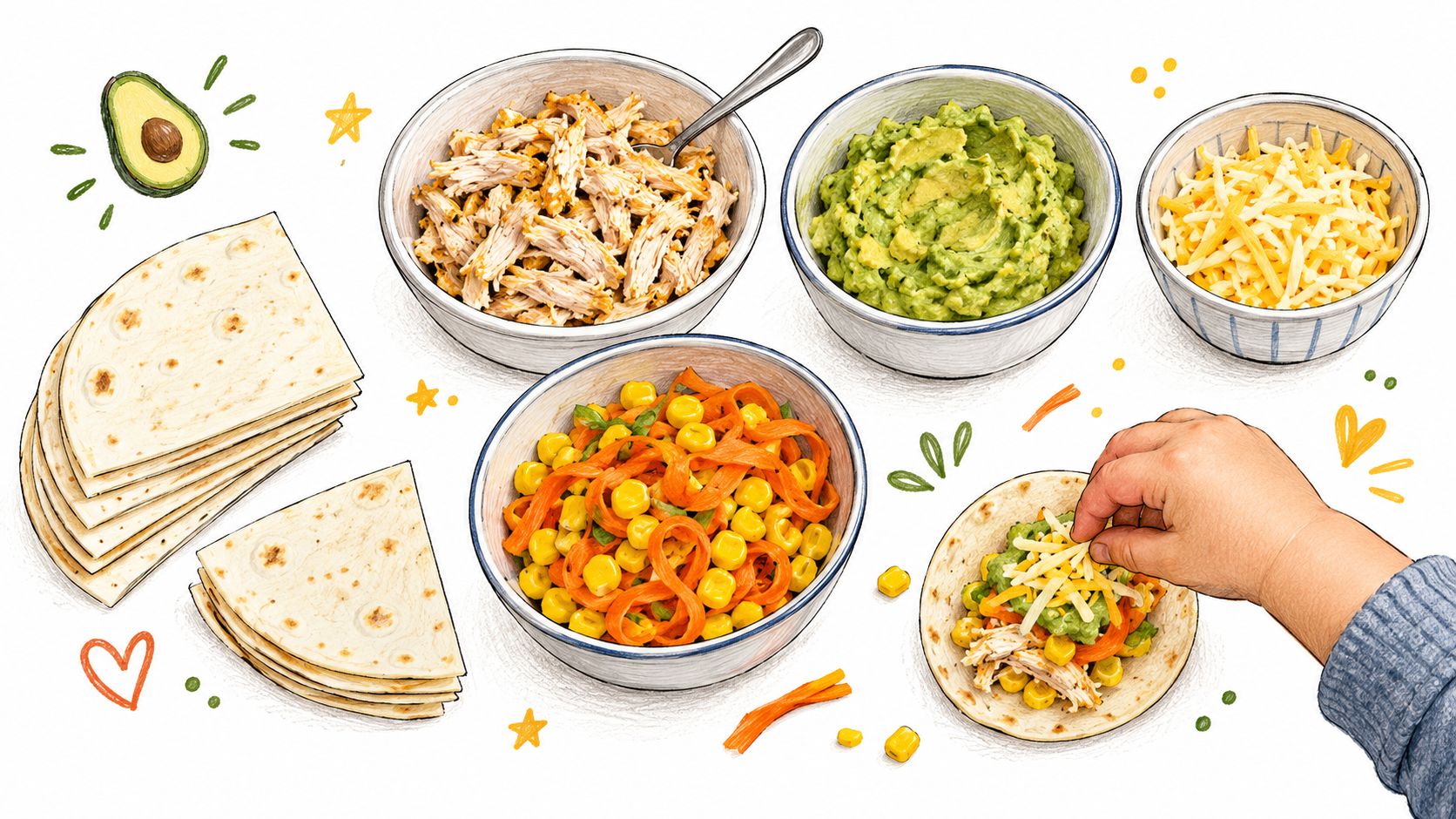
5. Build-Your-Own Soft Tacos or Wraps for Toddlers
A soft taco or wrap gives children a role in assembling lunch. They can touch the ingredients, make a choice and see how separate foods combine, which may encourage curiosity without turning the meal into a performance.
For children around 18 months and older, start with a soft tortilla or flatbread cut into quarters. Offer mild fillings such as shredded chicken, mild cheddar and a little tomato sauce. Flaked white fish with peas, sweetcorn and plain yoghurt can provide another option. Mashed avocado, soft vegetables, beans and cheese create a vegetarian filling.
Keep the first serving simple. Part-fill the tortilla so it's easier to hold, then offer a little more if the child manages it comfortably. Rigid shells can be difficult to bite and may break into hard pieces, so soft tortillas are generally more practical for young children.
- Reduce the mess: Place a small amount of filling in the centre rather than allowing the wrap to become too full.
- Offer familiar choices: Start with one accepted ingredient and add one new option.
- Check the temperature: Warm fillings should cool before serving.
- Supervise closely: Watch for overfilling and make sure pieces remain soft and manageable.
A bean taco with mashed avocado, cheese and soft vegetables can provide a useful alternative to meat. If beans are whole, mash them or prepare them in a texture the child can manage. Hummus can also work, provided the nursery or childcare setting has checked the child's allergy information and ingredient requirements.
Food preparation can become a relaxed creative activity. The creative activities guide for toddlers includes ideas for involving young children in hands-on experiences. At mealtimes, keep the focus on participation rather than producing a perfect wrap.
6. Creamy Risotto with Vegetables and Cheese
Risotto has a naturally soft texture, making it a useful choice for children who're still developing chewing and swallowing confidence. Arborio rice cooked slowly with vegetables and cheese creates a mild meal that can be served from a spoon or explored with a child-sized fork.
Peas and carrots make a familiar combination. Courgette, soft mushrooms and mild cheddar offer a different version, while asparagus and peas can introduce new shapes and flavours to an older toddler or preschooler. Dice vegetables evenly so they cook at a similar rate and remain easy to manage.
Use unsalted stock and avoid adding salt during cooking. Stir regularly, about every 2 to 3 minutes, adding stock gradually so the rice becomes creamy without turning watery. The rice should be fully cooked and soft enough to chew comfortably before serving.
Texture check: Press a piece of vegetable between your fingers before it reaches the child's bowl. It should be soft, with no hard centre.
Cheese adds creaminess and a familiar flavour, but it doesn't need to dominate the meal. A small amount stirred through the finished rice can help bind the ingredients while allowing the vegetables to remain visible. Keeping some vegetables recognisable can help children learn that the smooth meal contains foods they may later accept separately.
Serve risotto warm, not hot, and allow it to cool slightly before eating. A child who prefers separated foods may accept the same ingredients served beside the rice instead of stirred through it. This small change can preserve the ingredients while making the presentation less challenging.
7. Fruity Porridge with Natural Toppings for Breakfast or Snack
Porridge is a dependable breakfast or snack because it can change with the seasons while keeping the basic preparation familiar. Rolled oats cooked with milk or a suitable milk alternative can be combined with mashed banana, apple purée or blended berries instead of added sugar.
For babies from around 6 months, use a texture and oat product suitable for their stage of weaning. Baby porridge oats may be easier for very young children, while older toddlers can gradually manage a thicker mixture with soft fruit pieces. Always follow professional guidance about suitable foods and milk for an individual child.
Try these combinations:
- Apple and cinnamon: Stir apple purée through the porridge and add soft apple pieces once cool.
- Berry: Blend strawberries into the oats and top with softened raspberries.
- Banana and pear: Mash banana into the porridge, then add soft pear.
Cook the oats gently on a low heat, stirring occasionally so they don't stick. Add mashed or puréed fruit near the end, allow the porridge to cool to a safe temperature and serve water in a suitable training cup. The early years healthy eating activities guide includes ideas for helping children become familiar with food through positive experiences.
The Department for Education food-safety guidance says young children should be offered plain milk and fresh tap water to drink. It advises avoiding fruit juice, smoothies, squash, fizzy drinks and flavoured milk because of their sugar content and potential contribution to tooth decay.
Prepare porridge fresh where possible. If it needs to be stored, keep it in a sealed container in the fridge for no more than 24 hours, then reheat it safely and check the temperature thoroughly.
8. Baked Sweet Potato with Cottage Cheese and Vegetables
Sweet potato has a naturally sweet flavour and soft texture, which can make it appealing to toddlers who're still learning about savoury meals. Once baked until fork-tender, the flesh can be mashed with cottage cheese and combined with soft vegetables for a simple lunch or tea.
Bake the sweet potato at 200°C for approximately 40 to 50 minutes, depending on its size, until the centre is completely soft. Scoop out the flesh carefully, remove the skin and allow it to cool before mashing. Cottage cheese can be stirred through while the potato is warm, but the finished dish must be checked before serving.
Good combinations include:
- Broccoli and cottage cheese: Steam broccoli until soft, then chop it finely or mash it into the potato.
- Sweetcorn and mashed sweet potato: Use soft sweetcorn and check that the texture suits the child.
- Peas and carrot: Add tender peas and small, soft carrot pieces for colour and variety.
A potato topped with cottage cheese provides carbohydrate and dairy in one dish, while vegetables add different flavours and textures. Keep the vegetables partly visible if the child is ready to explore them, or mash them more thoroughly during an earlier stage of weaning.
This meal can be prepared ahead and gently reheated with a little milk or water if it becomes too thick. Stir thoroughly, allow it to cool and never serve food straight from the oven or microwave. A child may eat more confidently when the meal is familiar, so this recipe can be repeated with one small change rather than reinvented each time.
8-Item Nursery Food Comparison
| Dish | Implementation complexity | Resource requirements | Expected outcomes | Ideal use cases | Key advantages |
|---|---|---|---|---|---|
| Rainbow Vegetable Pasta with Hidden Nutrients | Low–Medium: chopping/pureeing and sauce blending | Common vegetables, soft pasta, blender/food processor, basic pantry | Greater vegetable acceptance; vitamins A/C and fibre; soft texture for chewing | 12 months+ transitioning to family meals; batch-freeze friendly | Encourages veg variety; soft, self-feeding friendly; freezer- and allergy-adaptable |
| One-Pot Mild Chicken and Vegetable Stew | Low: one-pot cooking but requires thorough cooking of meat | Chicken, root vegetables, unsalted stock, pot | Lean protein for growth; easy-to-chew texture; warming comfort food | 10–12 months+ for warm meals and meal-prep; cooler weather meals | High-quality protein; versatile vegetables; batch-cook friendly |
| Finger Foods Lunch Box with Balanced Nutrition | Low–Medium: multiple small-item prep and portioning | Variety of small foods (cheese, bread, fruit, veg), divided box, cutting tools | Fine motor skill development; independence; exposure to balanced variety | 18 months+ for self-feeding, preschool lunchboxes, snack times | Promotes autonomy; easy to tailor for allergies; supports food exploration |
| Mild Fish with Cheese Sauce and Vegetables | Medium: careful deboning and gentle cooking/sauce making | Boneless white fish, mild cheese, stock, tools for removing bones | Omega‑3 and iodine intake; high-quality protein; calcium from cheese | 12 months+ when introducing fish; weekly fish inclusion to build acceptance | Supports brain/eye development; nutrient-dense protein; calcium boost |
| Build-Your-Own Soft Tacos or Wraps for Toddlers | Medium: multiple components and supervised assembly | Soft tortillas, proteins, soft veg, small bowls for assembly, supervision | Engagement and choice; fine motor practice; balanced multi-group meal | 18 months+ interactive family meals, group activities, learning choice | Highly customizable; builds decision-making and motor skills |
| Creamy Risotto with Vegetables and Cheese | Medium–High: attentive stirring and timed stock additions | Arborio rice, low-salt stock, cheese, pan and stove | Carbohydrates for sustained energy; creamy texture for easy chewing; veg inclusion | 12 months+ for cosy lunches/dinners; introducing veg in grain form | Naturally creamy without added cream; good for vegetable incorporation |
| Fruity Porridge with Natural Toppings | Low: simple stovetop or microwave cooking | Rolled or baby oats, milk or formula, fruit purée, pot | Sustained energy and soluble fibre; suitable from weaning onwards | Breakfast or snack; 6 months+ (age-appropriate oats) | Adaptable by age/diet; naturally sweet without added sugar; cost-effective |
| Baked Sweet Potato with Cottage Cheese and Vegetables | Low: baking and simple assembly | Sweet potatoes, cottage cheese, cooked veg, oven or microwave | Beta‑carotene (vit A), calcium and complete protein, filling complex carbs | 12 months+ nutrient-dense lunch/dinner; batch-prep for busy parents | Nutrient-dense and naturally sweet; easy prep; high in vitamin A and protein |
Building a Flexible Nursery Food Routine
A balanced nursery meal doesn't need to be elaborate. Start with a starchy food such as pasta, rice, potato, oats or bread. Add a protein or dairy food, then include fruit or vegetables and offer water where suitable. This simple pattern reflects the four food groups set out in national early years nutrition guidance, while leaving plenty of room for cultural preferences, seasonal ingredients and family routines.
The same meal can look different for a baby, toddler and preschooler. A baby beginning weaning may need a smooth or mashed texture, a toddler may manage soft pieces with close supervision, and an older preschooler may be ready for more independence with a spoon or open cup. Portion size should follow the child's appetite rather than an adult expectation. Start small and offer more if they're still hungry.
A practical weekly rhythm might include pasta on one day, stew on another, a self-feeding lunch, fish, a soft wrap, risotto, porridge and sweet potato. You don't need to serve eight completely different meals every week. Repeating a successful meal helps children feel secure, while changing one ingredient gives them a gentle opportunity to explore something new.
- Pair familiar and unfamiliar foods: Put a new vegetable beside a food the child already accepts.
- Keep pressure low: Don't insist that a child clears the plate or takes another bite.
- Use family ingredients: Adapt the same basic meal instead of preparing a separate menu.
- Plan for waste: Cook flexible ingredients that can be used in more than one meal.
- Record allergies clearly: Share known allergies and intolerances with every carer and childcare setting.
- Follow individual advice: Speak with a health visitor, dietitian or other qualified professional when a child has a diagnosed allergy, feeding concern or restricted diet.
Food safety matters as much as nutrition. Adults should supervise children while they eat, prepare food in textures they can manage and check that hot meals have cooled. Nurseries and families also need clear processes for allergy information, ingredient checks, cleaning and preventing cross-contact. A meal that's safe for one child may not be suitable for another, even when the recipe looks simple.
Drinks deserve a place in the routine too. National guidance says milk and water are the drinks that should be offered in early years settings, while sweetened drinks and fruit-based drinks aren't suitable everyday choices for babies and toddlers. Offering water regularly helps children become familiar with it without making drinks a source of conflict.
Children don't always eat the same amount from one day to the next. Appetite can change with tiredness, activity, illness and the excitement of a new environment. Responding calmly helps children notice their own hunger and fullness cues. You can encourage variety by talking about colour, smell and texture, but you don't need to persuade them to like every food immediately.
If your child attends nursery, ask how the setting manages food preferences, allergies, mealtimes and packed food. A conversation can clarify which information carers need, how meals are adapted and how adults support children who eat slowly or prefer foods separately. Whether you're preparing food at home or discussing routines with a local nursery, a flexible approach gives children space to grow in confidence.
Happy Tree Academy is a day nursery in Northwood offering care and early education for children aged 3 months to 5 years, with balanced meals and snacks included in its early years routine. Families considering childcare can speak with local settings directly about menus, food preferences, allergy procedures and the support available at mealtimes.
Happy Tree Academy offers early years care and education for children aged 3 months to 5 years, with balanced, nutritious meals and snacks, fresh fruit and water available as part of its routine. If you're looking for childcare in Northwood or near Pinner, visit Happy Tree Academy to learn more and arrange a personal visit.