You're comparing nurseries in Northwood or Pinner. The brochure says “healthy, balanced meals”, but that phrase doesn't tell you whether children are offered water freely, whether oily fish appears on the menu, or whether staff can safely manage a serious allergy. It doesn't show what happens when a baby moves from milk to textured food, either.
A nursery food policy should turn a reassuring promise into a set of rules that parents can inspect. You should be able to see what the setting serves, how it handles food brought from home, how it records dietary needs and how staff check that practice matches the written policy.
What Parents Really Want to Know About Nursery Food
Most parents don't need a nutrition qualification to assess nursery food. They need clear answers to practical questions. What will my child eat during a full day? Who checks the ingredients? What happens if my child has an allergic reaction? Can the nursery adapt food for religious, cultural or medical reasons without just removing important nutrients?
The wording matters because England has a regulatory gap. The Early Years Foundation Stage requires meals, snacks and drinks supplied by early-years providers to be “healthy, balanced and nutritious”, but early-years settings don't have the same statutory nutritional standards used to assess school menus. Nurseries commonly rely on voluntary guidance, including Eat Better, Start Better and former Public Health England example menus. A nationally representative study of 306 English nurseries found that 82.6% knew about at least one principal voluntary guideline, while only 48.8% reported using either guideline (research on voluntary food and drink guidance in English nurseries).
That's why the document itself matters. Read it for the menu cycle, baby-feeding arrangements, allergen controls, drinking water, packed lunches, mealtime behaviour and review process. Then ask the manager to show you evidence that staff follow it.
Parent's rule: Don't judge a food policy by the word “healthy”. Judge it by the detail a member of staff can explain and demonstrate.
Defining a UK Nursery Food Policy
A nursery food policy is the setting's operational rulebook for food and drink. It should translate the EYFS requirement into instructions staff can follow every day, rather than repeating a general commitment to nutritious meals.
The policy should explain:
- What is provided, including meals, snacks and drinks.
- When food is served, across the child's booked hours.
- How menus are planned, approved and reviewed.
- How dietary needs are recorded, including allergies, intolerances, religious diets and cultural preferences.
- How food is prepared and served safely, including choking and cross-contact controls.
- What parents must provide, such as packed lunches, breast milk or formula.
- What happens when a menu item changes, is unavailable or needs a substitution.
The Early Years Foundation Stage framework supplies the statutory context, but it doesn't replace a nursery's own procedures. A voluntary guide can help a setting plan balanced meals, while the internal policy should state who checks the menu, where allergy information is kept and how staff communicate changes to families.
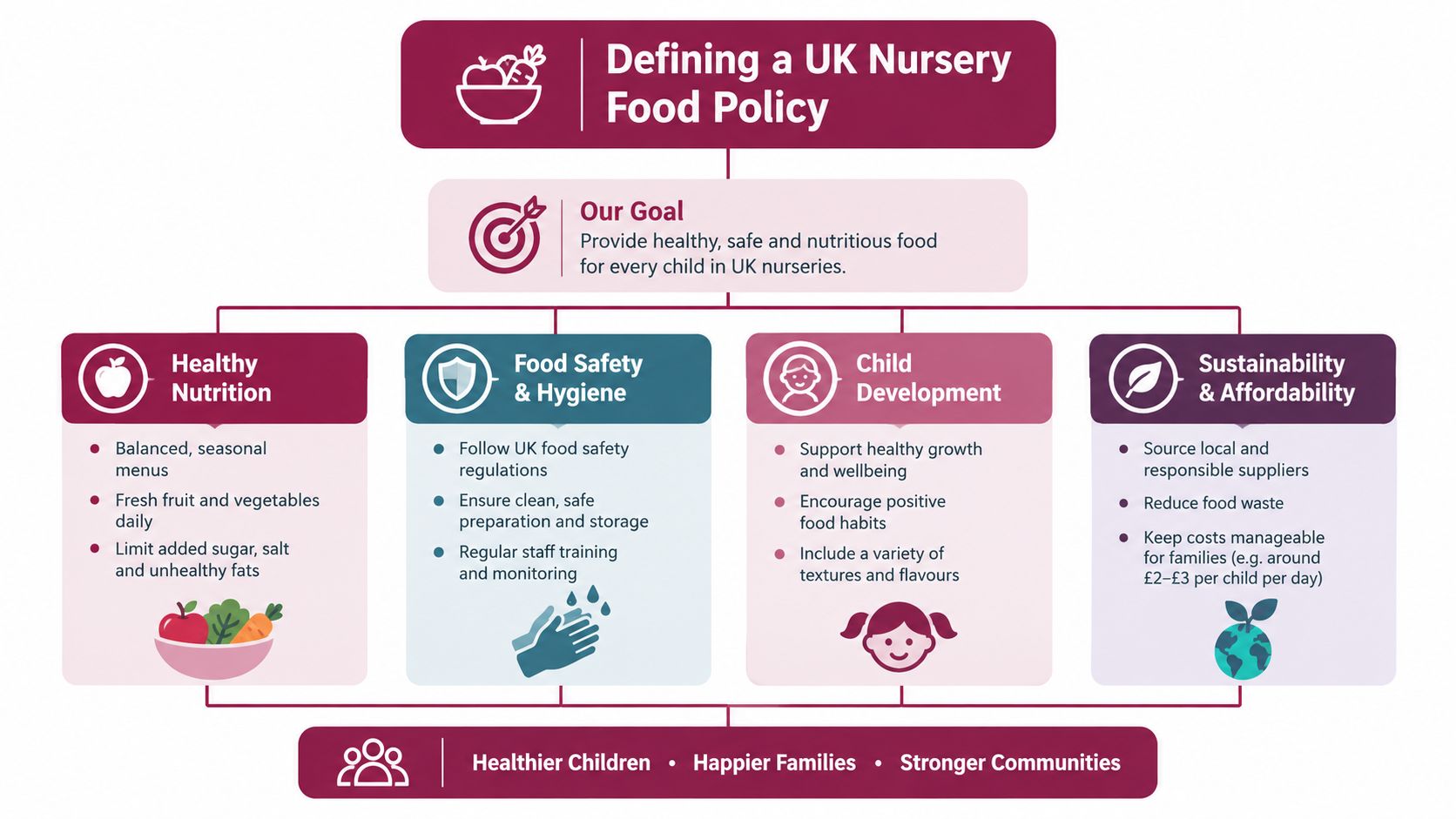
A useful policy also covers food waste, leftovers, supervision and staff training. It should be available to parents, written in language families can understand and reviewed against current guidance. If the document only says that the nursery provides “healthy food” without explaining how, it's a statement of intent, not a dependable system.
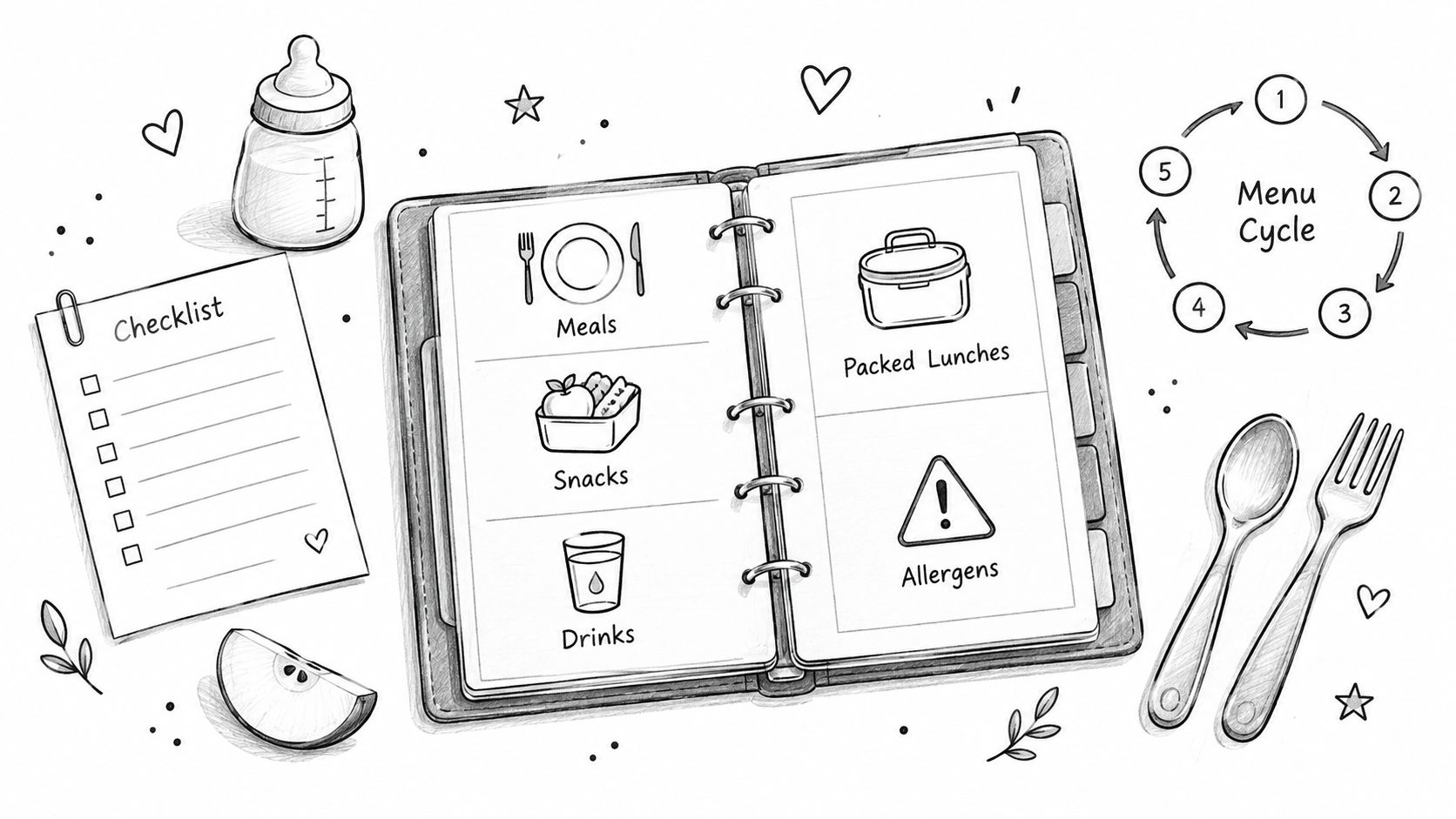
The Four Building Blocks of a Strong Policy
A practical nursery food policy should separate four areas. That makes gaps easier to spot.
Meals
Meals need a written menu cycle, not a changing list that parents see only on the day. The menu should show variety across starchy carbohydrates, protein foods, dairy or suitable alternatives, fruit and vegetables. It should also identify age-appropriate options for babies, toddlers and preschool children.
A full-day setting should explain how the policy covers the entire attendance period, including breakfast where applicable, lunch, tea and any snacks. For Happy Tree Academy, the policy should define a menu cycle of at least one week, cover the 7:30am to 6pm day and include a checklist for menu approval and substitutions, reflecting the Department for Education's early-years nutrition guidance.
Snacks
Snacks shouldn't become a steady stream of sugary or highly processed food. Look for fresh fruit and vegetables, suitable starchy choices and clear portion guidance. The policy should state whether snacks are prepared on site, purchased, supplied by parents or included in the catering contract.
Drinks
Water should be freely available, not offered only when a child asks. Ask where children can access it, how staff monitor drinking and how bottles are labelled for babies. The policy should distinguish water from sweetened drinks and explain how milk or suitable alternatives fit into the day.
Packed lunches
Packed-lunch rules protect the whole group, especially children with allergies. A good policy sets out prohibited risks, labelling requirements, safe storage and what staff do when a lunch contains an unsuitable item.
Meals, snacks, drinks and packed lunches are the four blocks. A nursery that explains all four gives you a much clearer picture than one that publishes a colourful menu but says nothing about food from home.
Reading a Menu Cycle the Right Way
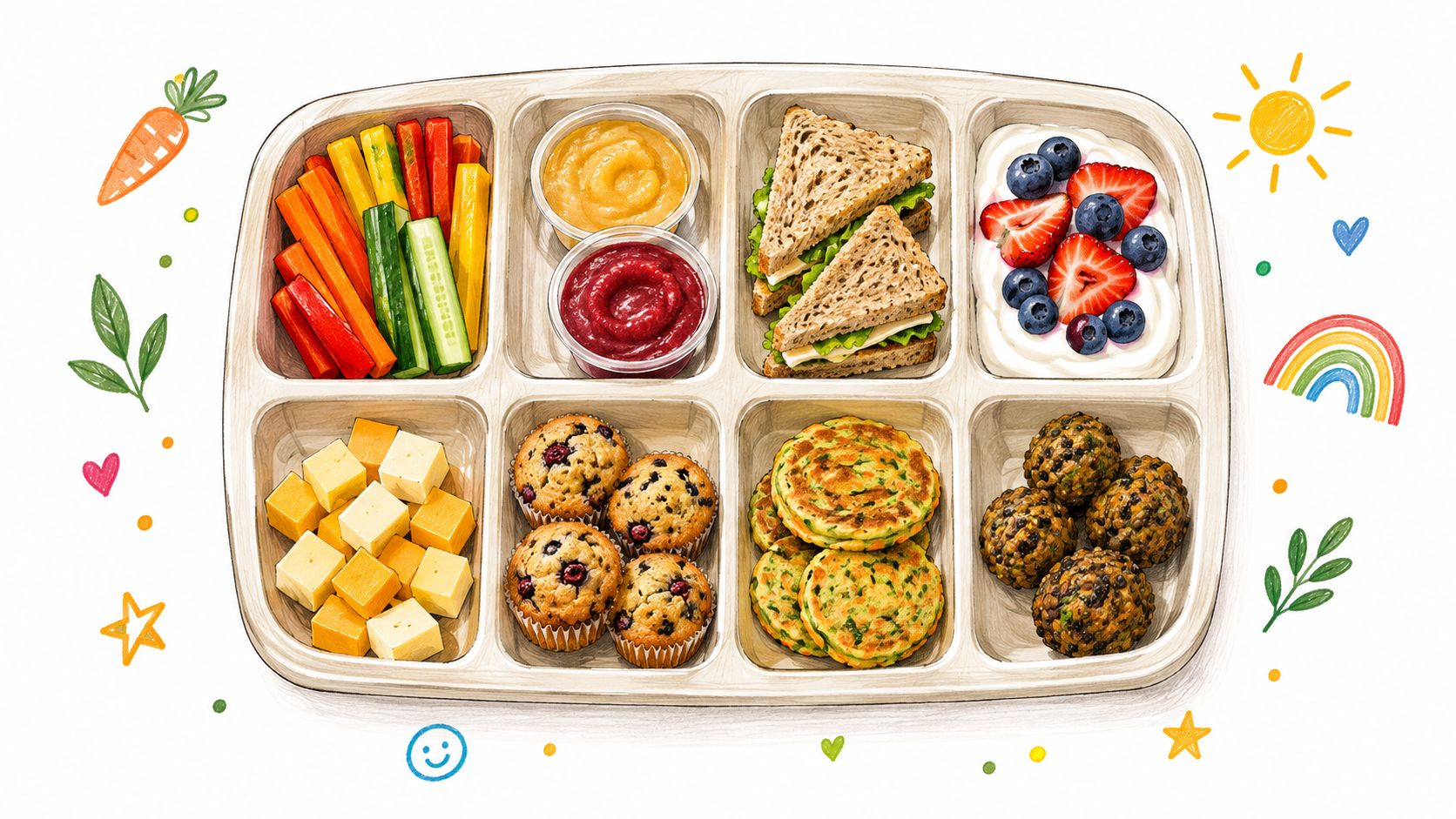
A colourful lunch can hide a weak policy. Read the full menu cycle first, then test whether it explains what children receive across the day and at different stages of development.
Check for:
- Starchy carbohydrates such as bread, rice, pasta, potatoes or other suitable choices.
- Protein foods, including beans, pulses, eggs, fish, meat or suitable alternatives.
- Fruit and vegetables offered in varied forms and colours.
- Dairy foods or suitable fortified alternatives.
- Wholegrains where appropriate.
- Oily fish at least two portions per week, a recommendation that UK early-years reviews found nurseries often missed (Nourishing Our Future review).
Then trace a typical nursery day. A child may have breakfast, lunch, tea and several snacks, so the policy should assess the combined intake rather than treating every dish separately. It should also show how portions and textures change for babies, toddlers and preschoolers. For babies, look for clear decisions about blended, mashed, chopped, grated and finger foods. For older children, check whether the menu develops chewing skills without relying on the same soft meals.
Look for energy, not just restriction
Healthy food must provide enough energy and nutrients for growth. A sound menu includes filling starchy foods, protein, fruit and vegetables, dairy or suitable alternatives and water, while limiting added sugar and salt.
The menu should name main ingredients and record substitutions. It should identify texture, portion guidance and any changes for individual children. If it only lists dishes such as “vegetable pasta” or “fish pie”, ask what ingredients, texture and portion a child receives in practice.
A strong menu gives parents enough evidence to judge balance without guessing what “healthy” means.
Allergens, Cross-Contact and Natasha's Law
Allergy management must be a documented safety system. It shouldn't depend on one experienced practitioner remembering a child's needs during a busy lunch.
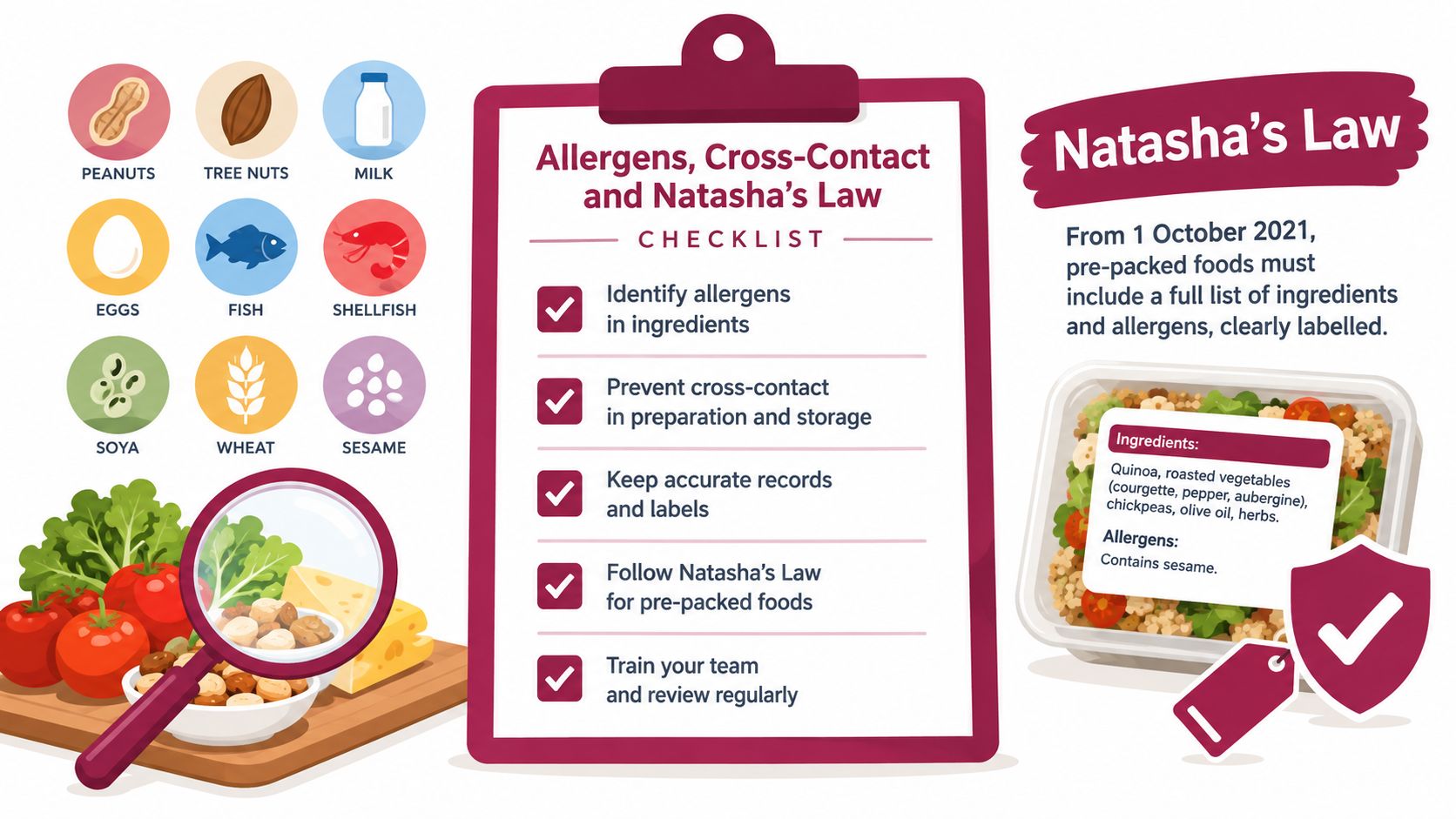
UK food law recognises 14 regulated allergens: celery, cereals containing gluten, crustaceans, eggs, fish, lupin, milk, molluscs, mustard, peanuts, sesame, soybeans, sulphur dioxide and sulphites above 10 parts per million, and tree nuts. The Food Standards Agency's allergen advice explains the information businesses must provide.
A nursery should keep a child-specific register containing the diagnosed allergen, symptoms, emergency medication, authorised responders and parent updates. Staff should know where the information is stored and how it is communicated to anyone preparing, serving or supervising food.
Cross-contact controls should include:
- Ingredient checks: Recipes and purchased products are checked against all regulated allergens.
- Separate handling: Labelled storage and dedicated utensils are used where necessary.
- Cleaning controls: Staff wash hands and clean preparation and serving areas properly.
- Final verification: Someone checks the child's meal before it is served.
- Substitution records: Changes are documented and shared with parents.
- Home-food checks: Food brought from home is assessed for allergen risks.
What Natasha's Law changes
Since 1 October 2021, Natasha's Law has applied to pre-packed-for-direct-sale food, including food prepared and packaged on site before a child selects or receives it. The food must carry its name, a complete ingredients list and clear emphasis of any regulated allergens (guidance for schools, colleges and nurseries.
Ask to see the labelling process for prepared snack pots, packaged meals or picnic-style items. A verbal explanation alone isn't enough where the rules apply.
Babies, Weaning and the Under-Twos
Babies need more than a smaller preschool menu. A setting caring for children from three months should have a separate feeding process covering breast milk, formula, weaning, textures, choking risks and parental instructions.
The policy should explain how expressed breast milk and formula are labelled, stored, prepared and given to the correct child. Feeding records should capture breast milk, formula, new foods introduced and the parent's instructions. Children under six months shouldn't be given cow's milk, eggs, wheat or gluten foods, nuts, peanuts or peanut products under the cited early-years food-safety guidance (DfE early-years nutrition guidance.
Texture should change deliberately
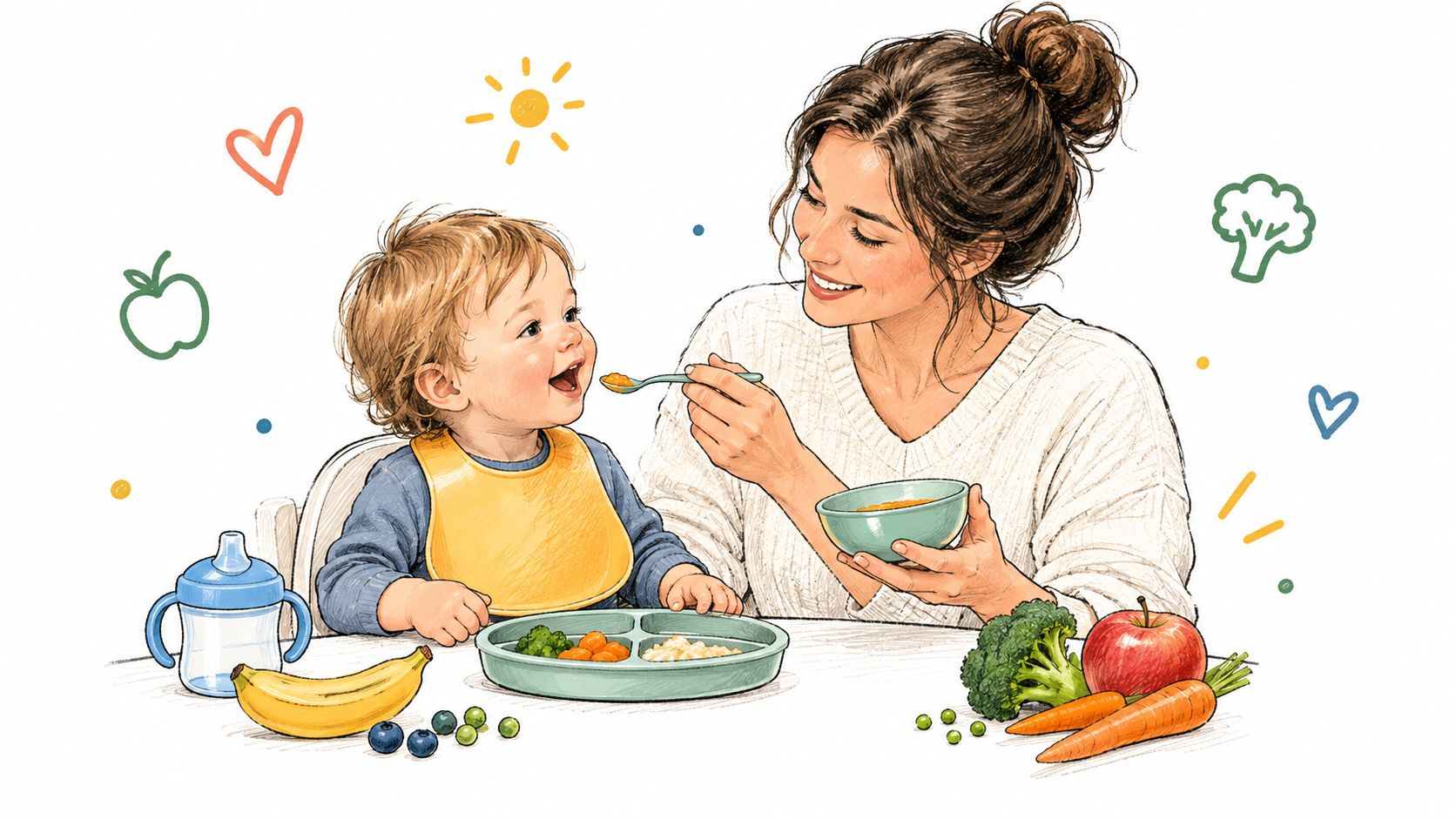
A well-built policy describes progression from smooth or mashed foods towards thicker textures, soft finger foods and family-style meals, according to the child's stage and parental guidance. Staff should explain how they reduce choking risks through preparation, supervision and suitable foods, rather than relying on a generic “weaning menu”.
Ask how the nursery records a child's feeding plan and how it manages new foods. You can also use this guide to food and nutrition for fussy eaters when discussing gradual exposure and consistent routines with staff.
The policy should respect breast milk, formula and family preferences without compromising safety. It should also explain how substitutions preserve energy and nutrients for children with allergies, religious dietary requirements or cultural preferences.
Mealtime Routines and the Wider Mealtime Environment
Food policy affects children's relationships with eating, not just the ingredients on the plate. NICE guidance recommends regular healthy meals and snacks in a pleasant, inclusive environment, with supervised mealtimes, enough time to eat and attention to individual dietary needs, cultural preferences and beliefs.
A good routine allows children to sit safely, talk with adults and peers, practise using cutlery and develop self-feeding skills. Staff should support independence without turning lunch into a test of obedience. Slow eaters need time, and children shouldn't be pressured to clear their plates.
Food shouldn't be used as a reward or punishment. A policy should say this plainly, because promises such as “one more mouthful and then you can play” can make children associate eating with adult approval rather than hunger and enjoyment.
The setting should also explain how it creates appealing alternatives for vegetarian, religious and culturally adapted diets. An alternative that is technically compliant but visibly less attractive or filling isn't genuinely inclusive.
Parents can ask whether mealtimes are sociable, whether children may respond to their own hunger and fullness cues, and how staff talk about unfamiliar food. Practical ideas for age-appropriate routines may also appear in resources about EYFS healthy eating activities.
How to Spot Whether a Policy Is Truly Implemented
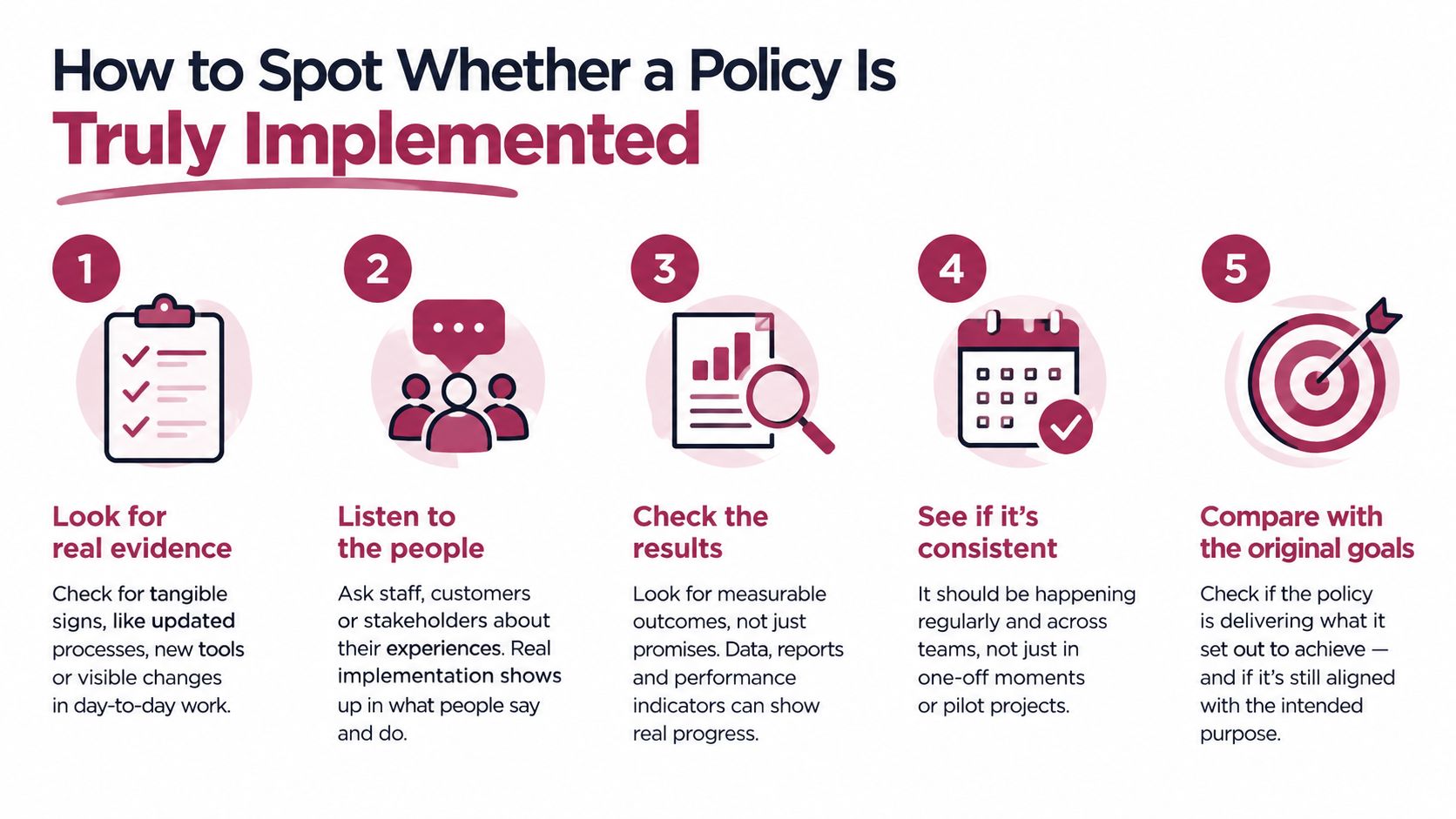
A polished policy proves little if staff cannot show how it guides today's lunch, snack and allergy decisions. Parents should audit the evidence in the room, not accept paperwork at face value. A 2025 Food Foundation survey found that 81% of early-years settings reported having a food policy, but only 41% said it was informed by Eat Better, Start Better guidance (Food Foundation early-years report).
Other UK research found wide variation in whether settings had a written policy. As noted earlier, reported figures ranged from 13% to 17% in some studies and from 68% to 77% in others. Fruit and vegetables were commonly provided, while oily-fish recommendations were often missed. The research also reported that only 17% of settings had a commercial kitchen. Parents provided 41% of food overall, rising to 70% in preschools.
The practical test is whether staff can explain the decisions behind the menu.
Ask to see evidence
Use a nursery visit to check how written commitments operate each day:
- Request the current menu. Confirm that it is the cycle children are eating now, not a polished example.
- Ask about substitutions. Who approves changes, and how are families told?
- Check allergy procedures. Ask how staff record child-specific information, confirm ingredients and verify each meal before serving.
- Ask about water. Find out how children access drinking water throughout the day.
- Ask about meal decisions. How are staff handling a missed oily-fish serving, a changed texture for a baby or an alternative meal for a child with an allergy?
- Ask for implementation records. Look for staff training, menu changes, incident reviews and parent feedback, rather than broad promises.
A nursery that can show dated menus, clear substitution records and consistent staff answers is giving you usable evidence. If the manager can only repeat “healthy and nutritious,” the policy has not been demonstrated.
Before choosing childcare, use this guide to choosing a nursery alongside your food-policy questions. Food is one part of the decision, but it reveals how carefully a setting turns written commitments into daily care.
A Parent Checklist for Reviewing Any Nursery Food Policy
Take these questions to a visit or use them while reading the setting's policy:
- Menu: Is there a written cycle of at least one week, with balanced meals and snacks across the child's full day?
- Variety: Are fruit, vegetables, pulses, wholegrains, protein foods, dairy or alternatives and oily fish included?
- Babies: How are breast milk, formula, new foods, textures and feeding instructions recorded?
- Allergens: Is there a child-specific register, ingredient checking, cross-contact procedure and emergency response plan?
- Labelling: Are pre-packed-for-direct-sale foods labelled correctly under Natasha's Law?
- Water: Is drinking water freely available, and how are bottles identified and cleaned?
- Packed lunches: What foods are allowed, how are lunches stored and how are allergy risks checked?
- Mealtimes: Are children supervised, given enough time and supported without pressure or food-based rewards?
- Inclusion: How are religious, cultural, vegetarian and medically required alternatives planned?
- Review: When was the policy last reviewed against current DfE nutrition guidance, and how is parent feedback recorded?
A manager who can answer these questions clearly is showing you how the policy works. A manager who can only point to the phrase “healthy and nutritious” hasn't given you enough evidence.
A Sample Nursery Food Policy You Can Use
Purpose: The setting provides food and drink that support children's growth, learning, safety and positive relationships with eating. The policy applies to meals, snacks, drinks, packed lunches, food brought from home and baby feeding.
Menu planning: A written menu cycle of at least one week covers the full attendance day. It includes starchy carbohydrates, protein foods, fruit, vegetables, dairy or suitable alternatives, wholegrains where appropriate and oily fish. Menus provide sufficient energy and nutrient density for young children and limit added sugar and salt.
Snacks and drinks: Snacks include suitable nutritious choices. Drinking water is freely available. Staff label, store and clean bottles safely, and follow each baby's feeding instructions.
Allergens and dietary needs: Parents provide information about allergies, intolerances, medical diets, religious requirements and cultural preferences before attendance. Staff maintain a child-specific record, check recipes and ingredients against the 14 regulated allergens, prevent cross-contact and document substitutions. Emergency medication and action plans are accessible to authorised staff.
Packed lunches: Food from home is labelled, stored safely and checked for allergy risks. Pre-packed-for-direct-sale food prepared on site carries the required name, ingredients list and allergen emphasis where Natasha's Law applies.
Mealtimes: Children eat in a pleasant, sociable and supervised environment. Staff allow enough time, support self-feeding and don't pressure children to finish. Food isn't used as a reward or punishment.
Babies and review: Staff record breast milk, formula, new foods, textures and parental instructions. The manager approves menus, records staff training, reviews the policy against current DfE guidance and considers parent feedback during each policy review.
Bringing It All Together for Your Family
A strong nursery food policy gives you something more useful than reassurance. It gives you evidence.
Check the four building blocks, meals, snacks, drinks and packed lunches. Then ask four direct questions: What does my child eat across the day? How are allergens managed? Can children access water freely? What happens to food brought from home?
Families in Northwood, Pinner and beyond shouldn't have to rely on a brochure sentence. Ask to read the policy, compare it with the current menu and request clear examples of how staff manage substitutions, baby feeding and mealtimes. Visiting a local nursery and asking these questions is a sensible way to decide whether its promises match everyday practice.
Happy Tree Academy provides balanced meal and snack menus, with fresh fruit and water available throughout the day, and adapts food and snacks to individual dietary needs. To discuss how the setting approaches nursery food and early-years care, visit Happy Tree Academy and arrange a visit.