
Welcome, parents and carers of Northwood and Pinner! Finding engaging and beneficial creative activities for toddlers can feel like a constant quest. Fostering your little one's imagination is about more than just keeping them occupied; it's about building foundational skills through joyful, play-based learning. Creative expression helps toddlers understand their world, develop crucial motor skills, and build emotional resilience.
This guide is designed for busy families, offering a comprehensive roundup of 30-50 simple yet powerful activities. Each idea is tailored for UK toddlers, with specific adaptations for babies (3-24 months) and young children (2-5 years). We provide everything you need to get started:
Short, simple materials lists.
Easy-to-follow, step-by-step guidance.
Key developmental benefits and safety tips.
Age-appropriate adaptations for every stage.
This article is your go-to resource for turning everyday moments into extraordinary opportunities for growth. Let's explore how you can nurture your child's natural curiosity and set them on a path of lifelong discovery.
1. Sensory Play with Natural Materials
Sensory play with natural materials is a cornerstone of early childhood development, offering a rich, multi-sensory experience that is both fun and foundational. This approach involves letting toddlers safely explore materials found in nature, such as water, sand, soil, leaves, stones, and bark. It’s one of the most effective creative activities for toddlers because it directly engages their sight, sound, smell, and touch, helping them make sense of the world around them.
Inspired by the Forest School and Reggio Emilia philosophies, this type of play encourages curiosity and unstructured exploration. By handling different textures—the roughness of bark, the smoothness of a pebble, the coolness of mud—children develop crucial fine motor skills, hand-eye coordination, and an early understanding of scientific concepts like weight, texture, and temperature.
How to Get Started
Setting up is simple and can be adapted to any space, indoors or out. A dedicated "messy play" area is ideal.
Materials: A shallow tray or builder's tuff spot, natural items (leaves, pebbles, twigs, sand), water, and simple tools like scoops, pots, and funnels.
Simple Steps:
Fill your container with a primary material, like sand or water.
Add a few other natural elements, such as pinecones or smooth stones.
Provide simple tools and allow your child to lead the exploration. Let them scoop, pour, mix, and build without instructions.
Safety Tip: Always supervise your toddler, especially those under two, to ensure small items don't become choking hazards. Check all natural materials for sharp edges.
2. Finger Painting and Mess-Free Art
Finger painting is a classic creative activity for toddlers that allows them to explore colour, texture, and self-expression in a wonderfully direct way. It enables children to connect with the artistic process through touch, developing fine motor skills and hand-eye coordination as they squish, spread, and mix paints. For parents concerned about mess, innovative alternatives provide all the sensory benefits without the cleanup.

Embraced by play-based learning approaches like the Montessori philosophy, this activity places the focus on sensory exploration. Whether it’s feeling the cool, smooth texture of paint or seeing new colours emerge from mixing, finger painting helps toddlers understand cause and effect. It’s also a fantastic emotional outlet, giving them a healthy way to express feelings before they have the words to do so.
How to Get Started
Setting this up can be as simple or as contained as you like, making it perfect for a quick afternoon project or a more involved art session.
Materials: Washable, non-toxic toddler paint, large sheets of paper (or a roll), an apron or old clothes, and a shallow tray. For mess-free versions, you'll need sealable plastic bags or contact paper.
Simple Steps:
Secure a large piece of paper to a table or the floor. Squeeze small blobs of one or two colours onto the paper or into a shallow tray.
For a mess-free option, squeeze paint into a zip-lock bag, seal it tightly (using tape for extra security), and tape it to a highchair tray or window.
Encourage your child to use their hands and fingers to move the paint around. Let them discover how the colours mix and what patterns they can make.
Safety Tip: Always use paints certified as non-toxic and child-safe. Supervise closely to prevent paint from ending up in your toddler’s mouth, or consider using edible paint made from yoghurt and food colouring for very young children.
3. Music and Movement Sessions
Structured and unstructured music and movement sessions are fantastic creative activities for toddlers, helping them develop rhythm, coordination, and emotional expression. This approach combines listening, singing, dancing, and exploring simple percussion instruments. It is a joyful way to support gross motor development, language acquisition, and social-emotional learning for all early years age groups.

Popularised by programmes like Music Together UK and embedded within the Early Years Foundation Stage (EYFS) framework, music and movement taps into a child’s natural inclination to respond to sound. Whether swaying to a gentle lullaby or stomping to an upbeat song, toddlers are learning to control their bodies, recognise patterns, and connect with others. This makes it a powerful tool for both energising and calming young children throughout the day.
How to Get Started
Creating a lively music session requires very few resources and can be done anywhere. The key is participation and creating a fun, pressure-free atmosphere.
Materials: A speaker for music, a selection of child-safe percussion instruments (bells, shakers, small drums), and colourful scarves or ribbons.
Simple Steps:
Choose a few familiar, high-energy action songs, like 'If You're Happy and You Know It'.
Model the actions with big, expressive movements and encourage your toddler to join in.
Introduce instruments and let them play along, or use scarves to "paint" in the air as the music plays.
End with a calming song or lullaby to help your child wind down.
Safety Tip: Keep sessions short (5-10 minutes) to match toddler attention spans. Always check instruments for small or loose parts.
4. Story Time and Interactive Books
Story time with interactive books is a powerful way to foster a lifelong love of reading and support crucial developmental milestones. This activity goes beyond simply reading words on a page; it’s a shared experience involving animated storytelling, touch-and-feel elements, and lift-the-flap surprises that make stories come alive. As one of the most versatile creative activities for toddlers, it nurtures language skills, emotional intelligence, and imagination.
Popularised by authors like Julia Donaldson and literacy programmes like Bookstart UK, this approach turns reading into an active, multi-sensory event. When children can touch the lion in Dear Zoo or poke their fingers through the holes in The Very Hungry Caterpillar, they connect with the narrative on a physical level. This builds foundational literacy skills, expands vocabulary, and helps children understand complex emotions by seeing them play out in a safe, relatable context.
How to Get Started
Creating an engaging story time is easy and requires minimal preparation. The key is to make it a special, cosy, and interactive moment.
Materials: A selection of age-appropriate books (rhyming, sensory, or lift-the-flap), comfortable cushions or a soft rug, and optional props like puppets or toys related to the story.
Simple Steps:
Create a dedicated, quiet reading corner away from distractions.
Choose a book with bright illustrations and repetitive phrases. Let your toddler help pick the story.
Read with expressive voices and animated gestures. Encourage your child to touch the pages, lift the flaps, and join in with recurring words.
Safety Tip: Ensure board books are sturdy and that any small, interactive parts are securely attached to prevent them from becoming choking hazards.
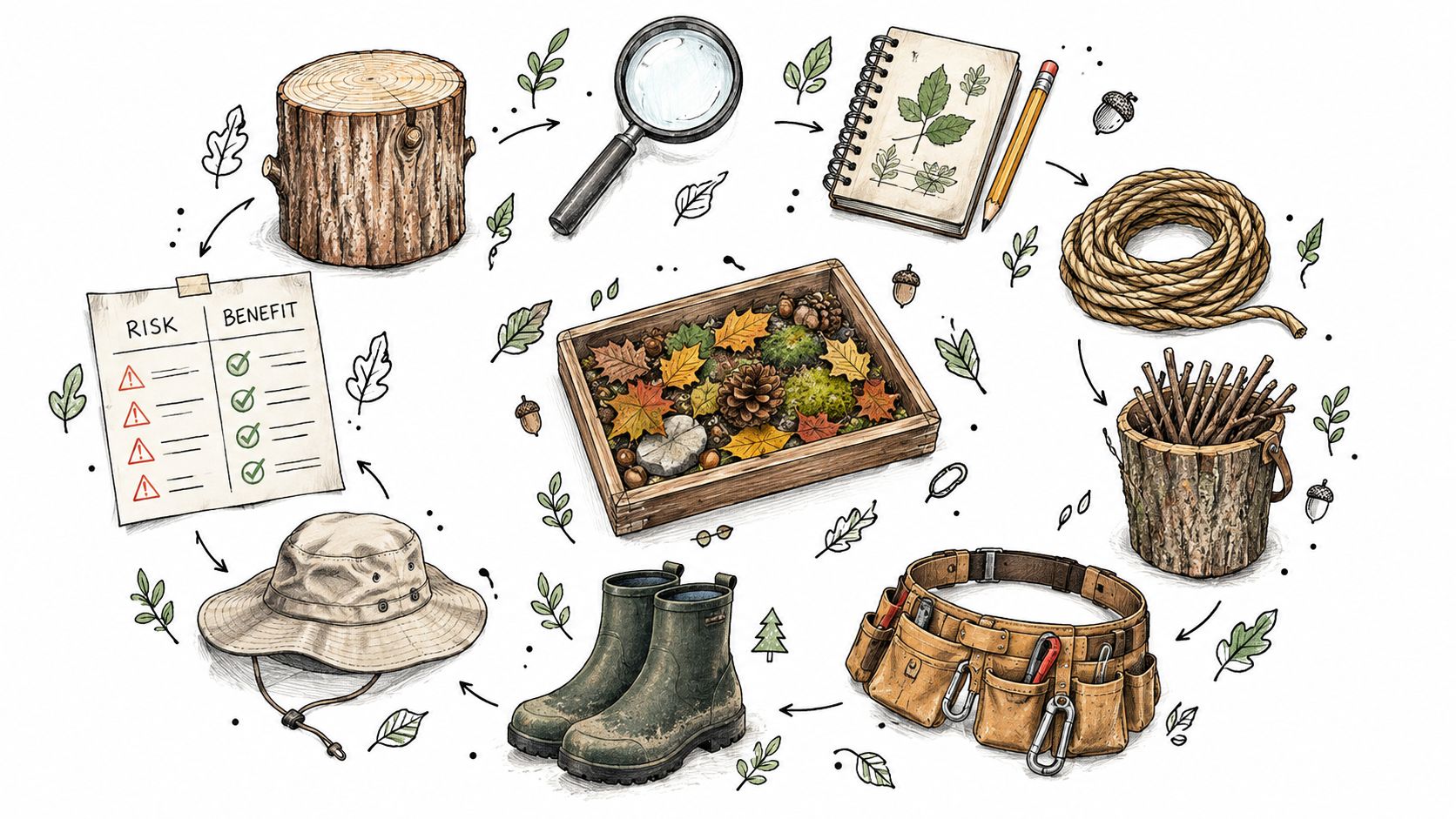
5. Outdoor Exploration and Nature Walks
Outdoor exploration and nature walks are fundamental creative activities for toddlers, offering an ever-changing classroom without walls. This activity involves guiding children through natural environments, encouraging them to investigate, question, and connect with the world. It builds resilience, physical confidence, and a deep-seated respect for nature, forming a core part of the Forest School philosophy.
Inspired by the Scandinavian approach to early years education, getting outdoors in all weathers supports robust development. Activities like bug hunts, building dens with branches, or simply collecting seasonal treasures help toddlers develop gross motor skills as they navigate uneven ground, learn to assess risks safely, and engage their senses with authentic, real-world experiences.
How to Get Started
A nature walk can happen anywhere, from a local park to a proper woodland trail. The key is to focus on the journey, not just the destination.
Materials: All-weather clothing and sturdy footwear, a 'treasure basket' or bag for collecting items, a magnifying glass, and perhaps a simple nature identification sheet.
Simple Steps:
Choose a safe, accessible route. Start with short, familiar paths for younger toddlers.
Set a simple goal, like a seasonal scavenger hunt (e.g., find five different coloured leaves in autumn).
Encourage your child to touch, smell, and observe their surroundings. Talk about the textures of bark, the sound of birds, and the feel of the wind.
Safety Tip: Always dress for the weather and be prepared for mud. Teach children to respect wildlife by observing from a distance and not picking living plants without guidance.
6. Construction and Building Play
Building and construction play is a fundamental creative activity for toddlers that powerfully supports cognitive and physical development. It involves using materials like blocks, cardboard boxes, and recycled items to design and build structures. This open-ended play is crucial for developing spatial awareness, problem-solving skills, and even early mathematical thinking as children explore balance, patterns, and gravity.
Inspired by the educational philosophies of Friedrich Froebel and Maria Montessori, block play encourages children to become little engineers and architects. By manipulating different shapes and sizes, toddlers refine both their fine motor skills (grasping smaller blocks) and gross motor skills (lifting large cardboard boxes). It’s a classic activity that grows with your child, from simple stacking to complex, imaginative creations.
How to Get Started
Creating a dedicated building area invites focussed play and makes tidying up more manageable.
Materials: A set of age-appropriate blocks (soft foam, large wooden, or plastic interlocking), cardboard boxes of various sizes, and recycled materials like tubes and plastic containers.
Simple Steps:
Designate a clear space on the floor as the 'building zone'.
Provide a basket of open-ended building materials without specific instructions.
Encourage exploration by asking open questions like, "How tall can we make it?" or "What can we build for your toys?"
Safety Tip: For children under three, use larger blocks that are not choking hazards. Ensure recycled materials are clean with no sharp edges. Supervise play, especially when building large structures like dens.
7. Cooking and Baking Activities
Inviting toddlers into the kitchen for age-appropriate cooking and baking is a wonderfully creative activity that builds essential life skills and confidence. This hands-on approach involves toddlers in simple culinary tasks like stirring, pouring, and decorating, transforming meal preparation into a fun and educational experience. It’s a powerful way to engage their senses of touch, smell, and taste while introducing foundational concepts in maths and science.
Inspired by the practical life elements of the Montessori philosophy and Jamie Oliver's campaigns to get children cooking, this activity supports fine motor development and hand-eye coordination. By participating in the creation of their own food, toddlers often develop a more positive relationship with eating and are more willing to try new flavours and textures. It helps them build independence and a sense of accomplishment.
How to Get Started
Creating a safe and fun cooking environment is key. Choose simple, no-bake recipes or tasks that focus on assembly rather than heat.
Materials: Child-safe knives, small mixing bowls, spoons, measuring cups, and pre-portioned ingredients. For recipes, think fruit salads, yoghurt parfaits, or decorating pre-made biscuits.
Simple Steps:
Start with hygiene. Always wash hands together before you begin.
Set up a dedicated, safe workspace, like a low table or a sturdy step-stool at the kitchen counter.
Give your child a simple task, such as mashing a banana, stirring a mixture, or arranging fruit pieces on a plate. Let them explore the ingredients through touch and smell.
Safety Tip: Always use child-friendly utensils and maintain constant supervision. Pre-prepare ingredients to minimise your toddler's interaction with sharp tools or hot surfaces. Be mindful of any allergies.
8. Role Play and Imaginative Play Spaces
Role play and imaginative play spaces are fundamental creative activities for toddlers, providing a stage for them to explore social roles, emotions, and real-world scenarios in a safe environment. By creating themed areas like a home corner, a doctor's surgery, or a shop, we invite children to step into another character’s shoes. This practice is crucial for developing language, empathy, and complex problem-solving skills as they negotiate roles and storylines with their peers.
Inspired by the Reggio Emilia approach, which views the environment as the "third teacher," these play spaces are more than just a collection of toys. They are carefully curated areas that encourage children to act out experiences, make sense of their world, and build on their understanding of community and relationships. Whether pretending to cook a meal, care for a "sick" teddy, or run a bustling café, toddlers are practising vital life skills and expanding their imaginative thinking.
How to Get Started
Creating an immersive role-play area can be simple and doesn't require expensive props. The key is to provide a clear theme with open-ended materials.
Materials: A designated corner or space, theme-specific props (e.g., play food and a till for a shop; blankets and toy animals for a vet), open-ended items like cardboard boxes and fabric scraps, and labelled baskets for organisation.
Simple Steps:
Choose a theme based on your child's interests or recent experiences, like a visit to the library.
Set up the space with a few key items. For a doctor's surgery, this could be a small bed, some bandages, and a toy stethoscope.
Introduce the area but allow your child to lead the narrative. You can gently scaffold by asking questions like, "Oh dear, it looks like Teddy has a cough. What should we do?"
Safety Tip: Ensure all props are age-appropriate and free from small parts that could be choking hazards. Regularly check items for wear and tear, especially toy medical kits or kitchen utensils.
9. Collage and Mixed Media Art Projects
Collage offers toddlers a wonderful way to explore composition and texture by combining different materials into a unique piece of art. This activity involves sticking various items, such as paper, fabric scraps, foil, and natural treasures, onto a surface. It is a fantastic creative activity for toddlers because it builds fine motor skills through tearing, cutting, and gluing, while also fostering aesthetic awareness and decision-making.
This method, popularised by artists and embraced in educational approaches like Reggio Emilia, celebrates process over product. Toddlers learn to sort, arrange, and layer materials, expressing their ideas visually. By using recycled items and natural elements, it also introduces early concepts of sustainability and connects directly to explorations in the natural world, turning a simple walk into a treasure hunt for art supplies.
How to Get Started
Setting up a collage station is quick and invites independent creation, making it perfect for a quiet afternoon indoors.
Materials: A base (cardboard, thick paper), child-safe PVA glue or glue sticks, a variety of materials (torn paper, fabric scraps, leaves, buttons, foil), and a tray to keep everything organised.
Simple Steps:
Place the base material on a protected surface.
Arrange the collage items in small pots or on a tray for easy access.
Demonstrate how to apply glue and stick an item down, then let your child take the lead. Encourage them to explore textures and colours freely.
Safety Tip: Always check that small items like buttons or seeds are not a choking risk for children under three. Supervise the use of glue, and only introduce child-safe scissors when you feel your toddler is ready.
10. Sensory Bottles and Calming Bottles
Sensory and calming bottles are sealed containers filled with various materials that create mesmerising visual and auditory stimulation. These self-contained worlds in a bottle are fantastic creative activities for toddlers, providing a safe, mess-free way to explore materials like glitter, water, oil, and beads. They are exceptionally effective tools for helping children self-regulate, focus their attention, and calm down during overwhelming moments.
Popularised by Montessori education and early years communities, these bottles support a wide range of developmental skills. As a toddler turns a bottle over, they are developing visual tracking skills, learning about cause and effect, and even getting an early introduction to scientific principles like viscosity and density. The slow, graceful movement of glitter in a calming bottle can be particularly soothing for an anxious or overstimulated child.
How to Get Started
Creating your own sensory bottles is a simple and rewarding activity you can do with your child. The magic lies in the combination of materials you choose.
Materials: Clear plastic bottles with secure lids, water, glitter, food colouring, baby oil or mineral oil, small items (sequins, beads, googly eyes), and a hot glue gun for sealing.
Simple Steps:
Fill a clean, dry bottle about two-thirds full with your primary liquid (e.g., water or a mix of water and clear glue).
Add your chosen sensory materials: glitter, food colouring, sequins, or small, safe objects.
For a "calming bottle" effect, add oil. The oil and water will separate, causing the glitter and sequins to fall slowly.
Secure the lid tightly. For extra safety, apply hot glue around the inside of the cap before screwing it on permanently.
Safety Tip: Always use sturdy, BPA-free plastic bottles and test for leaks before giving them to your child. Ensure the lid is glued shut to prevent any chance of your toddler opening it and accessing the small contents.
At Happy Tree Academy, we keep a basket of themed sensory bottles in our quiet corner. A favourite is our "Forest Floor" bottle, filled with tiny twigs, biodegradable glitter, and green-tinted water. These are invaluable tools for helping children manage transitions and find a moment of peace.
10-Item Creative Activities Comparison
| Activity | Implementation complexity | Resource requirements | Expected outcomes | Ideal use cases | Key advantages |
|---|---|---|---|---|---|
| Sensory Play with Natural Materials | Low–Medium (setup, ongoing supervision) | Natural materials, trays, tools, storage, outdoor/covered area | Multi-sensory development, fine/gross motor skills, imaginative play | Forest School, outdoor messy play, exploratory sessions | Multi-sensory, low-cost, highly adaptable |
| Finger Painting and Mess-Free Art | Low (simple prep; mess-free needs sealing) | Washable paints, aprons, trays, zip bags/contact paper, display area | Fine motor control, mark-making, creativity, sensory satisfaction | Baby/preschool art time, calming creative sessions, displays | Builds fine motor skills; mess-free options reduce cleanup |
| Music and Movement Sessions | Medium (space, scheduling, facilitation skills) | Instruments, playlists, open space, trained staff | Rhythm, coordination, language development, emotional regulation | Circle time, transitions, mixed-age group activities | Highly engaging; supports language and regulation |
| Story Time and Interactive Books | Low (staff delivery skills important) | Age-appropriate books, cosy reading corner, props/puppets | Vocabulary, early literacy, empathy, attention span | Daily story circles, settling/transition times, literacy focus | High impact at low cost; strengthens adult-child bond |
| Outdoor Exploration and Nature Walks | Medium–High (risk management, ratios) | All-weather clothing, high staff-to-child ratios, first-aid, transport if needed | Gross motor skills, resilience, curiosity, environmental awareness | Forest School sessions, seasonal hunts, large-group outings | Holistic physical and emotional benefits; cost-effective |
| Construction and Building Play | Medium (space, storage, safety measures) | Blocks, recycled materials, storage, designated building zone | Spatial reasoning, problem-solving, motor skills, collaboration | Free play, group projects, introductory STEM activities | Adaptable to ages; promotes maths and creativity |
| Cooking and Baking Activities | Medium–High (hygiene, allergies, safety) | Child-safe tools, ingredients, kitchen space, close supervision | Life skills, measuring/counting, sensory awareness, independence | Nutrition education, sensory sessions, cultural food exploration | Teaches practical skills and healthy eating habits |
| Role Play and Imaginative Play Spaces | Medium–High (planning, resourcing, rotation) | Themed props, furniture, varied materials, storage | Social-emotional skills, language, empathy, imaginative thinking | Home corner, café/shop role play, social skills development | Rich social learning; easily linked to real-life contexts |
| Collage and Mixed Media Art Projects | Low–Medium (material prep, supervision) | Recycled/natural scraps, adhesives, scissors, trays, display space | Fine motor skills, creativity, aesthetic awareness, reuse ethos | Art sessions, Forest School follow-ups, group murals | Eco-friendly, inclusive, produces displayable work |
| Sensory Bottles and Calming Bottles | Low (prep and secure sealing critical) | Plastic bottles, fillers (water, oil, beads), sealant, labels | Self-regulation, visual tracking, calming during transitions | Quiet corners, calming strategies, waiting/transition times | Low-mess, durable calming tool; highly customisable |
Bringing Creative Play to Life, Every Day
As we’ve explored, the world of creative activities for toddlers is rich, wonderfully messy, and absolutely essential for their development. From the tactile joy of finger painting to the focused calm of building a block tower, each activity is more than just a way to pass the time; it is a fundamental building block for a curious, confident, and capable little person. You don’t need a perfectly organised craft cupboard or hours of free time to make a meaningful impact. The true magic lies in the small, consistent moments of shared discovery.
The key takeaway from our extensive list is that creativity is not about the end product, but the process. It’s about your toddler squishing playdough between their fingers, discovering that red and yellow paint make orange, or listening intently to the sounds of birds on a nature walk. These experiences are the very foundation of scientific thinking, problem-solving, and emotional expression. By providing these simple opportunities, you are giving your child the tools they need to understand their world.
Making Creative Play a Sustainable Habit
Integrating these ideas into your daily routine might seem daunting, especially with a busy schedule. The goal is not to do everything at once, but to find what works for your family and build from there.
Start Small: Choose one or two activities from our list that genuinely excite you and your toddler. Perhaps it’s a five-minute “kitchen band” session with pots and pans while you make dinner, or a weekend ritual of collecting leaves for a collage.
Embrace the 'Imperfect': Let go of the need for Pinterest-perfect results. A lopsided tower, a brownish painting, or a wobbly sensory bottle are all signs of a successful, child-led exploration. The learning is in the doing, not the final appearance.
Follow Their Lead: The most impactful creative activities for toddlers are those driven by their own curiosity. If your child is fascinated by pouring water, lean into water play. If they love making noises, explore different musical instruments or sound-makers. Their interests are your greatest guide.
“Every child is an artist. The problem is how to remain an artist once we grow up.” – Pablo Picasso
This sentiment is at the heart of early years creativity. Our role as parents and carers is simply to protect and nurture that innate artistic spirit, providing the space, materials, and encouragement for it to flourish without judgement. By doing so, we are not just teaching them to paint or build; we are teaching them to be innovative thinkers, resilient problem-solvers, and expressive individuals. These skills are the true, lasting benefits of a childhood filled with creative play. The confidence they gain from seeing their own ideas take shape will support them long after the finger paints are washed away.
At Happy Tree Academy, we live and breathe this philosophy every day. Our Northwood nursery is designed to be a haven for creative exploration, where play-based learning helps children build essential skills in a nurturing environment. If you want to see how we bring these creative activities for toddlers to life in our purpose-built setting and unique Forest School, we invite you to book a visit and discover the Happy Tree difference for yourself.