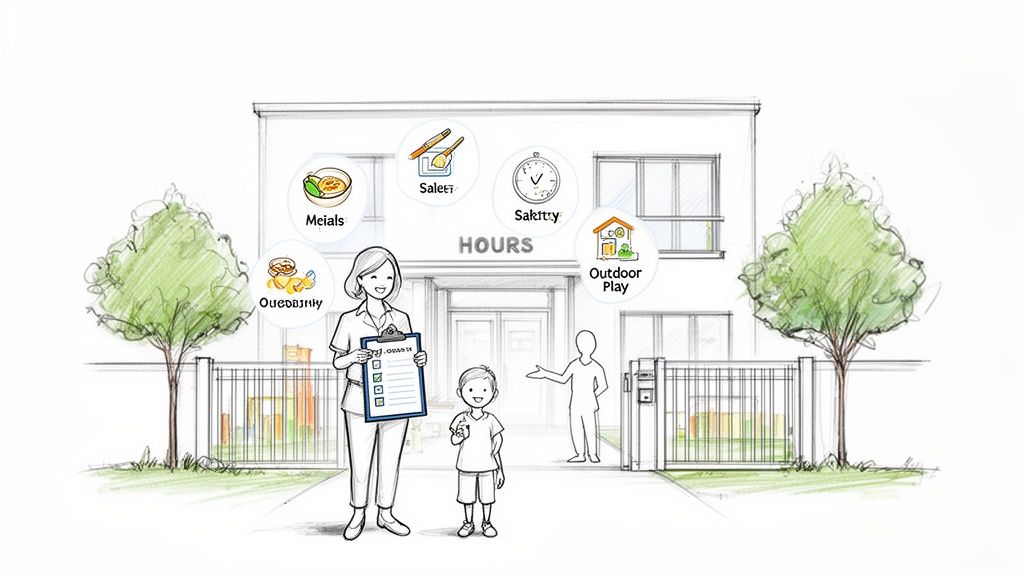

Finding the right nursery can feel like a monumental task. The secret isn’t to visit every single one, but to first figure out exactly what your family needs. Before you even start your search, take some time to map out your non-negotiables on things like location, hours, and budget.
This simple bit of prep work can turn an overwhelming trawl through websites into a focused, manageable project. It’s the best way to find a place where your child won’t just be looked after, but will genuinely flourish.
Defining Your Family’s Nursery Needs
Before you fall down a rabbit hole of Ofsted reports and online reviews, pause and think. What do you actually need? The nursery that’s perfect for your friend’s child might be completely wrong for you. Getting this clarity first is the single most effective thing you can do.
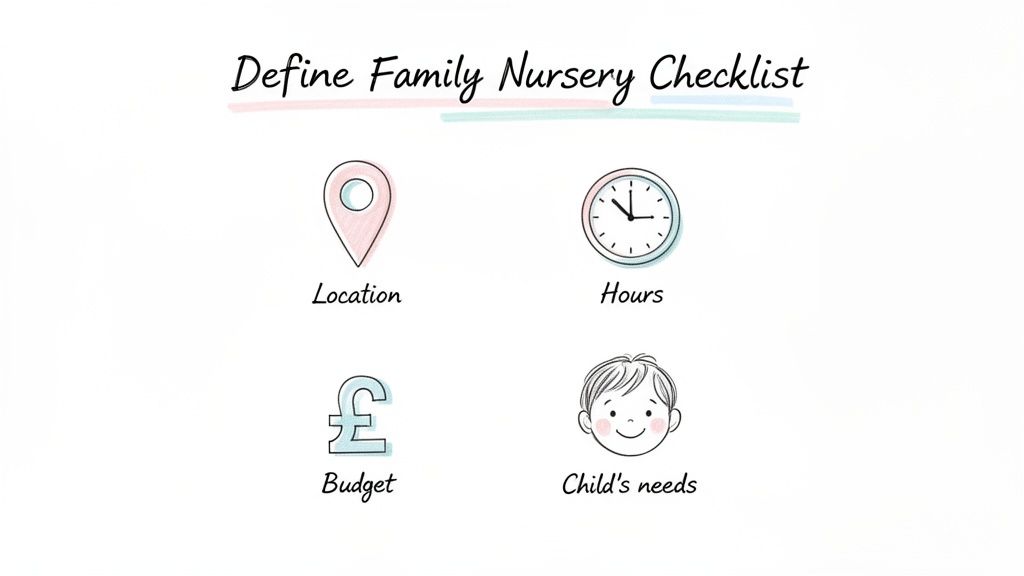
Think of this as creating your family’s personal nursery “must-have” list. It’s not about finding the one just yet, but about building a realistic shortlist. That way, you only spend your time and energy visiting settings that are serious contenders.
The Practicalities First
Let’s start with the logistics. These are the nuts and bolts of your week and are often the make-or-break factors that will instantly rule some nurseries in or out.
-
Location, Location, Location: Would a nursery near home make drop-offs easier on your days off? Or would one near the office slash your commute time? Get Google Maps out and trace your daily journeys to see what makes the most sense.
-
Operating Hours: Look closely at their opening and closing times. If a nursery shuts its doors at 6 pm sharp but your train is scheduled to arrive at 5:55 pm, you’re leaving zero room for the inevitable delays. Be brutally honest about the hours you need.
-
Your Budget and Funding: Nursery fees are a huge household expense, so you need a clear budget. Look into your eligibility for government help, like the 15 and 30-hour funded childcare schemes. Many nurseries in the Northwood and Pinner area accept this funding, which can significantly reduce your monthly bill. Also, don’t forget to ask if they take childcare vouchers or are part of the tax-free childcare scheme.
Considering Your Child’s Personality
Once the practicalities are sorted, the most important piece of the puzzle is your child. What is their temperament like? What kind of environment will help them feel safe, happy, and confident?
Trust what you already know about your child. A boisterous, sociable toddler might thrive in a big, busy setting, while a quieter, more sensitive little one might feel much more at home in a smaller nursery with a calmer feel.
Is your child a mini-explorer who’s happiest covered in mud? Then a nursery with a big garden or a Forest School focus would be a dream. Or are they more methodical, loving quiet corners and focused play? A calm, structured atmosphere might suit them better.
If you’re still weighing up when to make this move, you might find our article on when is the right time to start nursery a helpful read. Ultimately, matching the setting to their personality is the key to a smooth and happy start.
What to Look for During a Nursery Tour
A glossy brochure and a slick website can only tell you so much. The nursery tour is your chance to step behind the marketing and get a genuine feel for the place. This is where you see if the day-to-day reality lives up to the promises, so it pays to go in with your eyes wide open.
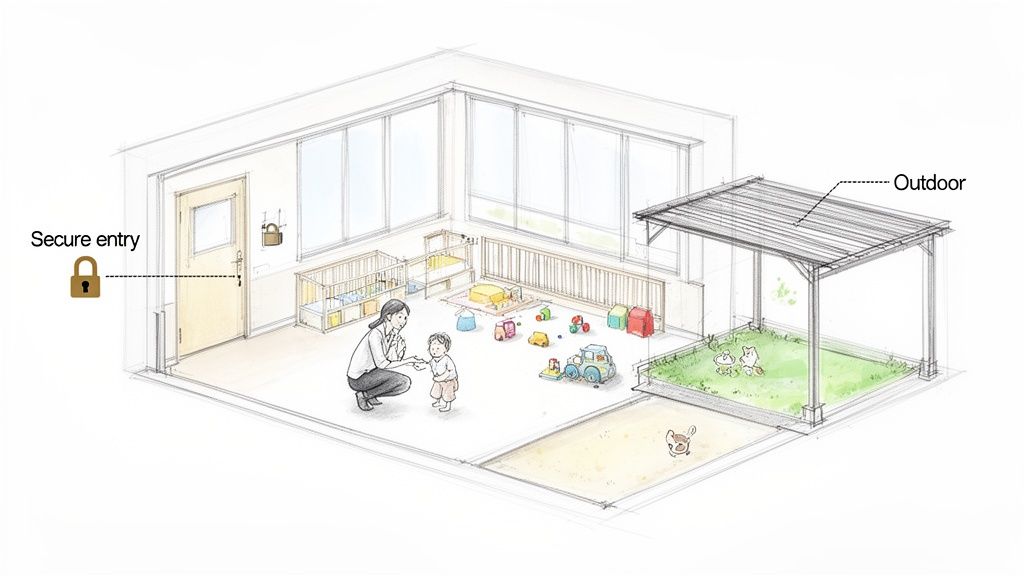
First impressions really do count. From the moment you walk in, trust your instincts. Is the entrance secure and well-managed? You should see systems like keypads or intercoms that make you feel confident about safety.
Beyond that, tune into the atmosphere. A great nursery has a happy, purposeful buzz. It should feel clean, bright, and well-cared-for, but also look like children actually play there! A bit of creative mess is a good sign; a sterile, showroom-like environment is not.
How Staff and Children Interact
The quality of any nursery ultimately comes down to its people. During your visit, try to be a fly on the wall and just watch how the practitioners engage with the children. Their interactions will tell you almost everything you need to know.
Are the staff members warm and attentive? Look for educators getting down on the children’s level, making eye contact, and really listening. This simple act shows they respect the children as individuals with their own thoughts and feelings.
You should see genuine, happy connections. Do children seem comfortable approaching staff for a cuddle or help with a tricky toy? This bond is the heart of the ‘key person’ system, which is fundamental to helping your little one feel safe and settle in.
A key green flag is seeing staff responding to children with patience and kindness, not just managing them. Look for laughter, gentle guidance, and people who seem genuinely happy to be there. Low staff morale is something you can feel, even on a short visit.
If you can’t get there in person straight away, many nurseries now offer a peek inside remotely. For example, you can get a great feel for a setting’s layout and resources by checking out a virtual tour of the facilities online before you book a physical visit.
Evaluating the Environment and Resources
Next, turn your attention to the physical space. It’s not about having the flashiest, most expensive toys. What matters is a rich and thoughtfully prepared environment that sparks curiosity and invites play.
Look for a good variety of age-appropriate resources that are easily accessible to the children. Are there well-defined areas for different kinds of play? You should hope to see:
-
A cosy book corner with inviting cushions for quiet time and stories.
-
Creative stations with materials like paint, clay, or collage bits out and ready to use.
-
Small-world play setups (think farm animals or dolls’ houses) to fire up their imagination.
-
Construction zones with different types of blocks for building, problem-solving, and teamwork.
Pay special attention to the outdoor area. It’s absolutely vital for a child’s development. Is it secure, with safe fencing and gates? More importantly, does it look like it gets used for real adventure, whatever the weather? A covered area, a muddy kitchen, or a patch for growing things are all fantastic signs of a nursery that values outdoor learning.
Nursery Visit Observation Checklist
Taking a checklist with you can help you stay focused and make objective comparisons later. Use this as a guide to ensure you don’t miss anything important during the tour.
| Area to Observe | What to Look For (Positive Signs) | Red Flags to Note |
|---|---|---|
| Atmosphere & Welcome | A warm, friendly greeting. A happy, purposeful buzz. You feel welcome. | Staff seem stressed or flustered. The environment feels chaotic or overly quiet/sterile. |
| Staff Interactions | Staff are on the children’s level, making eye contact. They are patient and responsive. | Staff are chatting amongst themselves, ignoring children. They seem disinterested or impatient. |
| Child Behaviour | Children are engaged, happy, and comfortable approaching adults for help or comfort. | Children seem bored, listless, or distressed. High levels of unresolved conflict. |
| Indoor Environment | Clean but looks "lived-in". Well-organised zones for different types of play. Children's artwork is displayed. | Dirty or cluttered spaces. Limited or broken toys. Lack of child-led activities on display. |
| Outdoor Space | Secure and well-maintained. Evidence of all-weather play (e.g., covered area, wellies). Encourages exploration. | Small, barren, or unsafe outdoor area. Looks like it’s rarely used. |
| Safety & Security | Secure entry system. Clean toilets and changing areas. | Unsecured main entrance. Obvious hazards. Poor hygiene standards. |
This checklist isn’t about finding a “perfect” score, but about building a complete picture. Armed with these observations, you can walk away from your tour with the real-world evidence you need to make a confident and informed choice for your family.
Key Questions to Ask the Nursery Manager
The nursery tour gives you a gut feeling for the place, but it’s the sit-down with the manager where you really get into the nuts and bolts. This is your chance to move past the general vibe and understand the policies, people, and philosophies that will shape your child’s day.
Think of it less as a formal interview and more as a conversation. You’re trying to see if their approach truly aligns with what your family needs. While you’ll naturally have questions about fees and notice periods, the most revealing answers come from digging a little deeper. If you’re trying to get your head around funding first, you can learn more about how government funding works and what you’re entitled to.
Understanding the Team and Culture
A nursery is only as good as the people who work there. The team’s happiness, stability, and expertise have a direct and powerful impact on the care your child will receive. Honestly, a settled, well-supported team is one of the biggest green flags you can find.
Don’t feel awkward about asking direct questions. You need to know:
-
What qualifications do your staff hold? You’re hoping to hear that a high proportion of the team holds at least a Level 3 qualification in Early Years, especially those in leadership roles. It shows a real professional commitment to child development.
-
What is your staff turnover rate? This is one of the most telling questions you can ask. A low turnover tells you that staff feel happy and valued. For your child, it means consistency and the chance to form secure, lasting bonds with the adults caring for them.
-
How does the key person system work here? Get specific. How is that bond established? How will your key person communicate with you about your child’s progress and little moments from their day? And who steps in when they’re on holiday?
Daily Routines and Child-Centred Care
A predictable routine helps children feel safe and secure, but it should never be so rigid that it can’t bend for an individual child’s needs. This is especially true when a little one is new or just having an off day.
A huge clue to a nursery’s culture is how they handle settling-in. Ask them to walk you through their process. Is it a strict, one-size-fits-all policy (like “three one-hour visits”), or is it flexible and led by the child’s own pace and comfort?
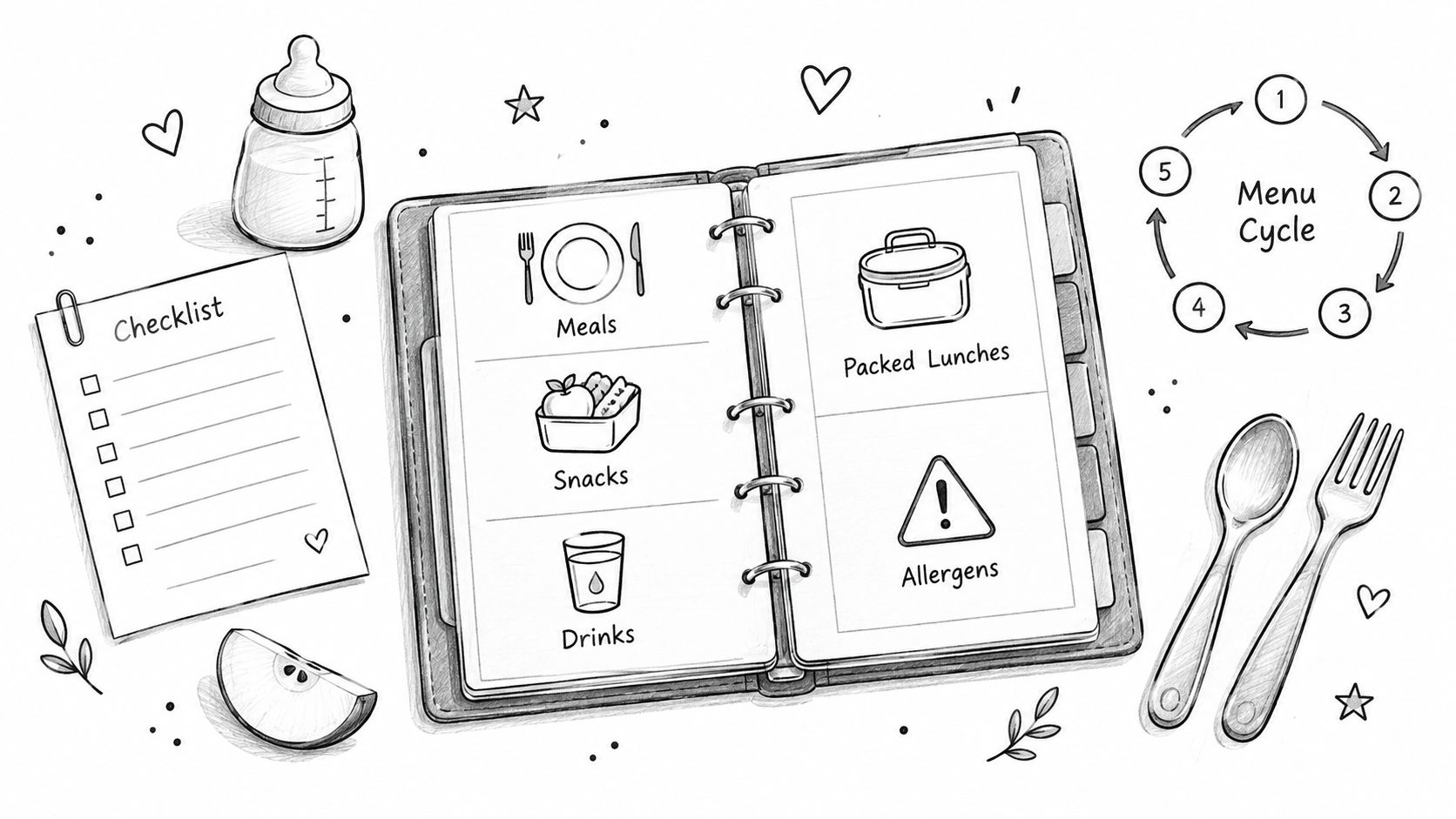
Drill down into what a typical day actually looks like. How are naps handled for different age groups? What are mealtimes like—are they a calm, social occasion? If your child has allergies or specific dietary requirements, this is the moment to get into the details of how they manage safety. You’re listening for a confident, clear explanation of their procedures.
The Educational Philosophy in Practice
Finally, get a sense of their educational ethos. Nearly all UK nurseries follow the Early Years Foundation Stage (EYFS) framework, but how they bring it to life can vary enormously. Is learning entirely play-based, or do they weave in ideas from other philosophies, like Montessori or Reggio Emilia?
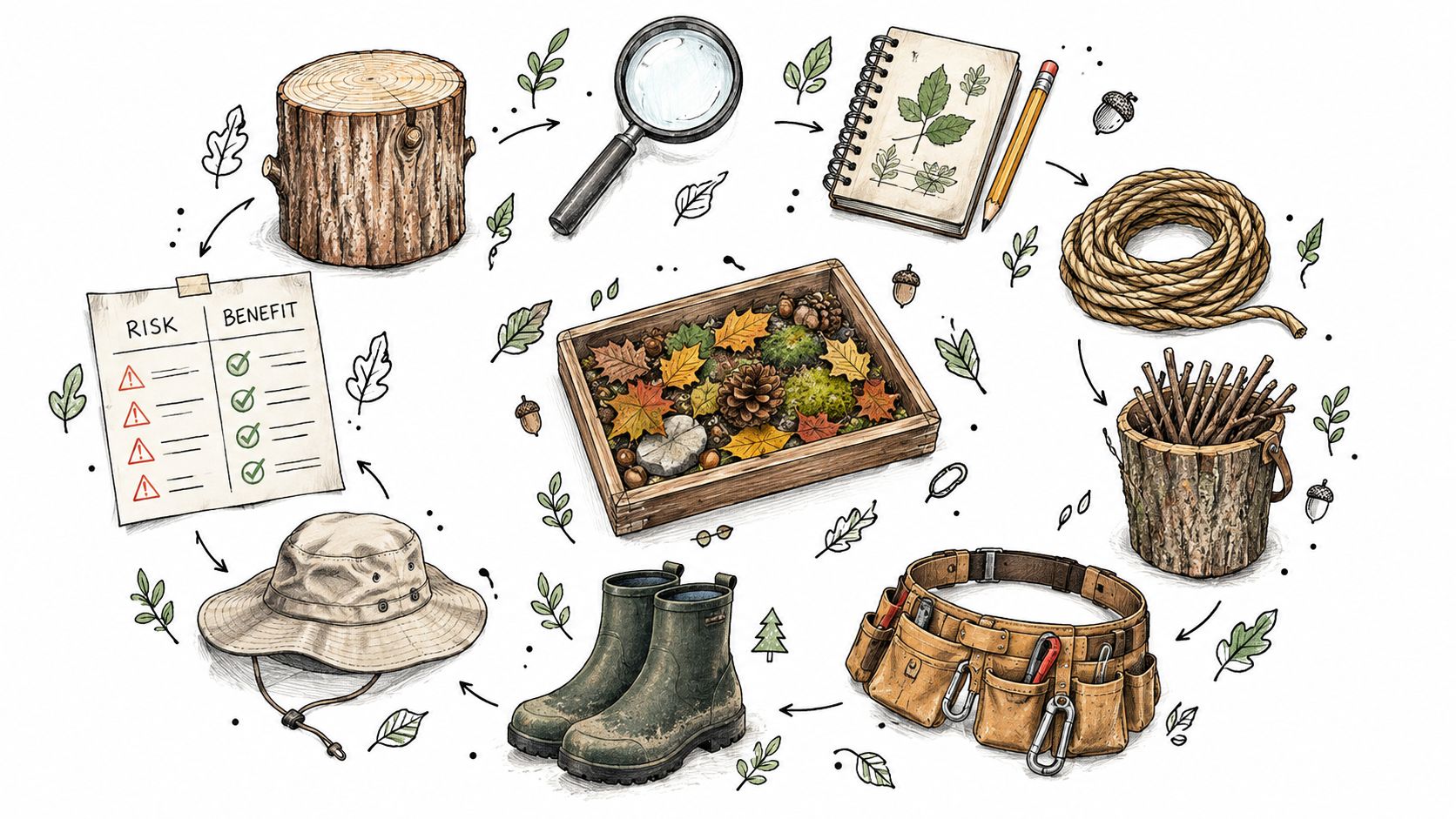
This is also the perfect time to ask about any of their standout features. For instance, at a nursery like Happy Tree Academy, a great question would be, “How does your Forest School site actually work day-to-day?” Find out how often children get to go and what specific benefits the team sees in the children’s confidence and curiosity.
Understanding what they truly value in early education helps you see if their vision for learning is the right fit for your child.
Comparing The Different Types of Childcare
Once you start looking, you’ll quickly find that “nursery” can mean a few different things here in the UK. Getting to grips with the main childcare models is the first real step in figuring out what will work best for your family. Broadly, your choices will fall into three camps: group-based day nurseries, school-based nurseries, and childminders.
Each has its own unique feel. A childminder, for example, offers a cosy, home-from-home environment with just a handful of other children, which can be a wonderful, gentle start for very young babies. On the flip side, a nursery attached to a primary school can be a lifesaver for parents who already have an older child at the school.
Understanding Group-Based Day Nurseries
This is what most of us picture when we think of a nursery. Group-based settings, like private day nurseries, are usually purpose-built spaces with dedicated rooms for different age groups—from a quiet, nurturing baby room right up to a bustling preschool class. One of their biggest draws is the flexibility they offer, with longer hours designed to fit around a typical working day.
The scale and structure of these nurseries are a significant advantage. In fact, official government data from the Childcare and Early Years Provider Survey shows just how central they’ve become. England now has 1,620,800 registered childcare places, with most of this growth coming from group-based providers. They saw a 3% jump to over 1.1 million places, now making up 42% of all settings and offering an average of 51 places each.
This setup also means they have the space and staff to offer a huge range of activities. You’ll often find fantastic, secure gardens and even specialised programmes. Some nurseries, for instance, build unique learning experiences right into the weekly routine. You can learn more about the benefits of a Forest School curriculum to get a sense of how this approach can build incredible confidence and a real love for the outdoors.
No matter which type of setting you visit, some questions are universal. This list gives you a great starting point for what to ask.
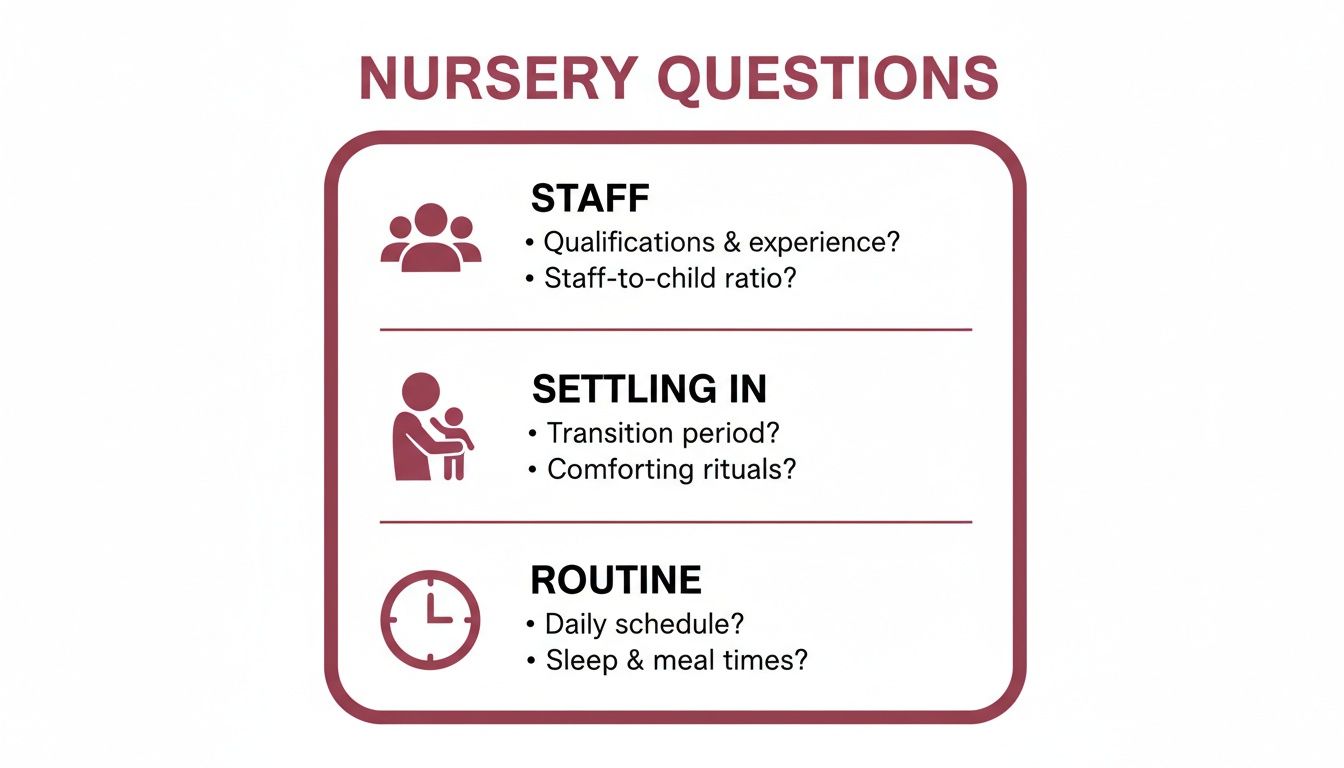
It’s a good reminder that, whatever the size or style of the provider, the quality of the staff, the warmth of the settling-in process, and the rhythm of the daily routine are what truly matter.
The Rise of School-Based Nurseries
Nurseries located on a primary school campus are another common choice. The convenience here is undeniable, creating a single drop-off point and helping to familiarise your little one with the school environment long before they start Reception.
These settings have seen a lot of government investment lately, especially in areas needing more childcare options. While the continuity they provide is excellent, a potential drawback can be their hours, which often follow the standard school day and term times, something that doesn’t always work for every family.
Ultimately, the best way forward is to weigh these different models against your own practical needs, your work schedule, and, most importantly, your child’s personality.
Right, you’ve done the tours. Now comes the hard part: taking all that information and making a decision you feel truly confident about.
It’s time to pull everything together. Start by going back to that original list of must-haves you made at the very beginning—the non-negotiables like opening hours, commute, and cost.
Try creating a simple chart or spreadsheet with your top two or three nurseries. Laying out the practical details side-by-side often makes the best choice for your family’s schedule and budget jump right off the page.
Thinking About the Local Advantage
For those of us in the Northwood and Pinner area, it’s also worth weighing the unique benefits of a truly local nursery. There’s a special feeling you get from a place that’s deeply woven into the community fabric. It’s more than just a short drive; it’s about being part of a place that understands local families.
When you bring all these pieces together – the practicals, the official reports, your own intuition, and any unique local perks – the right path usually becomes clear. You’ll be able to move forward not with doubt, but with the confidence that you’ve found the perfect place for your child to flourish.
Your Top Nursery Questions, Answered
Choosing a nursery can feel like a huge task, and it’s natural to have a long list of questions buzzing around your head. We get asked a lot of the same things by parents just starting their search, so we’ve put together some straightforward answers to the most common queries.
When Should I Start Looking for a Nursery Place?
My best advice? Start looking much earlier than you think you need to. For sought-after areas like Northwood and Pinner, you should really begin your search at least 9-12 months before you need a place. Many of the best nurseries have long waiting lists, especially for their baby rooms.
Starting early isn’t about being pushy; it’s about giving yourself breathing room. It means you’ll have plenty of time to visit a few different settings without feeling rushed and can secure a spot at the nursery that feels just right. If you’re planning your return to work, the second trimester is the perfect time to start shortlisting.
How Important Are Staff Qualifications and Turnover?
Honestly, they are two of the most critical things to consider. Think of it this way: these are the people who will be caring for and shaping your child’s earliest learning experiences. You want them to be knowledgeable, happy, and consistent.
-
Qualifications: Look for a high percentage of staff who hold at least a Level 3 qualification in childcare. This deeper training really shows in the quality of care and the activities they plan.
-
Turnover: Don’t be shy about asking about staff turnover. A low rate is a massive green flag. It points to a happy, well-supported team, which means your child will benefit from consistent care and be able to form those all-important secure attachments.
My Child Is Quite Shy, What Should I Look For?
If you have a more reserved or sensitive little one, the nursery’s atmosphere is paramount. You’re looking for a calm, nurturing space, perhaps with smaller group sizes where a quieter child won’t feel overwhelmed.
On your visit, make a point of watching how the staff interact with all the children, not just the most confident ones. Do they notice the child on the edge of the group and gently invite them to play? A strong key person system is also vital, as this gives your child one specific grown-up to build a trusting bond with.
Most importantly, ask about their settling-in process. A rigid, one-size-fits-all schedule is a red flag. The best nurseries will be flexible and work with you, letting your child take the lead and offering as many settling-in visits as they need to feel safe and happy.
Feeling ready to see a nursery in action? The only way to truly know if a setting is right is to get a feel for it in person. We warmly invite you to visit Happy Tree Academy to tour our bright, nurturing facilities, meet our dedicated team, and learn more about our play-based curriculum and exciting Forest School.
Book your personal tour today and discover what makes our nursery a special place for children to learn, play, and thrive.