
That first day of nursery is a huge milestone, not just for your little one, but for you too. Getting them ready isn’t simply about packing a bag; it’s about gently preparing them for a new and exciting world. The key to a smooth transition is to start early. By weaving the idea of nursery into your conversations and daily life, you can make the change feel natural and even exciting.
Laying the Foundations for a Smooth Start to Nursery
The groundwork for a happy start at nursery is laid weeks, or even months, before the first day. It’s a big step, and a bit of forward-thinking can transform potential nerves into a sense of adventure for everyone.
Building a Positive Mindset
Your child takes their cues from you. If you’re anxious, they will be too. So, the most powerful tool you have is your own positivity. Frame nursery as a fantastic new chapter.
- Talk it up! Chat about all the fun things they’ll get to do. “You’re going to love playing in the garden at nursery,” or “Think of all the new friends you’ll meet!”
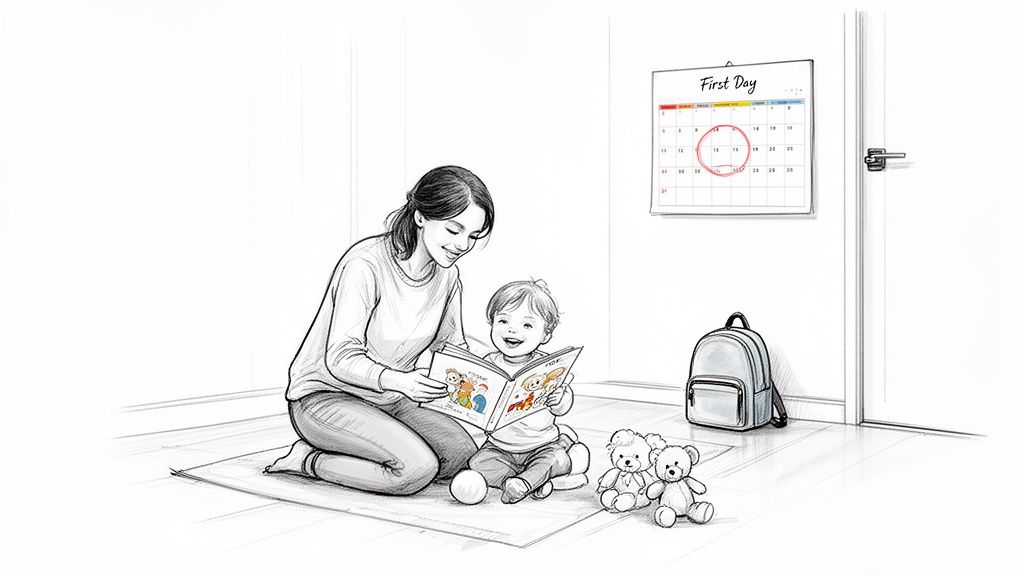
- Share stories. Find some lovely picture books about starting nursery. Reading them together makes the whole concept less abstract and much friendlier. It gives them a visual of what to expect – other children, kind teachers, and lots of toys.
- Focus on the fun specifics. Does your child love painting or building towers? Mention that they’ll get to do lots of that. “Many nurseries have so many colourful paints, just for you!”
The Importance of Organisation
Getting all the practical bits sorted early on does wonders for creating a sense of calm. This isn’t just about forms and fees; it’s about building a predictable routine that your child can rely on during a time of change. When the practical side is handled, you can focus all your energy on emotional support.
A child who feels safe, happy, and excited on their first day is a child who is ready to learn and thrive. That positive start really does set the tone for their entire learning journey.
If you’re still weighing up your options, getting some expert insight on the right time to start nursery can be really helpful. For families in and around Northwood, visiting a nursery beforehand can make a world of difference. It turns the ‘idea’ of nursery into a real, tangible place they can look forward to. Your goal is simply to build a bridge of confidence that helps your child walk happily into their next big adventure.
Your Timeline for Nursery Preparation: An 8-Week Action Plan
Figuring out how to prepare your child for nursery can feel overwhelming. The secret? Break it down. Spreading the preparations over 8 weeks turns one giant hurdle into a series of small, manageable steps, giving both of you time to adjust practically and emotionally.
This approach lets you gently build up to the big day, moving from abstract ideas to concrete actions, ensuring everyone feels confident and ready.
Think of the first few weeks as laying the groundwork. This is your chance to get organised and start making the idea of nursery a normal, positive part of your child’s world.
8 to 6 Weeks Before Starting
This is the time for planning and familiarisation. Your goal is to introduce the concept of nursery in a low-pressure, exciting way.
- Book a Visit: If you haven’t already, now’s the time. Visiting your chosen nursery is crucial. For families looking at a nursery in Northwood, for instance, taking a tour helps you and your little one see the space, meet a few friendly faces, and get a feel for the atmosphere.
- Start the Conversation: Weave “nursery” into your daily chats. Keep it light and positive. You could say things like, “Wow, look at all these books! You’ll get to read so many new stories at nursery.”
- Share Nursery Stories: Find some lovely, age-appropriate picture books about starting nursery. Reading them together helps normalise the experience, framing it as a fun adventure that lots of children go on.
- Tackle the Admin: Get all the important paperwork out of the way now. Complete those registration forms, sort out funding applications, and return any medical information requests. Ticking this off early saves a world of last-minute stress.
4 to 2 Weeks Before Starting
As the start date gets closer, it’s time to shift from talking about nursery to making it feel real. This phase is all about gently aligning your home life with the new routine to come.
One of the best things you can do is get your child involved in the practical side of things. Letting them pick their own nursery bag or a special water bottle gives them a sense of ownership and makes it their adventure, not just something that’s happening to them.
Now is a good time to start making small tweaks to your daily schedule. Most nurseries are more than happy to share their typical timings for meals and naps.
Routine Adjustments:
- Nudging Nap Times: If your child’s naps don’t line up with the nursery’s, begin shifting them gradually. Moving nap time by 15 minutes every few days is a gentle way to help their body clock adjust, which can make all the difference in preventing them from being overtired and overwhelmed in those first few weeks.
- Matching Meal Times: In the same way, try to bring your lunch and snack times in line with the nursery’s schedule. This simple bit of consistency creates a comforting sense of predictability for your child.
You can also start introducing the things they’ll be taking with them. Let them play with their new rucksack or wear their nursery shoes around the house. It all helps build positive, happy connections with the items that will soon be part of their big new chapter.
The Final Week
The last week is all about reassurance, final checks, and keeping everything as calm as possible. Your child will mirror your emotions, so a relaxed and organised attitude is your greatest asset.
Double-check the details for the settling-in sessions with the nursery. Knowing the exact times, duration, and what’s expected of you helps you feel in control and plan your week without any added jitters.
Your Final Checklist:
- Pack the Bag (Early!): Get everything packed a couple of days beforehand. And label everything. Seriously, everything—from jumpers and wellies to that special comforter.
- Plan Your Goodbye Ritual: A quick, consistent, and loving goodbye is key. It could be a special cuddle, a high-five, or a simple phrase you always use, like, “Have a wonderful time! Mummy/Daddy always comes back.”
- Get Ready the Night Before: Lay out your child’s clothes (and your own!) the night before the first day. A smooth, unhurried morning can set a positive tone for the entire day ahead.
- Keep Talking and Reassuring: Continue to talk about all the fun they’ll have and the new friends they’ll meet. Remind them that you’ll be there to pick them up later, ready to hear all about their day.
This structured countdown helps you methodically tick off every task, turning what could be an anxious time into a confident and organised lead-up to an exciting milestone.
To help you stay on track, here is a sample timeline you can adapt to your own family’s needs.
Sample 8-Week Nursery Preparation Timeline
This week-by-week guide is a practical tool to help you stay organised and ensure the transition to nursery is as smooth as possible for both you and your child.
| Timeframe | Key Actions and Focus Areas |
|---|---|
| Weeks 8-7 | Initial Planning & Paperwork: Confirm your nursery place. Complete and submit all registration forms, funding applications, and medical documents. Book a family visit or tour if you haven't already. |
| Weeks 6-5 | Start the Conversation: Begin talking positively about nursery. Read age-appropriate books about starting school. Casually mention the fun activities, new toys, and friends they will make. |
| Weeks 4-3 | Practical Preparations: Purchase the nursery bag, water bottle, and any required clothing (e.g., wellies, spare clothes). Let your child help choose some items to build excitement. Start labelling everything! |
| Weeks 3-2 | Routine Adjustments: Get the nursery's daily schedule. Start gradually shifting nap times and meal times to align with theirs. Practise short periods of separation if your child isn't used to it (e.g., leaving them with a grandparent for an hour). |
| The Final Week | Final Checks & Emotional Prep: Confirm settling-in session times. Pack the nursery bag. Plan a simple, consistent goodbye ritual. Talk through the first day's plan with your child. |
| The Night Before | Calm & Organised: Lay out all clothes (yours and theirs). Prepare a quick and easy breakfast. Double-check the packed bag. Have an early, relaxing bedtime. |
| The First Day | Stay Positive & Calm: Enjoy a relaxed morning. Arrive at the nursery with plenty of time. Say your planned goodbye confidently and lovingly, then leave. Trust the key person. |
| After Nursery | Reconnect & Rest: Plan for a quiet, reconnecting afternoon. Expect your child to be tired and possibly emotional. Offer lots of cuddles and one-on-one time. |
Remember, this is just a template. Feel free to adjust it based on your child's temperament and your family's schedule. The goal isn't to follow a rigid plan but to feel prepared and confident as you embark on this exciting new journey together.
Helping Your Child Feel Ready for Nursery
While sorting out the admin and packing a bag are on your to-do list, your child’s emotional readiness is what truly paves the way for a smooth start at nursery. Helping them feel confident and ready to make friends in the weeks leading up to their first day can turn potential tears into genuine excitement.
The way you talk about nursery really matters. You're their guide, and framing it as a fun, exciting new chapter will shape how they see it.
Talking About Nursery in a Positive Way
Start weaving positive, simple chats about nursery into your daily life. The goal is to build a picture of fun and discovery, focusing on the brilliant things they’ll do rather than the fact you’ll be apart.
- Share stories: Snuggle up and read books about starting school or nursery. Seeing a favourite character go through the same experience—and have a great time—makes the whole idea feel much less daunting.
- Focus on the fun: Talk about the specific activities you know they’ll love. "I bet you'll get to sing lots of new songs at nursery!" or "Just think of all the amazing paintings you're going to make!"
- Link it to their passions: If they're obsessed with dinosaurs, try, "Maybe you and your new friends can build a giant dinosaur with the blocks at nursery!"
This helps them imagine nursery as a place full of exciting new possibilities, not just a place they go without you.
Gently Building Social Skills
For many little ones, nursery is their first real dive into a big group of children. Giving them a few chances to practise their social skills beforehand can give them a huge head start.
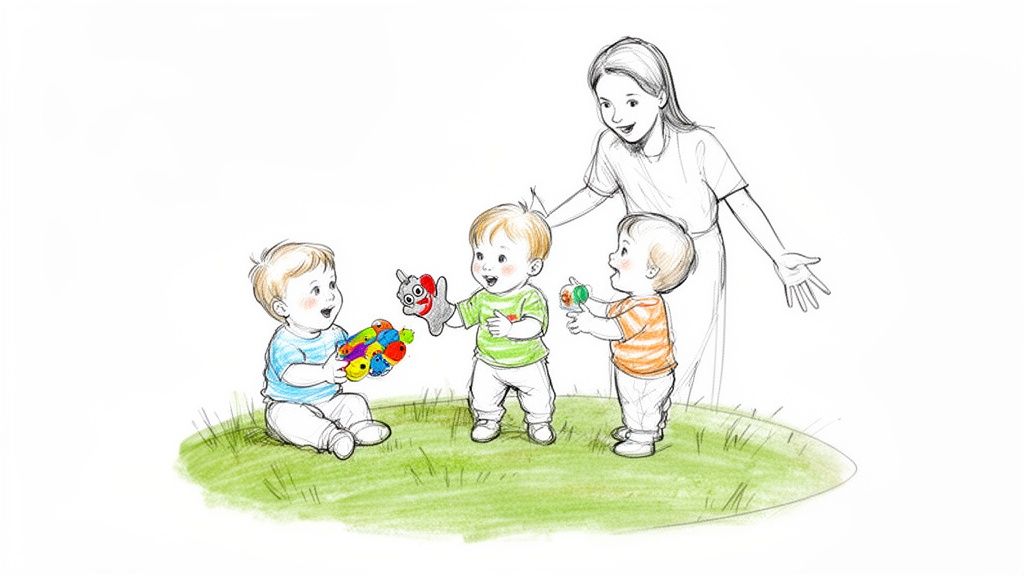
Even small, gentle interactions help build the foundations for sharing, taking turns, and communicating. Arranging a couple of playdates or popping into a local parent-and-toddler group can be a brilliant, low-pressure way to get them used to being around other children. Some research suggests that just two or three of these social get-togethers can help a child settle into nursery much faster.
It's so important to let them know their feelings are valid. You can say something like, "It's okay to feel a bit wobbly about trying new things. Everyone does! But I know you're going to have so much fun, and I'll be right here to pick you up when it's finished." This shows you understand while reassuring them that you’re coming back.
Using Play to Prepare
The idea of 'nursery' can be a bit abstract for a toddler. One of the best ways to make it feel real and manageable is to turn it into a game.
Try these simple role-playing games at home:
- 'Nursery' time with toys: Use their favourite dolls or figures to act out a typical day. Have a 'mummy' or 'daddy' toy drop them off, watch them play with other toys, have a snack, and then get a big cuddle at pick-up. It demystifies the whole process.
- Practise your goodbye: Create your own special goodbye ritual. It could be a silly high-five, a butterfly kiss on each cheek, or a special phrase you both say. Practise it when you leave the room for a minute, so it becomes a comforting and familiar signal that you always come back.
- Let puppets do the talking: Sometimes it’s easier for a child to voice their worries through a toy. A puppet could ask, "What if I miss you while you're gone?" This opens the door for you to offer comfort in a really playful, gentle way.
These little games give your child a sense of predictability and control, which are the building blocks of emotional resilience. Exploring the power of play in child development is a fantastic way to find even more ideas to support your child.
Outdoor play is another brilliant tool for building both physical and emotional confidence. Studies have shown that regular time spent playing outside can improve emotional regulation in young children. When a child is encouraged to explore and test their limits in a safe environment, they build a 'can-do' attitude that helps them tackle new social situations.
Getting the Practicalities Sorted: Routines, Packing, and Mealtimes
Let's get down to the practical stuff. The small, concrete things you can do at home in the weeks before nursery starts can make a world of difference. Getting your child’s daily rhythm in sync with the nursery’s is less about strict rules and more about creating a sense of familiarity that helps them feel safe and settled from day one.
A little bit of planning now makes those first few mornings so much smoother for everyone.
Easing into the Nursery Routine
Little ones feel secure when they know what’s coming next. It's why they love the same book a hundred times! One of the kindest things you can do is to gently nudge your home schedule closer to the nursery’s.
Most nurseries are more than happy to give you a copy of their daily rhythm. Look at their timings for lunch, snacks, and naps, and start making tiny adjustments at home.
- Nap Times: If your toddler usually naps at 1 pm but nap time at nursery is 12:30 pm, don’t make the change overnight. Start shifting their nap earlier by 10-15 minutes every few days. This avoids them being overtired and grizzly just when they need to settle in a new environment.
- Meal Schedules: The same goes for mealtimes. If your child is more of a grazer, getting them used to set times for lunch and snacks can really help manage their energy and mood throughout a busy nursery day.
This isn’t about running a military operation in your living room. It’s simply about creating a gentle flow that won’t feel like a huge shock to their system when they start.
A child who arrives at nursery well-rested and with a full tummy is a child who is ready to play and explore. These small adjustments are an act of kindness to your future self and, most importantly, to your little one.
What to Pack in Their Nursery Bag
A well-packed bag is your best friend for stress-free mornings. Think of it as your child’s little survival kit, full of comforts and necessities for the day ahead. And here’s the golden rule of nursery life: label absolutely everything. From socks to sun cream, named items have a much better chance of finding their way back to you.
Your Essential Nursery Bag Checklist
| Item Category | What to Pack |
|---|---|
| Clothing | At least two complete changes of clothes (vest, top, bottoms, socks). If you’re potty training, pack more. Always include weather-appropriate gear. |
| Comfort Items | Their favourite teddy, a special blanket, or a dummy. That familiar scent and feel can be a huge comfort during quiet time or if they feel a bit wobbly. |
| Nappies & Wipes | A day's supply of nappies, wipes, and any nappy cream you use. Most nurseries ask you to provide these, so it's always worth checking their policy. |
| Outdoor Gear | A waterproof coat and a pair of wellies are non-negotiable. Many nurseries love outdoor play, come rain or shine! |
| Milk & Meals (If needed) | Any formula or expressed breast milk you need to send. Make sure it's clearly labelled with your child's full name and the date. |
Encouraging a Curious Palate
Another big one is food. Nurseries are brilliant at introducing children to a variety of healthy meals, encouraging them to try new tastes and textures alongside their friends. You can give your child a head start at home.
This doesn’t mean you need to whip up complex new recipes. Just offering different fruits and vegetables or serving things they already like in a new way can work wonders. When they see other children at nursery happily eating something new, that little bit of prior exposure at home can be all it takes for them to feel brave enough to try it too. For parents in Northwood exploring local childcare, don’t hesitate to ask about the food and nutrition approach during your visit; it tells you a lot about a setting’s ethos.
Tackling the First Day and Those Inevitable Tears
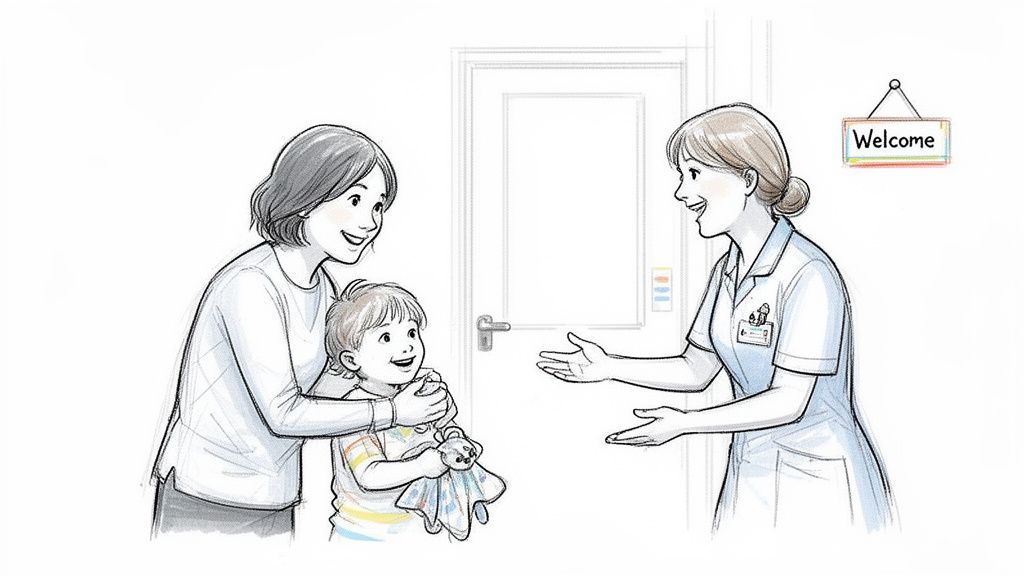
Let’s be honest: the first day of nursery can feel like a monumental hurdle. It’s completely natural to have a knot in your stomach, and it’s just as normal for your little one to feel wobbly. Separation anxiety isn’t a sign of a problem; it’s a sign that you’ve built a wonderfully strong and secure bond with your child.
With a few gentle strategies up your sleeve, you can make those first few days and weeks much calmer for everyone. The aim is to build their confidence, show them that nursery is a safe and fun place to be, and reassure them that you will always come back.
The Power of Settling-In Sessions
Settling-in sessions are your absolute best friend for a smooth start. Think of them as a gentle handshake with nursery life. These short visits let your child get used to the new sounds, faces, and routines, all with the safety blanket of you being right there.
Most nurseries will have a plan, and it usually unfolds gradually.
- Visit One: You’ll likely stay for the whole time, maybe an hour, just exploring the room and getting to know their key person together.
- Visit Two: You might stay for a bit, and then once they’re happily playing, pop out of the room for just 15-20 minutes.
- Visit Three: This time, you could try leaving them for a bit longer, perhaps an hour on their own or staying through a snack time.
The real key here is to go at your child’s pace and trust the guidance of the experienced staff. These sessions are all about building a bridge of trust between your child, their key person, and their new environment.
Understanding the Key Person’s Role
In UK nurseries, every child is assigned a key person. This isn’t just an administrative title; this practitioner is your go-to contact and, most importantly, the person dedicated to your child’s emotional well-being. Their entire job is to form a close, trusting bond, becoming that one familiar face your child can turn to for a cuddle or a bit of reassurance.
This relationship is everything. It gives your child a ‘secure base’ from which they feel confident enough to explore and play. Before the official start date, make a point of chatting with the key person. Share all the little things—their favourite stories, what soothes them when they’re upset, and their funny little quirks.
The goodbye is a moment, not a negotiation. A brief, loving, and confident departure is one of the most reassuring things you can do. It tells your child, “You are safe here, I am confident in leaving you, and I will be back.”
The Goodbye Ritual: A Calm and Confident Departure
How you say goodbye really sets the tone for their day. A long, drawn-out farewell where you look anxious can actually make them feel more worried. A calm, consistent, and quick routine, on the other hand, builds predictability and trust.
Try to create a simple drop-off habit:
- Prep on the way: On the walk or drive, chat about what will happen. “We’ll go in, find your key person, give a big hug, and then Mummy will go to work. I’ll be back after you’ve had your tea!”
- Handover warmly: When you arrive, make a beeline for their key person or an activity you know they’ll love. Help them get settled for a moment.
- Keep it brief and loving: Give them your special hug, a kiss, or a high-five. Say your line—”Have a brilliant day, I love you, and Mummy/Daddy always comes back”—and then leave.
- Resist the urge to sneak out: It feels tempting, but it can shatter trust and lead to much more distress down the line. Always, always say goodbye.
Separation anxiety is tough to witness, but it is a phase. For a deeper dive into managing those wobbly moments, you might find our guide on how to help a child with separation anxiety at nursery really helpful.
Looking After Yourself
Finally, a word for you. It is perfectly okay to walk away from that first drop-off and have a good cry. Your feelings are completely valid. Plan something for yourself afterwards—a coffee with a friend who gets it, a brisk walk, or even just ten quiet minutes in the car. Trust the nursery staff. They have done this hundreds of times and are experts at scooping up a tearful child and distracting them in a matter of minutes. They’ve got this, and so have you.
Sorting Out the Paperwork: Funding, Forms, and Key Contacts
Let’s be honest, the paperwork side of starting nursery can feel a bit daunting. But getting all the practical bits and pieces sorted out early is one of the best things you can do to reduce stress later on.
When you handle the forms and funding ahead of time, you can focus completely on your little one when their first day finally arrives.
Getting to Grips with Government Funding
For many families, childcare costs remain one of the biggest factors when deciding when to start nursery. The good news is that, in 2026, government support for working parents is more extensive than ever before, helping to make early years childcare far more affordable.
Eligible working families can now access up to 30 hours of funded childcare per week for children aged 9 months and over during term time. This expanded scheme has made a significant difference to household budgets and has given parents greater flexibility when returning to work.
Alongside funded childcare hours, many parents also benefit from the Tax-Free Childcare scheme. With this initiative, the government adds £2 for every £8 paid into your childcare account, up to a maximum top-up of £2,000 per child each year.
While eligibility criteria still apply, most working parents who meet the minimum earnings threshold can now take advantage of this support. Exploring your options early can help you better plan your childcare arrangements and reduce costs considerably.
Your Admin To-Do List
After you’ve officially accepted your nursery place, a welcome pack filled with forms will likely land in your inbox or on your doormat. My advice? Tackle them straight away to avoid that last-minute panic.
You’ll typically find these forms inside:
- Registration Form: All the basics—contact details, your child’s information, and emergency contacts.
- Medical and Allergy Information: This is hugely important. Be as specific and thorough as you can about any allergies, dietary needs, or medical conditions.
- Consent Forms: Standard permissions for things like applying sun cream, seeking emergency medical treatment, or using photos of your child in nursery displays.
- ‘All About Me’ Booklet: This is your chance to help the staff really get to know your child’s unique personality, their favourite toys, what soothes them, and what their routine is like at home.
Think of the ‘All About Me’ booklet as your first proper handover. The rich detail you provide helps your child’s key person connect with them from the moment they walk in, making them feel seen and secure right from day one.
Don’t Hesitate to Discuss Extra Support
Open and honest communication with your nursery is the foundation of a great partnership. This is especially true if you think your child might benefit from extra support.
One area to be aware of is the Early Years Pupil Premium (EYPP). This is additional government funding given directly to nurseries to help support the development and learning of eligible 3- and 4-year-olds. If your family receives certain benefits, the nursery could get this funding to provide even more resources for your child.
It’s definitely worth a quiet chat with the nursery manager to see if you might be eligible. It’s a simple way to unlock valuable extra support for your little one’s experience.
Your Questions Answered
Starting nursery is a huge milestone, and it’s bound to bring up a lot of questions. As you get ready for this big step, you’re likely wondering about a few things. Here are some of the most common queries we hear from parents, along with our experienced take on them.
What Is the Best Age for My Child to Start Nursery?
Honestly, there’s no magic number. The “right” age really comes down to your child’s unique personality and what works best for your family. Some little ones are born social butterflies and soak up the busy atmosphere from just a few months old, while others are a bit more reserved and might benefit from waiting until they’re closer to two.
What truly matters isn’t the age on their birth certificate, but how well you prepare them for the change. A well-prepared one-year-old will often have a smoother start than a less-prepared three-year-old.
How Long Will It Take My Child to Settle In?
This is the big one, isn’t it? Every child’s journey is different. Most little ones find their feet within two to four weeks, but some wave goodbye without a second glance on day one, and others may need a couple of months of gentle encouragement.
Your best friends during this time will be patience and a consistent goodbye routine. Building a strong, trusting relationship with your child’s key person is also crucial. They have years of experience helping children feel safe and happy and can give you those much-needed updates that everything is okay once you’ve left.
What if My Child Doesn’t Nap or Eat Well at Nursery?
This is such a common worry, but try not to lose sleep over it. Nursery teams are pros at handling the full spectrum of eating and sleeping habits. They create calm, predictable routines, and you’d be amazed at the power of positive peer pressure! Often, seeing their friends tucking into lunch or snuggling down for a nap is all the encouragement a reluctant child needs.
Keep the conversation flowing with the nursery staff. Sharing what works at home gives them a great starting point, and they can work with you to find a solution that helps your child feel comfortable. It’s a real team effort.
A useful tip: Some research has shown that running ‘nursery simulations’ at home—like having set snack times or singing group songs—can help ease first-day tears.
Initiatives like the Early Years Pupil Premium also give nurseries extra funding for resources to support these transitions. You can find out more about early years funding at eyalliance.org.uk.