
Starting nursery is a huge milestone, and if you’re wondering how to make it a positive experience, the secret isn’t complicated. The best way to settle a child into nursery is through a gentle, gradual approach. It’s all about building familiarity and security through short, positive visits that slowly get longer, creating a predictable routine, and establishing a strong partnership with the nursery staff from day one.
Your Gentle Guide to Starting Nursery
Let’s be honest, starting nursery is a big deal for everyone involved. You’re likely feeling a mix of excitement for all the new friends and experiences awaiting your child, alongside a healthy dose of nerves about the change. That’s completely normal. This guide is built from years of experience helping families just like yours, designed to help you navigate this transition with calm and confidence.
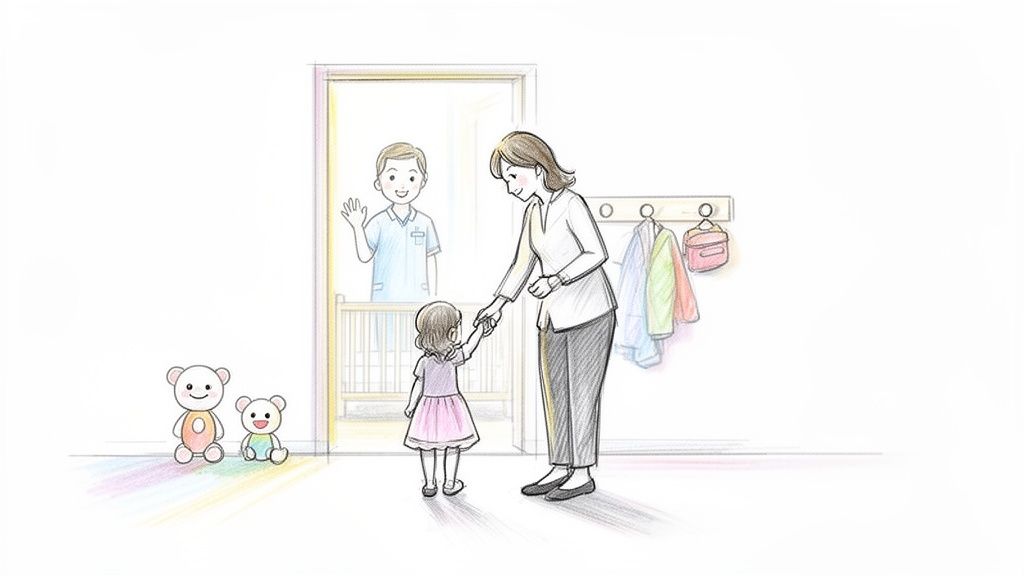
Framing the Transition as an Adventure
The journey of settling into nursery looks different for every single child. Some little ones dive right in, while others need a bit more time to get used to the new faces, spaces, and rhythms of the day. There is absolutely no right or wrong timeline.
The most important thing is to create a sense of safety and predictability. Many early years settings across the UK have supported thousands of children through this period. We know that a child who feels secure is a child who is ready to learn, play, and explore. By taking things slowly, you give your child the space to build real trust with their new caregivers and to realise that nursery is a fun, welcoming place where they belong.
A child-led, gradual approach is the foundation for a successful nursery start. It’s not about speed; it’s about building a feeling of safety that allows your child’s confidence to grow at their own pace.
Key Principles for a Smooth Start
Understanding the core philosophy behind a smooth settling-in period can make the whole process feel much less daunting. The timing of this big step is also a major factor, which is why we’ve put together a separate resource on when is the right time to start nursery.
Ultimately, it all comes down to a few key ideas that many nurseries champion:
- Partnership: See the nursery staff, especially your child's key person, as your partners. Open communication is the single most important tool for creating consistent, loving support for your child.
- Patience: There will be great days and there will be wobbly days. That’s just part of the process. Your patience and steady, positive presence are the emotional anchor your little one needs to navigate these new feelings.
- Positivity: Your attitude sets the tone. Children are incredibly perceptive, and when you talk about nursery as an exciting, happy place, they absorb that confidence. Your belief in their ability to thrive makes all the difference.
Preparing for the First Day at Nursery
That first day at nursery can feel like a huge milestone, and honestly, a little preparation goes a long way. The secret isn't a grand gesture on the day itself, but all the small, positive steps you take in the weeks leading up to it. Your goal is to gently weave the idea of nursery into your child's world, making it feel like the next exciting chapter, not a sudden change.
How you frame it matters. Try to talk about nursery with genuine warmth and excitement. Focus on all the brilliant things they’ll get to do, like playing with new friends, digging in the sandpit, or exploring all the fun toys. Finding a lovely picture book about a little bear starting school can also be a fantastic, low-pressure way to help them picture what's coming.
Building a Sense of Familiarity
Children thrive on the familiar. The more you can demystify the nursery, the more comfortable they'll feel when they finally walk through the door.
- Do a few ‘nursery run’ drive-bys: When you're out and about, casually point out the building. A simple, "Look! There's your new nursery where you'll get to play!" helps make it a real, tangible place.
- Make the most of settling-in visits: These are incredibly valuable. It's your child's chance to explore the rooms and meet their key person with you right there as their safe base. It takes the scariness out of the unknown.
- Have a sneak peek from home: Sometimes, just seeing the space is enough to spark curiosity. Many nurseries now offer virtual tours on their websites which can be a fun way to start the conversation. For example, we've put together a way for you to see inside the nursery with a virtual tour right from your sofa.
Practising the New Rhythm
Routines are the bedrock of a young child's sense of security. By easing into the new nursery schedule before day one, you’re giving them a huge head start.
A week or two beforehand, start practising your "nursery morning." This just means getting up, having breakfast, and getting dressed at the time you’ll need to for the real thing. It helps you iron out any wrinkles and avoids that frantic, stressful rush on their first official morning.
A powerful tool many experts recommend is practising short, happy goodbyes. Leave your child with a grandparent or trusted friend for just a short while. A cheerful "Bye-bye, I'll be back soon!" and a big smile when you return teaches them the most important lesson of all: you always come back.
This isn't just anecdotal advice; it's backed by what we see across the early years sector. With around 135,000 children in nursery school each year, getting the settling-in period right is a top priority. Research highlights that a gradual, gentle start is a key feature of the 80.3% of providers rated 'Good' by Ofsted. These small steps build an incredible amount of confidence, making that first drop-off so much easier for both of you. If you're interested in the numbers, you can review insights about nursery school statistics on Statista.com.
Your Practical Plan for the First Few Weeks
The first few weeks at nursery are a huge step for your little one, and it's completely normal to feel a mix of excitement and apprehension. Our best advice? Go in with a plan, but hold it loosely. The goal isn't to hit a specific deadline but to build a foundation of trust and confidence that makes nursery feel like a second home.
It all begins by simply being there together. Your first visits to the nursery should be short and sweet, maybe just an hour. Stay with your child, letting them explore the new toys, faces, and spaces from the safety of your lap or with you close by. Think of it as a low-pressure way for them to observe the world of nursery without feeling overwhelmed.
Gradually Building Independence
Once they've had a couple of these shared sessions, it's time to introduce tiny moments of separation. This doesn’t have to be a big dramatic exit. It can be as simple as saying, “I’m just popping to the loo, I’ll be back in a moment,” and leaving the room for a minute. Your calm, casual tone is everything.
These small steps teach a crucial lesson: you always come back. As they get used to these micro-separations, you can gently stretch the time. Maybe you pop out for a 15-minute coffee nearby. Before you know it, they’ll be ready for their first full hour on their own.
Your goodbye ritual is your secret weapon. Keep it short, loving, and exactly the same every time. A simple, "Have a wonderful time playing, I'll be back after lunch," a quick hug, and a confident wave can work wonders. This predictability is incredibly reassuring for them.
Even if there are tears—and there might be—it’s so important not to linger. A long, drawn-out goodbye can sometimes make a child feel like there’s a reason to be worried. A quick, cheerful departure, however, sends the message that you’re confident they’re in a safe, fun place. The tears often stop moments after you’ve gone.
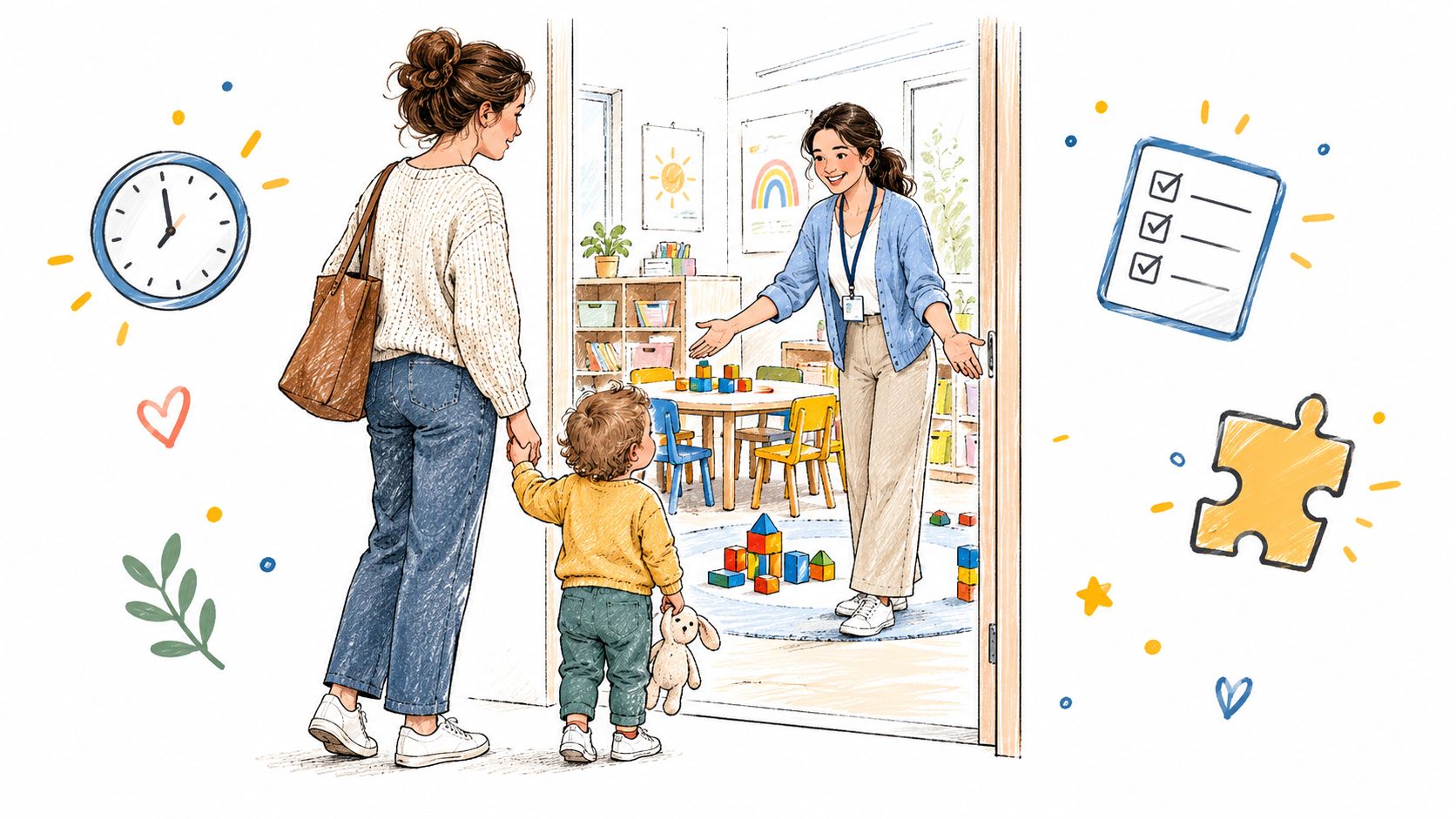
The visual guide below breaks down the simple, foundational steps to take before that first drop-off even happens.
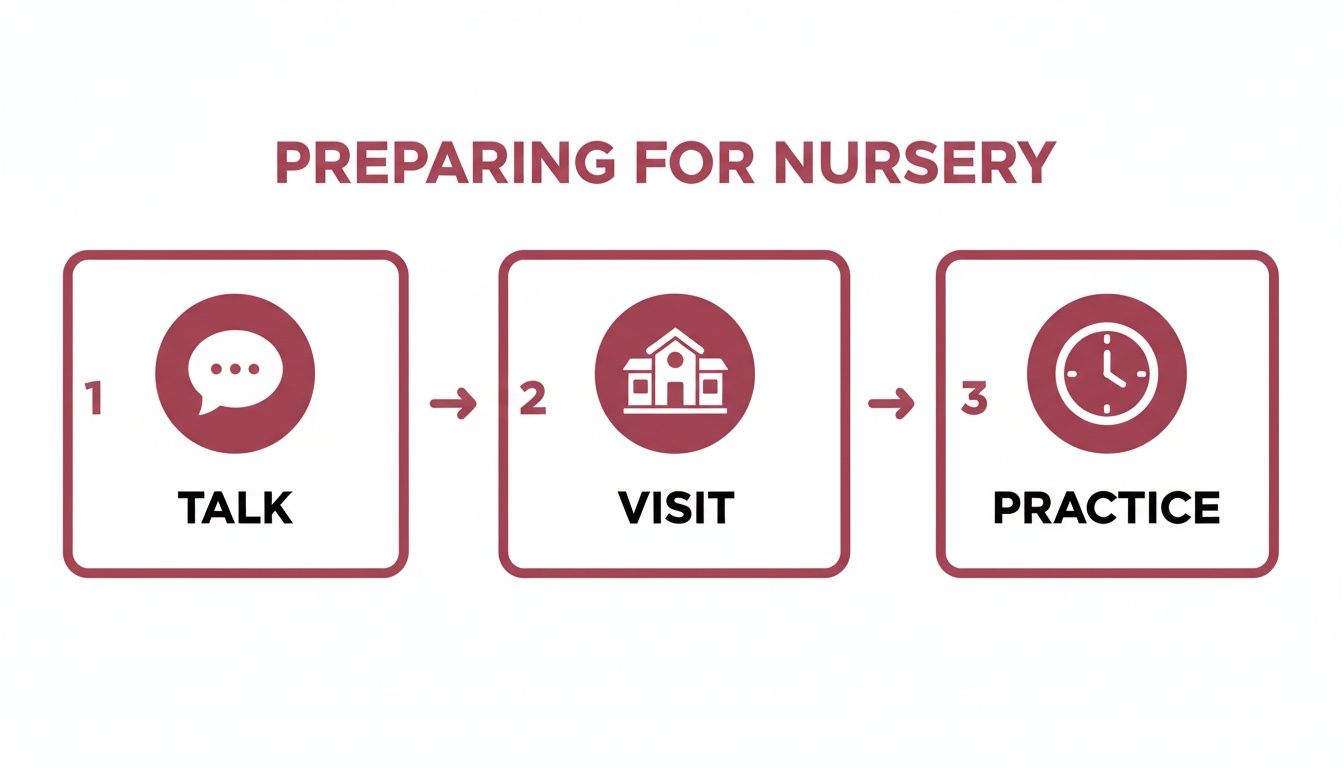
Talking about nursery, visiting the space, and practising short separations creates a powerful cycle of reassurance for your child.
An Adaptable Schedule
Every child settles at their own pace. There’s no magic timeline. One child might be happily doing a half-day within a week, while another might need three weeks of shorter visits to feel secure. That’s perfectly okay. The key is to follow your child’s lead and keep the conversation going with their key person, who will give you honest feedback on how they’re doing after you leave.
As they spend more time at nursery, you might find mealtimes bring new challenges. If so, our guide to food and nutrition for fussy eaters has lots of practical tips.
Sample Two-Week Settling-In Schedule
To give you an idea of what this gradual process might look like, here’s a sample schedule. Remember, this is just a guide! It’s a flexible timeline to help you and your child ease into nursery life. You should always adjust the timings based on how your child is coping and your nursery’s specific policy.
| Day | Activity | Duration | Parent's Role |
|---|---|---|---|
| Day 1 | Joint Play Session | 1 Hour | Stay with your child, exploring the room together. |
| Day 2 | Joint Play & Brief Separation | 1 Hour | Play together, then pop out of the room for 5-10 mins. |
| Day 3 | Short Drop-off | 15-30 Mins | Settle your child, then leave the building for a short period. |
| Day 4 | Longer Drop-off | 1 Hour | Drop-off, say a quick goodbye, and return after one hour. |
| Day 5 | Stay for a Snack | 1.5 Hours | Extend the time to include a key routine like snack time. |
| Day 8 | Morning Session | 2 Hours | Child stays for a longer play session without a parent. |
| Day 10 | Stay for Lunch | 2.5 Hours | Extend the session to cover the lunchtime routine. |
| Day 12 | Almost a Half-Day | 3 Hours | Building stamina for a full half-day or morning session. |
Ultimately, this plan is not a set of rigid rules but a flexible framework. It’s designed to empower you with a structured approach that you can tailor to your child’s personality, making the transition to nursery a positive and manageable experience for everyone involved.
Building a Strong Partnership with Nursery Staff
Starting nursery isn't just a big step for your child; it’s a new partnership for you, too. When you and the nursery team are on the same page, you create a brilliant, consistent support system that makes your little one feel safe and understood. This relationship is the bedrock of a smooth transition.
In most nurseries, your child's key person will quickly become your most important ally. This is the practitioner who is dedicated to building a special bond with your child, acting as their go-to person for cuddles, comfort, and celebrating all their little wins. They're also your main point of contact.
Sharing What Matters Most
Before day one, your key person will want to get to know your child inside and out. Don't hold back on the little details—they are absolute gold dust for the team and help them provide truly personalised care from the moment your child walks through the door.
Be ready to share things like:
- Their Comforts: Is it a specific worn-out teddy? A particular lullaby that always soothes them? Do they need a dummy for naps?
- Their Routines: How do they signal they're tired? Do they prefer to be rocked or patted to sleep?
- Their Personality: Are they a bundle of energy who dives right in, or more of a quiet observer who likes to watch from the sidelines first? What makes them belly laugh?
- Their Anxieties: Are they wary of loud noises or big groups? Knowing what might trigger a wobble helps the staff get ahead of it and offer support.
This focus on partnership is a hallmark of excellent early years settings. In fact, of all providers delivering funded early education, 80.3% were rated 'Good' and 17.6% 'Outstanding' by Ofsted, which shows a huge commitment to creating these safe, responsive environments. With a steady demand for places, this teamwork between families and nurseries is more vital than ever. You can read the full government report about funded early education for more detail.
Keeping the Conversation Going
The chat doesn't stop once the settling-in period is over. Keeping that line of communication open is absolutely essential as you navigate the weeks and months ahead.
Think of drop-off and pick-up times as mini-check-ins. A quick, "They had a great sleep last night but were a bit clingy this morning," gives the key person vital context for the day ahead.
Many nurseries also use secure apps to share photos and daily updates on naps, meals, and what your child has been exploring—whether that's splashing in puddles during outdoor learning experiences or getting stuck into messy play. It’s a wonderful window into their world and offers that extra bit of reassurance.
By working together, you and the nursery staff create a seamless circle of care. It makes the whole experience of settling your child into nursery feel much more connected and positive for everyone.
Navigating Wobbles and Emotional Upsets
Let’s be honest, even with the best preparation in the world, there will almost certainly be a few wobbles. Seeing your child cry at drop-off can feel absolutely gut-wrenching, but please know this: it's a completely normal part of the process. In our experience, these tears are usually short-lived. Your calm, confident presence is the anchor they need to get through these big, new feelings.
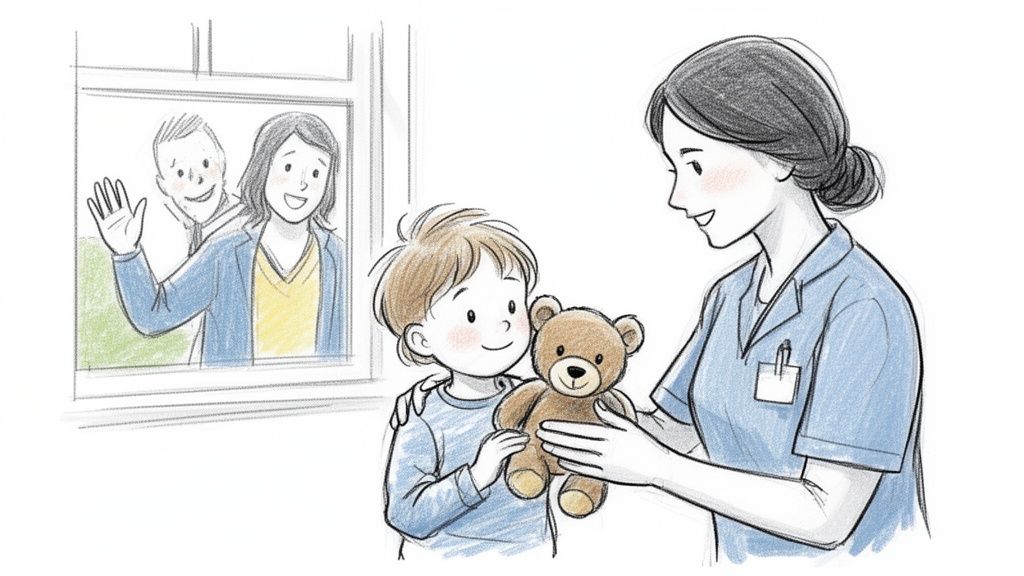
The trick is to acknowledge how they feel without getting caught up in the emotion yourself. Try saying something warm but firm, like, "I know you're sad I'm going, but you’re going to have a wonderful time today, and I'll be back right after your nap." It validates their feelings while clearly stating you're coming back. This simple, consistent message works wonders to build their sense of security over time.
The Power of a Comfort Item
Never underestimate the power of a small piece of home. A comfort object can make all the difference, acting as a tangible, reassuring link to you when they feel a bit lost or overwhelmed.
- A favourite teddy or blanket: A classic for a reason! The familiar smell and texture are incredibly soothing, especially during quiet moments or nap time.
- A family photo: A small, laminated picture of the family tucked into their bag can be a lovely, concrete reminder that we're all still here for them.
- A piece of your clothing: For babies and younger toddlers especially, a t-shirt or scarf that smells like you can be a powerful comforter.
This isn't just a crutch; it's a tool that helps them learn to self-soothe, which is a massive step towards building resilience in their new environment.
Troubleshooting Common Scenarios
Just when you think you’ve cracked it, a new challenge can pop up. This isn’t a step backwards; it's just part of the journey. Here are a couple of situations we see all the time:
- The "Honeymoon" Phase Ends: It’s incredibly common for a child to be perfectly happy for the first week or two, then suddenly start crying at drop-offs. This usually happens once the novelty has worn off and they realise nursery is a regular part of their week. Don’t panic! Just stick with your positive goodbye routine. This phase will pass.
- The Pick-Up Protest: Does your child suddenly not want to leave when you arrive? Take it as a huge compliment! It means they are happy, engaged, and feel secure. To make the transition easier, try giving them a five-minute warning before it’s time to go.
Your unwavering positivity and patience are your greatest assets. This is an emotional journey for your child, and they are looking to you for cues. By staying calm and confident, you are teaching them that they can handle this new adventure.
If you find the wobbles are more persistent, it can be helpful to understand what's behind them. We go into more detail in our guide on how you can help a child with separation anxiety at nursery, which offers more targeted strategies. Remember, this is a developmental phase that your child will move through with your loving support.
Your Settling-In Questions, Answered
Even with the most carefully laid plans, it’s completely normal to have wobbles and questions as you and your little one start this new adventure. As nursery practitioners, we’ve heard them all! Let's walk through some of the most common concerns we chat about with parents.
How Long Will It Really Take for My Child to Settle?
This is, without a doubt, the question every parent asks. The honest truth is: there's no magic number. Some children waltz in and barely look back after a few days, while others might take a month or even longer to feel truly comfortable and secure.
The most important thing is to watch and follow your child's cues, not the calendar. Staying in close contact with their key person is vital. Patience, a predictable routine, and plenty of reassurance are your best friends here. Remember, progress isn’t always a straight line; you’ll have brilliant days and some more challenging ones, and that’s perfectly okay.
What Should I Do If My Child Cries at Drop-Off?
This is the one that really pulls at the heartstrings. Seeing your child cry when you leave is tough, but please know it’s incredibly common. More importantly, the tears almost always stop just minutes after you’re out of sight as they get swept up in an activity.
The best strategy is to create a goodbye ritual that’s quick, positive, and confident.
A cheerful, "Have a wonderful time playing, I'll be back after your nap," followed by a quick hug and a wave, shows your child you're confident they are in a safe, happy place. Lingering, while tempting, can often make them more anxious. You can always phone the nursery 20 minutes later for an update – you’ll almost certainly hear they’re busy playing and having fun.
Is It Better to Start with Half-Days or Full Days?
We almost always find that starting small is the best approach. Many nurseries, including our nursery in Northwood, recommend beginning with very short sessions and building up from there. A one-hour visit together, then a one-hour visit on their own, is a gentle way to ease your child in without overwhelming them.
Working up to a comfortable half-day before tackling a full day allows them to get used to the rhythm of nursery life, from snack times and group activities to outdoor play and quiet time.
Should I Send a Comfort Item from Home?
Yes, absolutely! A special item from home can be a wonderful source of comfort and a real, tangible link to you and the security of home. It’s a powerful tool for helping them self-soothe.
A few ideas that work well:
- A favourite teddy or a special blanket.
- A small, laminated family photo they can keep in their pocket or cubby.
- A t-shirt or scarf that smells like you (this works wonders!).
These comforters aren't just distractions; they are genuinely important anchors that help a child feel safe and grounded in their new surroundings.
At Happy Tree Academy, we see ourselves as your partners in making this transition as smooth and happy as possible. If you’re looking for a nursery in the Northwood area, we’d love for you to book a visit and see our nurturing environment for yourself.