
Deciding when to start nursery is a significant milestone for any family, filled with a mixture of excitement and apprehension. Many parents wonder about the 'perfect' age, but the truth is, readiness is not about a specific date on the calendar. Instead, it’s about a unique combination of developmental, social, and emotional milestones. Recognising these signals can help you make a confident choice that feels right for both you and your child, setting them up for a positive and happy start to their early education.
This guide explores the key indicators to watch for, helping you understand the signs a child is ready for nursery. Rather than focusing on age alone, we will look at the practical skills and emotional cues that suggest your little one might thrive in a group care environment. Understanding these signs allows you to prepare them effectively, turning a potentially daunting transition into an exciting new adventure.
We will provide detailed insights into what these readiness signs look like in everyday life, from managing short separations to showing curiosity about other children. The goal is to offer a clear, actionable checklist to help you assess your child’s development and feel assured in your decision-making process.
1. Separation Anxiety Management
One of the most significant emotional milestones, and a clear sign a child is ready for nursery, is their growing ability to manage separations from you. While some apprehension is entirely normal, a child who can cope with brief periods apart without becoming extremely distressed shows the emotional resilience needed to settle into a new environment. This ability suggests they are developing trust that you will return, a crucial foundation for building relationships with new caregivers.
Observing how your child handles minor separations at home provides valuable insight. If they can play happily in one room while you are in another for several minutes, or if they are content being left with a grandparent for a short time, these are positive indicators. Their behaviour demonstrates a strengthening sense of object permanence – the understanding that people and objects exist even when they cannot be seen. This developmental step is key to feeling secure in a nursery setting.
How to Nurture This Skill
Building this confidence is a gradual process. Here are a few practical ways to support your child:
- Practise Short Separations: Start small. Leave the room for a few minutes while your child is engaged in an activity, then return. This reinforces the idea that you always come back.
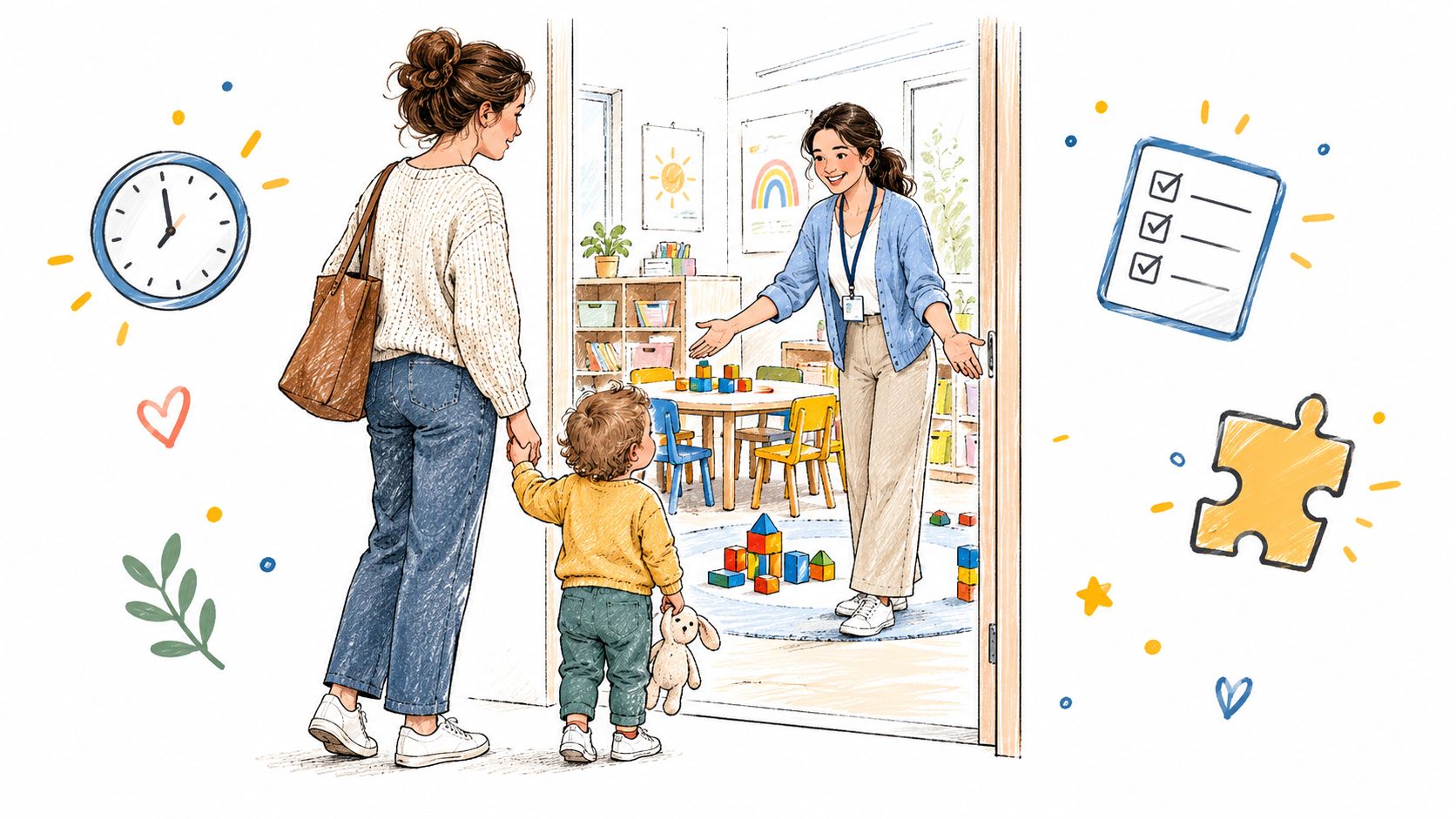
- Establish a Goodbye Routine: Create a simple, predictable, and loving goodbye ritual, such as a special hug and a wave. Consistency helps create a sense of security and predictability during drop-offs.
- Always Say Goodbye: It can be tempting to sneak away to avoid tears, but this can create more anxiety. A clear and confident goodbye, even if it causes a brief upset, builds long-term trust.
- Share Comfort Items: A favourite teddy, a blanket, or a small photo book can act as a transitional object, helping your child feel connected to home and soothed during the day.
If managing goodbyes feels particularly challenging, exploring strategies to help a child with separation anxiety at nursery can offer further support.
2. Following Simple Instructions and Routines
A child's ability to understand and follow basic instructions is another of the key signs a child is ready for nursery. This skill demonstrates crucial cognitive development and budding impulse control, which are vital for participating in a group setting. In a busy nursery environment, a child who can respond to simple directions like ‘get your shoes’ or ‘let’s sit down for a story’ can be kept safe and can join in more easily with daily activities. This readiness is less about perfect obedience and more about comprehension and cooperation.
You can observe this skill developing in everyday life. For instance, a toddler who, when asked, helps put their toys in a basket before a meal is showing they can follow a two-step sequence. Likewise, a child who can find their coat and try to put it on when it is time to go out is beginning to understand and participate in established routines. These small moments of cooperation are significant indicators that they can adapt to the structured, yet playful, flow of a nursery day.
How to Nurture This Skill
Strengthening your child’s ability to follow instructions can be built into your daily life with a few simple techniques:
- Use Clear, Simple Language: Give one instruction at a time, especially for younger children. Use direct phrases like, “Please pass me the book,” rather than complex sentences.
- Offer Structured Choices: Providing choices empowers your child while maintaining structure. For example, “It’s time to get dressed. Do you want to wear the blue top or the yellow one?”
- Praise and Acknowledge Effort: When your child follows an instruction, offer specific praise. Saying, “Thank you for putting your cup on the table,” reinforces the positive behaviour.
- Establish Home Routines: Consistent routines for waking up, meals, and bedtime help children learn to predict what comes next, which makes nursery routines feel more familiar and secure.
- Practise Turn-Taking: Simple games at home that involve waiting and taking turns, like rolling a ball back and forth, build the foundations for sharing and group play.
3. Social Interaction and Parallel Play
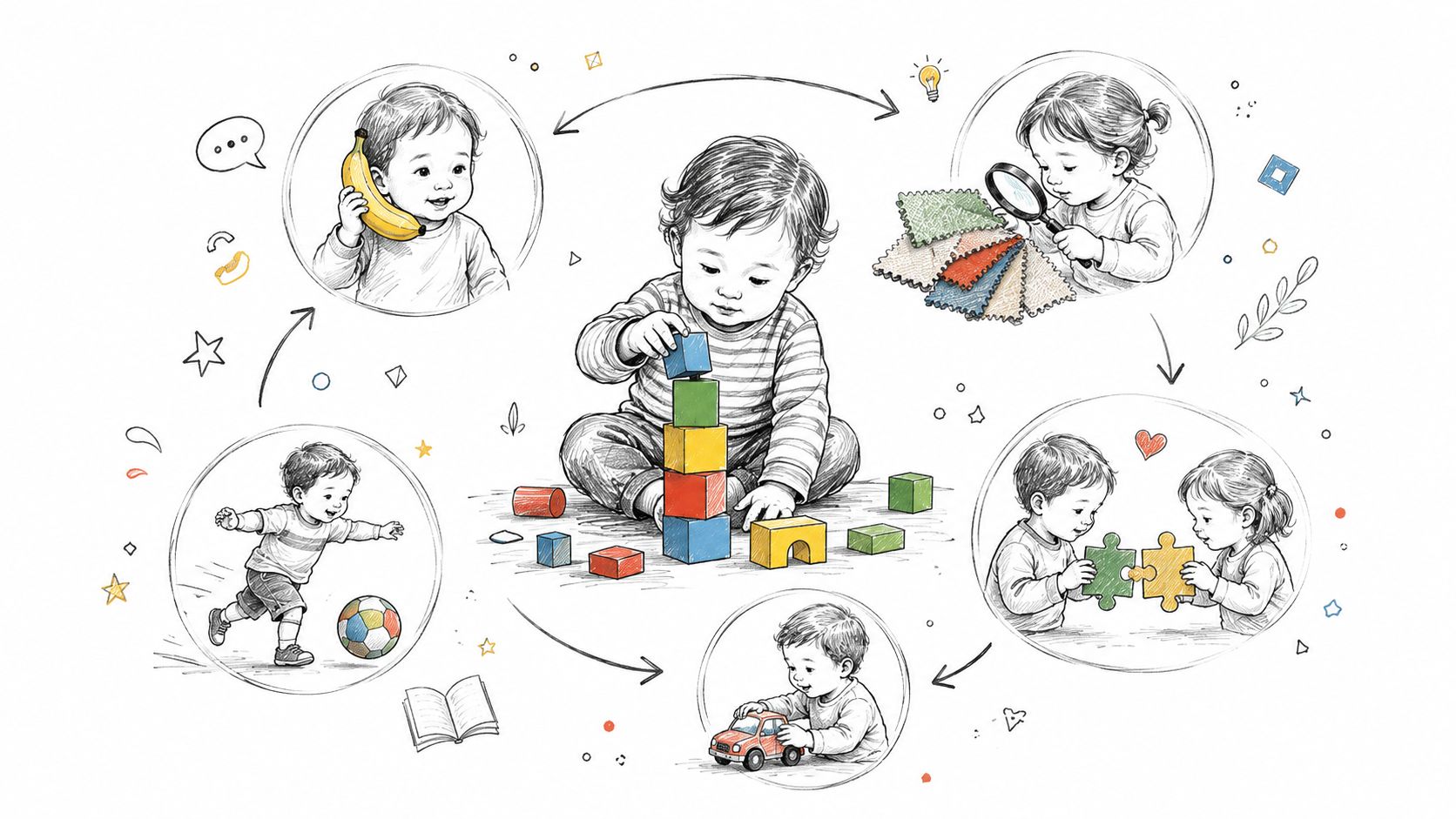
A child’s growing interest in their peers is another key sign they are ready for nursery. This does not mean they need to be a social butterfly, but a willingness to be around other children and engage in side-by-side activity, known as parallel play, shows they are developing the social foundations needed for a group environment. This interest indicates a child feels comfortable with group dynamics and is starting to understand social cues, which is fundamental to settling well in a bustling nursery.

Observing how your child behaves around other children is telling. For example, if they play happily with their toys while another child plays nearby, they are demonstrating comfort with proximity. You might also notice them watching another child on a climbing frame and then attempting similar movements. These behaviours, from simply observing to mimicking, show a developing awareness and curiosity about others, which is exactly what helps children adapt to a social setting like nursery.
How to Nurture This Skill
Gently encouraging social awareness can make the transition to a group setting feel more natural. Here are a few ways to support your child’s budding social skills:
- Arrange Playdates: Organise short, low-pressure playdates or visit local parent-and-toddler groups. This exposes your child to peer environments in a safe and familiar context.
- Narrate Social Scenes: When you see other children playing, talk about what is happening. For instance, "Look, that little boy is building a big tower with his blocks, just like you do!"
- Model Positive Interactions: Let your child see you interacting warmly and positively with other adults and children. Your behaviour sets a powerful example for them.
- Read Books About Friendship: Share stories that feature children playing together, sharing, and navigating simple social situations. This helps normalise group activities and introduces concepts like taking turns.
4. Self-Care Skills and Independence in Basic Tasks
A child's growing independence in basic self-care is a strong sign they are ready for nursery. When children can attempt tasks like eating, drinking from a cup, or helping with their own clothes, it shows a level of personal readiness that allows them to engage more fully in the social and educational aspects of nursery life. This independence builds confidence and allows staff to focus on group activities and deeper learning, rather than constant one-to-one physical care.
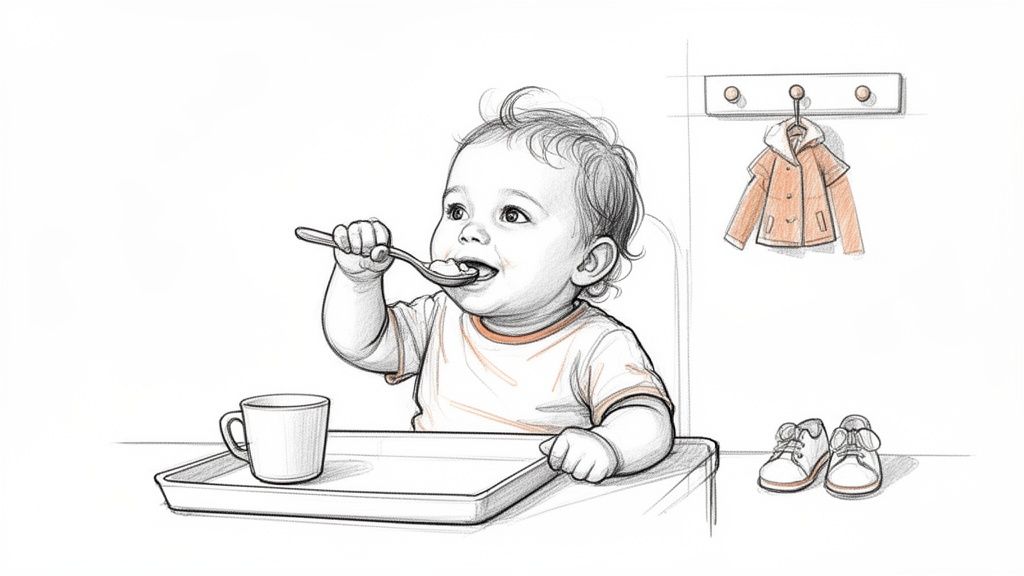
It is not about perfection; it is about the attempt. Observing a toddler using a spoon to eat yoghurt (even with spills) or a preschooler pulling off their own shoes demonstrates a desire to be independent. These skills, often influenced by the Montessori philosophy of practical life, empower children. It means they can participate in snack time with their peers, feel a sense of accomplishment, and navigate the daily routines of a busy nursery with greater ease.
How to Nurture This Skill
Encouraging these skills at home can be a gentle and positive process. Here are some practical ideas:
- Practise Self-Feeding: Offer child-sized utensils and cups and allow your child to feed themselves, accepting that mess is part of the learning process. Make mealtimes a relaxed and social occasion.
- Involve Them in Dressing: Turn getting dressed into a game. Ask, "Where does your arm go?" or let them try to pull on their socks. Celebrate every effort they make.
- Normalise Toilet Routines: If your child is showing signs of readiness, introduce the potty or toilet in a low-pressure way. For guidance on this big step, our guide for parents on potty training offers helpful tips.
- Celebrate the Effort: Praise their attempts, not just their successes. Saying, "Well done for trying to put your coat on!" builds resilience and encourages them to keep trying.
5. Language Development and Communication Ability
A child’s emerging ability to communicate is another of the key signs they are ready for nursery. This does not mean they need to speak in full sentences, but having a functional way to express their needs, wants, and feelings is vital for a positive experience. Whether through words, gestures, or sounds, this ability allows them to ask for help, indicate discomfort, or join in with play, which reduces potential frustration for both them and the nursery staff. This communication skill is fundamental for building social connections and feeling understood in a new group environment.
You can observe this developing skill at home. For instance, a child might say 'juice' or point to their cup during snack time, or say 'outside' and gesture towards the garden. Even simple vocalisations paired with actions show an understanding of communication. As children's language typically accelerates between 18 months and three years, their ability to make their needs known, such as telling a grown-up they 'need the toilet', significantly improves their ability to settle in and enjoy their nursery day.
How to Nurture This Skill
Encouraging communication is a natural part of daily interaction. Here are some simple ways to support your child’s language development:
- Narrate Your Day: Talk to your child constantly about what you are doing. Simple narration like, "Now we are putting on your coat to go to the park," helps build vocabulary and sentence structure.
- Expand on Their Words: When your child says a word, add to it. If they say "doggy," you can respond with, "Yes, that's a big, brown doggy running fast!"
- Read Together Daily: Make reading a regular, enjoyable activity. Talk about the pictures, ask simple questions about the story, and let your child turn the pages.
- Sing Songs and Rhymes: Nursery rhymes and songs, especially those with actions, are excellent for developing language, rhythm, and memory.
- Accept All Forms of Communication: Acknowledge and respond to gestures, pointing, and sound approximations. This validates their efforts and encourages them to keep trying, without pressure to be perfect.
6. Emotional Regulation and Impulse Control
A developing ability to manage big feelings is another of the key signs a child is ready for nursery. Life in a group setting involves sharing, waiting, and navigating disappointments, all of which require a degree of emotional regulation. While tantrums are a completely normal part of development, particularly between 18 months and three years, a child who shows some capacity to recover from frustration or respond to calming strategies has the emotional foundation needed to adapt to a nursery environment.
Observing how your child handles minor frustrations at home can offer great insight. A child who becomes upset when an activity ends but can be redirected to something new within a few minutes is building resilience. This emerging skill is crucial for safety and for creating a positive learning atmosphere for all children. It shows they are starting to understand that while their feelings are valid, their actions have boundaries, which is a vital part of social development.
How to Nurture This Skill
Guiding your child to manage their emotions is a supportive and ongoing process. Here are some practical ways to encourage this development:
- Name Emotions Consistently: Help your child build their emotional vocabulary by labelling feelings as they happen. For example, "I can see you're feeling frustrated because your tower fell down."
- Model Calm Responses: Show your child how you manage your own feelings. You can say things like, "I'm feeling a bit cross that I can't find my keys, so I'm going to take a deep breath."
- Create a Calm-Down Space: Designate a cosy corner at home with soft cushions or favourite books where your child can go to self-soothe when they feel overwhelmed. This is a quiet retreat, not a punishment.
- Validate Feelings, Maintain Boundaries: Acknowledge your child's emotions while reinforcing rules. A clear phrase like, "It's okay to feel angry, but it's not okay to hit," helps them understand this distinction.
7. Curiosity and Willingness to Explore New Environments
A child’s natural curiosity is a powerful engine for learning and a positive sign they are ready for nursery. When children show interest in new spaces, people, and activities, it signals a cognitive readiness to engage with the world around them. This exploratory behaviour, even if it starts with a little caution, suggests they have the confidence and adaptability needed to thrive in a vibrant, play-based environment like a nursery. It is a key indicator of their learning disposition.
Observing your child's reactions to new situations offers valuable clues. A child who points at interesting materials, asks questions (verbally or non-verbally), or moves towards new outdoor play equipment instead of clinging tightly to you is demonstrating an openness to new experiences. For example, they might hesitantly approach a sensory tray before diving in, or ask "What's that?" when encountering new items during outdoor play. This willingness to investigate is exactly the skill they will use to engage with the curriculum and their peers.
How to Nurture This Skill
You can actively support your child's innate desire to explore and build their confidence for new settings. Here are some practical ways to encourage their curiosity:
- Model Curiosity: Show your own interest in the world. Say things like, "I wonder what's inside this box?" or "Look at that interesting leaf!" Your enthusiasm is contagious.
- Create Safe Exploration Zones: Provide safe spaces at home where your child can freely investigate. Sensory baskets with different textures, water play, sand, and paint are all fantastic tools.
- Ask Open-Ended Questions: Encourage investigation by asking questions that do not have a simple 'yes' or 'no' answer. Try, "What do you think will happen if you mix those colours?"
- Respect Their Pace: If your child is cautious, that’s perfectly normal. Acknowledge their feelings but gently encourage small steps, like touching a new toy or waving to a new person.
- Familiarise Them with New Places: Before they start, visiting the nursery together can make the environment feel less intimidating and more exciting, turning the unknown into a familiar adventure.
8. Attention Span and Engagement in Activities
A child’s growing ability to focus on a single activity is one of the clearest practical signs a child is ready for nursery. A developing attention span shows they are prepared to participate in the structured and group activities central to the nursery day, like story time or creative projects. This developing cognitive skill means they can engage with new experiences for longer periods without needing constant novelty or one-on-one redirection from an adult.
You can observe this emerging readiness at home. If your toddler can focus on a shape sorter for several minutes, trying different shapes even after mistakes, or if your preschooler sits for a 10-minute story, asking questions and pointing at the pictures, these are strong indicators. This ability to sustain interest shows they can gain value from the varied activities offered in a nursery environment, from songs and rhymes to sensory play.
How to Nurture This Skill
Building attention is a natural process that can be gently encouraged. Here are some practical ways to support this development:
- Offer Open-Ended Materials: Provide toys that encourage sustained engagement, such as building blocks, play dough, or sensory bins. These materials allow for deeper exploration.
- Prioritise Interactive Play: Reading books together daily, starting with short picture books and gradually increasing the duration, is an excellent way to build focus. Songs, rhymes, and repetitive stories are also highly effective at holding attention.
- Create 'Invitations to Play': Arrange interesting materials on a low table to spark curiosity. This simple setup invites your child to explore an activity independently, naturally extending their focus.
- Acknowledge Effort: Offer simple, positive feedback like, "You played with those blocks for such a long time!" This praise recognises their effort and encourages them to do it again. Understanding the power of play is key to appreciating how these moments support learning.
8-Point Nursery Readiness Comparison
| Readiness Indicator | Implementation Complexity | Resource Requirements | Expected Outcomes | Ideal Use Cases | Key Advantages |
|---|---|---|---|---|---|
| Separation Anxiety Management | Moderate — needs gradual exposure and consistent routines | Key-person staff, time for settling, calm drop-off routines | Faster settling, less distress, better attendance | New starters; mixed-age transitions; attachment-sensitive cases | Promotes independence; reduces one-to-one comforting needs |
| Following Simple Instructions and Routines | Low–Moderate — requires repetition and clear communication | Consistent routines, staff coordination, parental reinforcement | Smoother transitions; safer group management | Snack/nap transitions, group activities, busy routines | Improves safety; enables planned learning activities |
| Social Interaction and Parallel Play | Low — provide peer opportunities and modelling | Group play areas, staff facilitation, small-group setups | Increased peer interest; foundation for cooperative play | Mixed-age rooms, peer learning, play-based sessions | Encourages social learning; reduces isolation |
| Self-Care Skills and Independence in Basic Tasks | Moderate — practice and tolerance for mess/accidents | Child-sized utensils, toileting support, patient staff time | Greater independence; fewer intensive caregiving demands | Mealtimes, toileting routines, long-day care | Builds confidence; frees staff for group teaching |
| Language Development and Communication Ability | Moderate — needs modelling and interactive practice | Language-rich environment, trained staff, early intervention access | Reduced frustration; better social and instructional engagement | Expressing needs, group instructions, multilingual settings | Facilitates care, learning, and peer interaction |
| Emotional Regulation and Impulse Control | High — developmental and requires consistent strategies | Trained staff, calm spaces, predictable routines, time | Fewer escalations; improved peer relations; calmer classroom | Conflict-prone groups, transitions, behaviour support needs | Enhances safety; creates positive learning climate |
| Curiosity and Willingness to Explore New Environments | Low–Moderate — encourage safe exploration | Well-resourced, safe spaces, attentive supervision | Higher engagement; accelerated exploratory learning | Outdoor play, sensory play, new activities | Drives engagement; builds resilience and problem-solving |
| Attention Span and Engagement in Activities | Moderate — scaffolded activities to build focus | Open-ended materials, short structured sessions, limited screens | Ability to join circle time; deeper activity engagement | Story time, group lessons, hands-on learning | Enables group instruction; improves learning uptake |
Trusting Your Instincts and Taking the Next Step
Deciding when your child is ready for nursery is a significant milestone, and it’s natural to seek clear indicators. Throughout this guide, we’ve explored the key behavioural and developmental signs a child is ready for nursery, from their growing ability to manage brief separations to their curiosity about the world around them. We’ve seen how following simple instructions, engaging in parallel play, and showing glimpses of independence in basic tasks all point towards a readiness for a new, structured environment.
The journey towards this next chapter is not about ticking every single box on a checklist. Instead, it’s about observing the overall pattern of your child’s development. Perhaps you’ve noticed them becoming more verbal, trying to express their needs and wants. Maybe their attention span is lengthening, allowing them to focus on a favourite puzzle or story for a few minutes longer than before. These moments, small as they may seem, are powerful signs of their growing capacity for learning and socialising in a group setting. Remember that nurseries are expertly designed to meet children where they are, with experienced staff ready to support them in areas where they still need to grow, such as emotional regulation or sharing with peers.
Ultimately, your knowledge of your child is the most valuable tool you have. While articles and checklists provide a helpful framework, your parental intuition is often the most accurate guide. You are the expert on your child’s unique personality, temperament, and pace of development.
If you find yourself nodding along with many of the signs discussed, it’s a strong indication that your child may be prepared to flourish in a new environment. The next logical step is to move from observation to action. Exploring your local options provides the clarity and reassurance needed to make a final decision. For parents in Northwood and the surrounding areas, visiting a nursery allows you to see the setting first-hand, understand its daily rhythm, and speak with the people who would be caring for your child. This experience can transform an abstract decision into a confident and exciting plan for your family's future, ensuring you feel comfortable and positive about this important new chapter.
Ready to see how a nurturing environment can support your child’s development? If you are exploring options in the Northwood area, we invite you to book a personal tour of Happy Tree Academy. Visiting our nursery is the perfect way to understand how a play-based, supportive setting can help your child take their next confident step.