
Starting nursery is a huge milestone for both children and parents. It marks the beginning of a new chapter filled with learning, play, and new friendships. However, the first day can also bring a mix of excitement and anxiety. You might be wondering how your little one will cope with the separation, whether they’ll make friends, or if they’ll settle into the new routine. These feelings are completely normal.
At its heart, a successful transition is about preparation, communication, and consistency. By taking a few proactive steps, you can transform the first day from a source of stress into a positive and reassuring experience. The goal is to build a foundation of trust and security, helping your child understand that nursery is a safe, fun place where they will be cared for, and that you will always come back. Many early years settings, like our nursery in Northwood, prioritise a gentle settling-in period to support this crucial adjustment.
This guide provides practical, actionable tips for the first day at nursery, drawing on insights from early years professionals. We will cover everything from emotional preparation and creating goodbye rituals to what to expect in the first few weeks. These strategies are designed to empower you with the confidence to support your child through this important step in their development.
1. Visit the Nursery Together Before the First Day
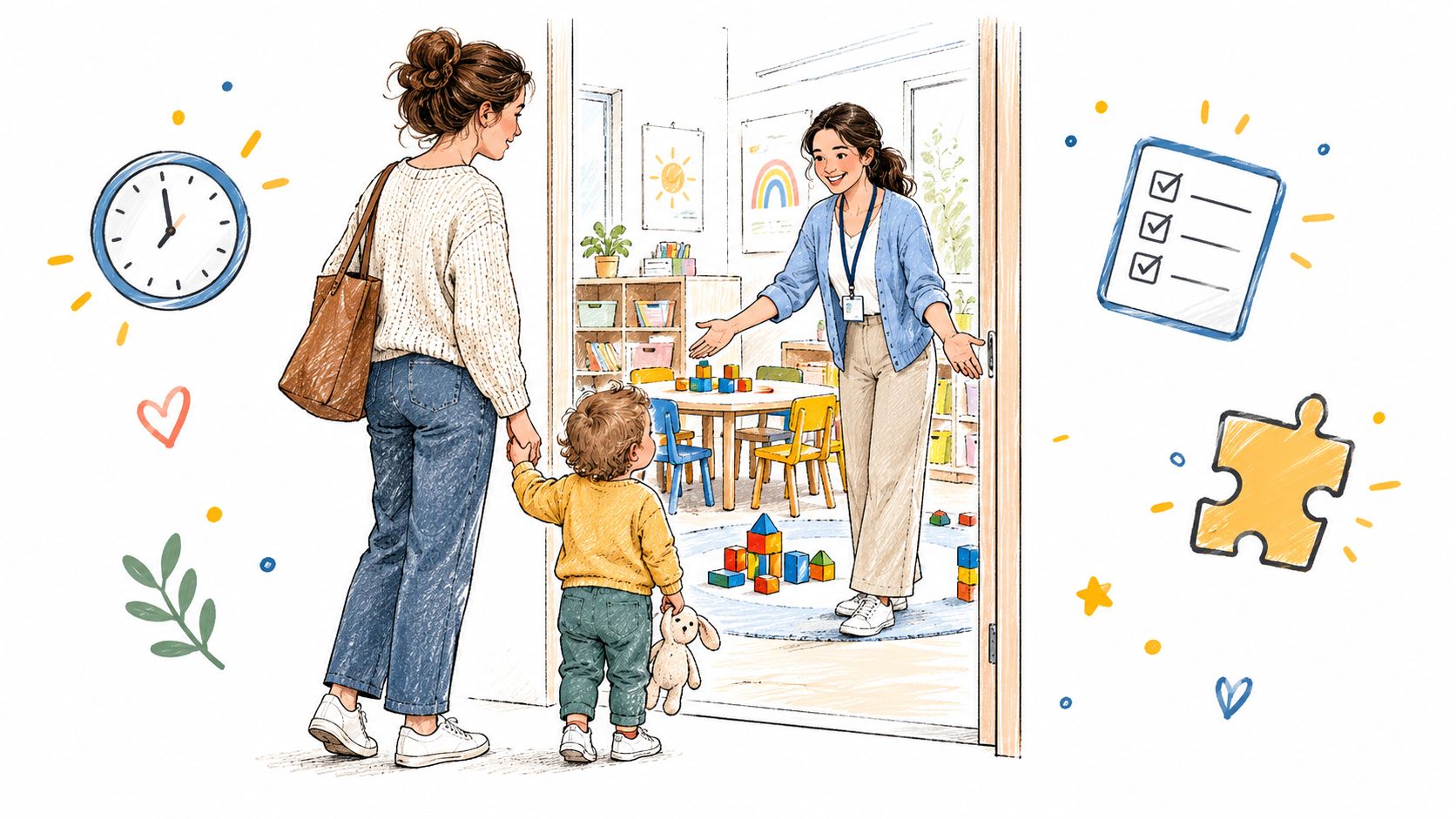
One of the most effective tips for a smooth first day at nursery is to remove the element of surprise. By visiting the nursery with your child beforehand, you transform an unknown space into a familiar one, which can significantly reduce anxiety for both of you. A preliminary visit helps your child build positive associations with the building, the rooms, and the people, making the official start feel less like a separation and more like a return to a place they already know.
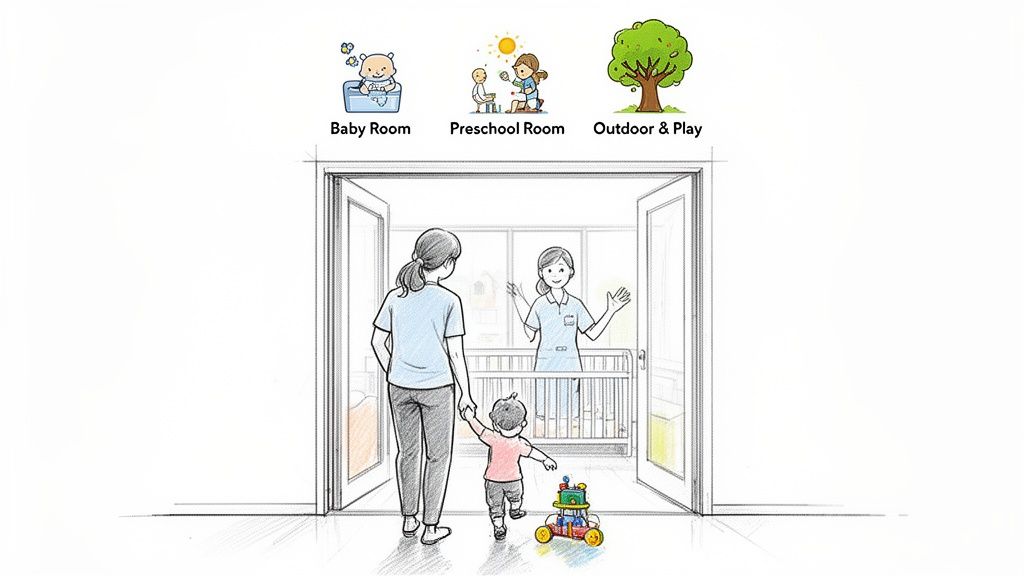
This process is about creating comfort through familiarity. Many nurseries, including those in Northwood, actively encourage these settling-in visits. For example, a parent might book a 30-minute tour where their toddler can explore the main play area, meet a key worker, and even interact with other children. This short, positive experience gives them a mental picture of what nursery is like, which you can then talk about at home.
Key Insight: The goal of a pre-start visit isn’t just to see the space, but for your child to experience it in a low-pressure way. Letting them play with a few toys or see the outdoor area for a few minutes while you are with them builds a foundation of safety and trust.
To make these visits as effective as possible, consider these practical steps:
- Time it right: Ask to visit when the nursery is active. Seeing other children happily playing provides powerful social proof that it’s a fun and safe place to be.
- Keep it short and sweet: For babies and toddlers, a 15-to-30-minute visit is often enough to make a positive impression without causing overstimulation.
- Focus on the fun: Point out things your child will love, such as the messy play station, the book corner, or the door leading to the garden.
- Meet the key people: Try to meet your child’s assigned key worker. Putting a friendly face to a name helps your child feel they have a specific ally waiting for them.
If you are exploring childcare options in the Northwood area, you can book a tour to visit Happy Tree Academy and see how this initial introduction can set the stage for a successful start.
2. Create a Consistent Transition Routine and Goodbye Ritual
A predictable goodbye ritual is one of the most powerful tips for a first day at nursery because it gives your child a sense of control and security during separation. Children thrive on routine, and a consistent set of actions helps them understand what is happening and, crucially, that you will return. This ritual, repeated every single day, becomes a comforting anchor that signals the transition, making it less of a shock and more of an expected part of their day.
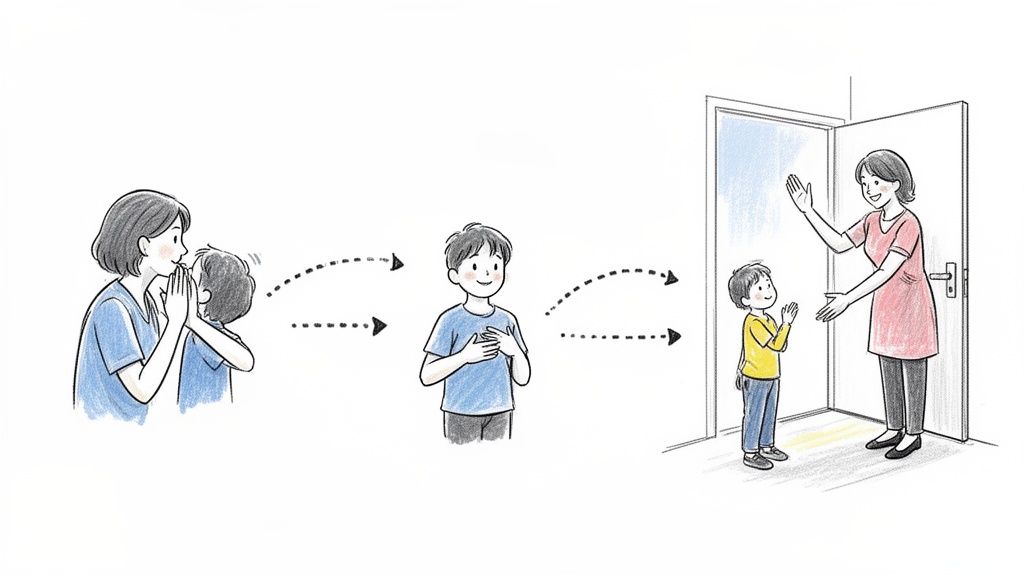
The ritual doesn’t need to be complicated; in fact, simple is better. A parent of an 18-month-old might say, “First kiss on my hand, then hand goes on your heart, then I wave from the window,” every morning. For a baby, it might be a simple phrase like, “Mummy goes to work, [key worker’s name] has lots of fun with you, I come back after nap time,” spoken in the same calm tone each day. This predictability helps even very young children anticipate and accept the separation more calmly over time.
Key Insight: The ritual is a promise. It communicates love, security, and the certainty of your return without prolonging the goodbye. Its power lies in its unwavering consistency, not in its complexity.
To establish an effective goodbye ritual, follow these practical steps:
- Keep it very short: Aim for a ritual that takes less than two minutes. A prolonged farewell can increase a child’s distress.
- Be completely consistent: Use the same words, actions, and sequence every single time. Consistency is what builds trust and reduces anxiety.
- Say a clear goodbye: Never sneak away. This can damage trust and make future drop-offs much harder. A clear, loving goodbye reinforces that you are leaving but will be back.
- Stay calm and confident: Your child will pick up on your emotions. If you appear anxious or sad, they will feel there is something to worry about. A calm, matter-of-fact demeanour shows them it’s a normal part of the day.
- Share your plan: Let your child’s key worker know about your goodbye ritual so they can support the transition and comfort your child immediately after you leave.
3. Prepare Your Child Emotionally with Age-Appropriate Conversations
How we talk about nursery shapes how our children feel about it. By having positive, age-appropriate conversations in the weeks leading up to the first day, you can help them build a mental picture of a fun and exciting place. This dialogue demystifies the experience, turning a daunting unknown into an anticipated adventure and providing one of the most effective tips for a first day at nursery free from unnecessary anxiety.
Even babies as young as six months benefit from hearing a calm, excited tone of voice when you mention “nursery,” while toddlers and preschoolers can grasp simple, concrete explanations. For example, a parent of a two-year-old might read a book about starting nursery every night, while a parent of a three-year-old could explain the day’s routine: ‘Tomorrow you’re going to nursery! You’ll play in the garden, have a yummy snack with [Key Worker’s Name], and then Mummy comes to get you.’ This frames it as an event with a clear, reassuring end point.
Key Insight: The language you use is critical. Focus on what your child will do and who they will see, not on the fact that you are leaving. Words like ‘play’, ‘friends’, and ‘fun’ build positive anticipation, whereas phrases like ‘I have to leave you’ can trigger separation anxiety.
To make your conversations as effective as possible, try these practical steps:
- Start early, but not too early: Begin talking about nursery one to two weeks beforehand. This gives them time to get used to the idea without causing prolonged worry.
- Use simple, positive language: Stick to upbeat and straightforward descriptions. Say, “You get to go to a special place for playing,” rather than, “Mummy has to go to work, so you’re going to nursery.”
- Mention specifics: Talk about the activities you saw on your visit, like the painting easels, the book corner, or the outdoor space. This makes it feel real and exciting.
- Name the key people: Repeatedly use the name of your child’s key worker. Saying, “[Key Worker’s Name] can’t wait to show you the toys,” helps your child feel like a friend is waiting for them.
- Be clear about your return: Use concrete, child-friendly time markers like, “I’ll be back to pick you up after you have your lunch.” This is much easier for a child to understand than “I’ll be back at 5 pm.”
- Read relevant stories: Picture books like Owl Babies or The Kissing Hand are excellent tools for exploring feelings about separation in a safe, gentle way.
Handling these conversations with care and positivity is a powerful way to set your child up for success. For more guidance on navigating these kinds of discussions, you can explore this guide on how to talk to children about difficult topics.
4. Establish a Calm, Unhurried Morning Routine on the First Day
The atmosphere on the morning of the first day sets the tone for the entire experience. A rushed, stressful start can create anxiety that your child carries with them to the nursery door. By establishing a calm, unhurried morning routine, you help your child feel secure and settled, making the transition from home to nursery feel more manageable and less abrupt.
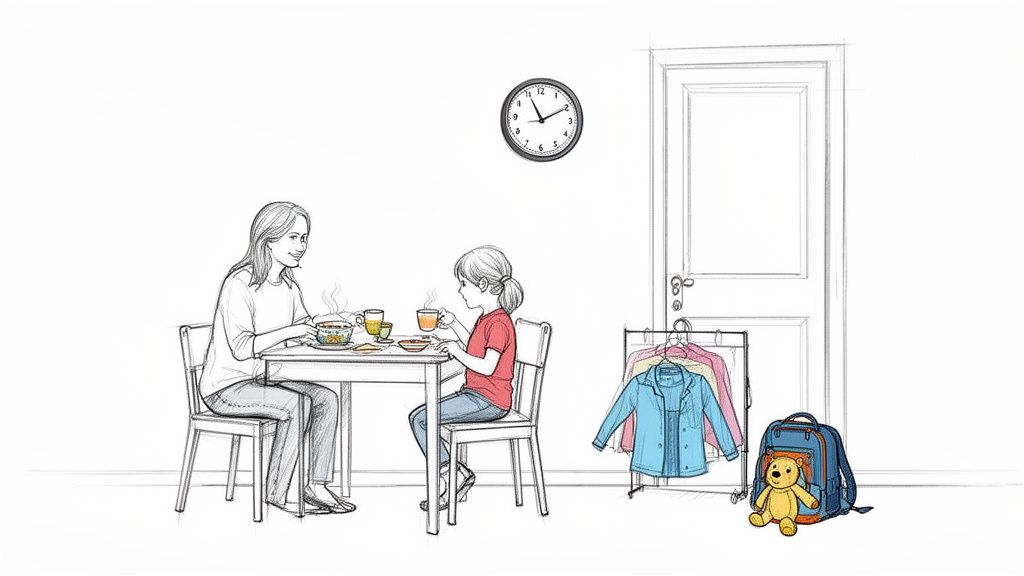
This approach is about creating a predictable, positive sequence of events. Instead of a frantic scramble, the morning becomes a series of familiar steps: waking up gently, eating a favourite breakfast, getting dressed, and leaving with plenty of time. For example, a working parent might arrange a flexible start at work on day one, allowing them to arrive at the nursery with enough time for a relaxed settling-in period before their workday begins. This small adjustment prevents the morning from feeling like a countdown.
Key Insight: Your calm demeanour is your child’s biggest cue. If you are relaxed and positive, they are more likely to mirror that emotional state. A peaceful morning routine signals that this new step is normal and safe, not something to be feared.
To make the first morning as smooth as possible, consider these practical steps:
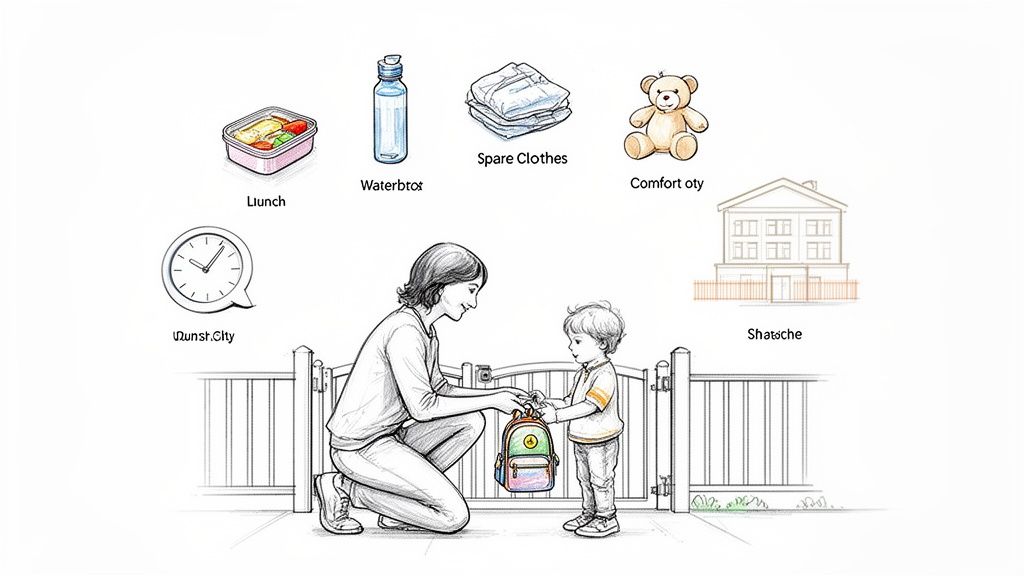
- Prepare the night before: Lay out comfortable, easy-to-manage clothes and pack the nursery bag in advance. This removes last-minute decisions and potential stress points.
- Wake up earlier: Set your alarm 15-30 minutes earlier than usual. This buffer of extra time is one of the most effective tips for ensuring a calm first day at nursery.
- Keep it familiar: Stick to a simple, known breakfast and avoid introducing new foods or activities. Familiarity provides comfort during a time of change.
- Allow for small choices: Letting your child choose between two pre-approved shirts or which toy to bring (if permitted) can give them a valuable sense of control.
- Minimise distractions: Keep the morning environment peaceful by limiting screen time and avoiding raised voices. A quiet, focused atmosphere helps reduce overstimulation.
- Plan your arrival: Aim to get to the nursery 10-15 minutes before the peak drop-off rush. This gives you time for a proper goodbye without feeling pressured by other families arriving.
5. Pack a Comfort Item and Maintain Connections to Home
The separation on the first day of nursery can be emotionally challenging, but a small piece of home can make a significant difference. Packing a familiar comfort item, such as a favourite soft toy, a blanket, or even a photo of the family, provides a tangible link to home. This object acts as a source of security, helping your child self-soothe when they feel anxious or homesick in their new surroundings.
This strategy is especially effective for babies and toddlers who are learning about object permanence and developing emotional regulation. For example, an 18-month-old might be given their small stuffed rabbit, which smells like home, during nap time when separation distress is often highest. Similarly, a two-year-old might be given a small photo album of family members to look at during transitions, turning it into a coping tool they can use throughout the day. These items bridge the emotional gap between home and nursery.
Key Insight: A comfort item isn’t just a toy; it’s a portable piece of security. It gives your child a sense of control and a familiar anchor in an unfamiliar environment, reinforcing the idea that they are safe and that you will return.
To use comfort items effectively, consider these practical tips:
- Choose wisely: Select a small, safe, and washable item that doesn’t present a choking hazard. Avoid anything too large or precious that could get lost or damaged.
- Label everything: Clearly write your child’s name on the item to prevent it from getting lost or mixed up with another child’s belongings.
- Brief your key worker: Explain the significance of the item and suggest when it might be most helpful, for instance, during settling-in, nap time, or if your child becomes upset.
- Introduce it beforehand: Make sure the item is already a source of comfort at home before the first day, so your child strongly associates it with feelings of safety.
- Have a backup: It’s a good idea to keep a duplicate comfort item at the nursery or at home, just in case the primary one is lost or needs washing.
- Consider a family photo: A small, laminated photo of the family can be a wonderful, non-intrusive way to remind your child of their connections to home.
6. Maintain Open Communication with Key Workers About Your Child’s Needs and Progress
Building a strong partnership with your child’s key worker is one of the most powerful tools for a successful nursery start. This two-way communication ensures your child’s unique needs, routines, and personality are understood and supported consistently. Key workers are experienced early years professionals who can offer daily updates and reassurance, creating a bridge between home and nursery life that helps your child feel secure.
This collaborative relationship is about more than just exchanging pleasantries at drop-off. It’s a vital information-sharing process that allows staff to provide personalised care. For example, a quick morning update via the nursery app, such as ‘slept poorly last night’, gives the key worker context if your child is a bit emotional. In return, an evening message like ‘had a great day and really enjoyed the messy play’ gives you peace of mind and something positive to talk about with your child.
Key Insight: Open communication turns your key worker into a true partner in your child’s care. Sharing small details about home life (like a new favourite song or a visit from grandparents) helps them connect with your child on a deeper level and integrate familiar comforts into the nursery day.
To build and maintain this essential relationship, consider these practical steps:
- Provide essential information upfront: On the first day, share key details about your child’s routine, sleep habits, comfort strategies, allergies, and any significant family changes, such as a new sibling or house move.
- Use the preferred communication method: Nurseries often use a secure app, email, or communication book. Using the designated channel consistently helps keep all information organised and accessible for the staff.
- Ask specific, open-ended questions: Instead of just asking “how was their day?”, try asking “What was the best part of their day?” or “How did they get on with their nap?” This invites more detailed and useful feedback.
- Share the positives: Let your key worker know about milestones and happy moments from home. This gives them a more rounded picture of your child beyond the settling-in period.
- Celebrate progress together: When your child finally waves goodbye with a smile or tries a new food, share that joy. Acknowledging these small victories together reinforces the supportive team around your child.
A nursery’s commitment to building strong parent partnerships is a great indicator of its quality. You can find out more about the dedicated professionals who support children’s development by exploring the team at our Northwood nursery.
7. Prepare for and Normalise Common Adjustment Reactions (Clinginess, Regression, Sleep Changes)
One of the most valuable tips for a first day at nursery is knowing what to expect in the weeks that follow. It’s completely normal for children to experience emotional or behavioural changes as they adapt to this new, significant part of their lives. Reactions like increased clinginess, regressions in toilet training, or disturbed sleep patterns are not a sign that something is wrong; they are standard, developmentally appropriate responses to a major transition.
Understanding these reactions helps you respond calmly and supportively, avoiding unnecessary guilt or alarm. For example, a two-year-old who was confidently using the potty might suddenly have accidents at home. Similarly, a previously independent three-year-old may become tearful at drop-off for the first couple of weeks. These behaviours are temporary and typically resolve within two to four weeks as your child builds security in their new routine.
Key Insight: These adjustment reactions are a child’s way of processing a big change. By normalising them, parents can provide the consistent, reassuring presence their child needs, which in turn helps them settle more quickly and happily.
To manage this period effectively, it’s helpful to be prepared. Consider these practical steps:
- Learn what’s typical: Before the first day, read about common adjustment behaviours. Knowing that a “honeymoon period” (smooth first few days) followed by some distress is common will help you navigate it without panic.
- Keep home life consistent: Avoid other major changes at home during the initial nursery period if possible. Maintaining predictable routines for meals, play, and bedtime provides a crucial sense of security.
- Partner with your key worker: Discuss potential reactions with the nursery staff. When you and your child’s key worker are on the same page, you can present a united, calm front.
- Resist the urge to withdraw: It can be tempting to pull your child out when they seem distressed, but consistency is key to a successful adjustment. If you’re struggling, you can find further support on how to help a child with separation anxiety at nursery.
- Know when to seek further advice: While most reactions fade, contact your key worker or health visitor if behaviours persist beyond four weeks or seem particularly severe.
7 Essential First-Day Nursery Tips Comparison
| Item | Implementation Complexity | Resource Requirements | Expected Outcomes | Ideal Use Cases | Key Advantages |
|---|---|---|---|---|---|
| Visit the Nursery Together Before the First Day | Moderate — arrange and attend tour with staff | Time (30–60 min), transport, staff availability | Lower first-day anxiety; familiarity with environment | New starters; anxious children; parents choosing a setting | Builds recognition, meets caregivers, creates positive associations |
| Create a Consistent Transition Routine and Goodbye Ritual | Low–Moderate — create and repeat a short ritual daily | Daily parent time (30s–2min), staff awareness to reinforce | Reduced crying/clinginess; increased predictability and trust | All ages, especially toddlers and clingy children | Simple to implement; supports secure attachment and routine |
| Prepare Your Child Emotionally with Age-Appropriate Conversations | Low — regular short, positive conversations before start | Parent time across days/weeks; books or examples | Reduced fear of unknown; anticipation and better emotional prep | Toddlers and preschoolers; children with developing language | Builds understanding, sets expectations, increases excitement |
| Establish a Calm, Unhurried Morning Routine on the First Day | Moderate — adjust schedules and pacing for morning | Extra morning time (15–30 min), planning, possible work flexibility | Lower parental and child stress; smoother drop-off and settling | Working parents on first day; children sensitive to rushed mornings | Prevents escalation, models calm, improves initial settling |
| Pack a Comfort Item and Maintain Connections to Home | Low — select, label and introduce a safe comfort object | Small washable item, backup, staff cooperation and hygiene checks | Improved self-soothing; reduced homesickness; better naps | Infants and toddlers (6 months–4 years); children missing home | Portable emotional support; immediate calming tool without parent |
| Maintain Open Communication with Key Workers About Needs & Progress | Moderate — establish channels and regular check-ins | Time for messages/meetings, nursery communication system | Personalised care, early issue detection, parental reassurance | Any new starter; children with specific needs; anxious parents | Fosters partnership, consistency, and progress tracking |
| Prepare for and Normalise Common Adjustment Reactions | Low — provide guidance and set expectations for parents | Information resources, staff guidance, monitoring time | Reduced parental guilt; calmer responses; realistic expectations | All starters during first 2–4 weeks; parents concerned about reactions | Reduces overreaction, supports consistent responses, prevents premature withdrawal |
Embracing the Journey Ahead
Your child's first day at nursery marks a significant milestone, not just for them, but for your entire family. While it is natural to feel a mix of excitement and apprehension, remember that this is just the beginning of a wonderful new chapter. The practical strategies we have explored are designed to build a strong foundation, transforming potential anxieties into confident steps forward. From visiting the nursery together to establishing a predictable goodbye ritual, each action reinforces a message of security and trust.
The key to a smooth transition lies in preparation and partnership. Talking to your child about what to expect, packing a familiar comfort item, and creating a calm morning routine are all powerful tools. These small, consistent efforts send a clear signal: nursery is a safe and positive place. Remember, mastering these practical tips for the first day at nursery is not about achieving a tear-free drop-off on day one. It is about equipping your child with the emotional resilience to navigate new social environments.
Key Takeaway: The goal is not perfection, but progress. Every child adapts at their own unique pace. Your patience, consistency, and positive attitude are the most important resources you can provide during this adjustment period.
Building a strong, communicative relationship with your child's key worker is just as important as the preparations you make at home. They are your partners in this process, ready to share insights and work with you to support your child's individual needs. Do not hesitate to share details about your child's personality, routines, or any anxieties they may have. This collaborative approach ensures a seamless bridge between their world at home and their new experiences at nursery.
Ultimately, these tips are about more than just surviving the first day. They are about fostering independence, encouraging social skills, and nurturing a love for learning that will last a lifetime. By embracing this journey with positivity and open communication, you are giving your child the best possible start. Trust in their ability to adapt and in the expertise of the early years professionals dedicated to their care. The initial wobble is a normal part of the process, and soon enough, you will see your child blossom with new friends, skills, and a growing sense of confidence. If you are exploring options in the Northwood area, visiting a local nursery can provide invaluable clarity and reassurance.
At Happy Tree Academy, we understand that a successful start to nursery life begins with a strong partnership between our team and your family. If you are looking for a nurturing environment in Northwood where every child’s transition is handled with care and individual attention, we invite you to book a tour. See for yourself how we support our children and parents every step of the way.