
Deciding when to start your little one at nursery is one of the biggest milestones you’ll face as a parent. There’s no single ‘right’ answer, as every child and family is different. While UK nurseries have long welcomed children from just a few months old, recent shifts in government funding have completely changed the conversation for parents thinking about 2026 and beyond.
The bottom line? The perfect age to start is now a blend of your child’s individual readiness, your family’s needs, and some brilliant new financial support that makes starting earlier a real option.
Why Parents Consider an Early Start
Of course, funding is only one piece of the puzzle. Thinking through your own family’s priorities will help you decide what’s best for you.
Here are a few common reasons parents choose to start nursery early:
- Returning to Work: For many, heading back to a career means needing reliable, professional childcare they can count on. A nursery provides that structured, safe environment.
- Fostering Social Skills: Early exposure to other children and trusted adults is fantastic for helping little ones learn to share, take turns, and communicate their needs.
- Supporting Development: A great nursery is a treasure trove of learning opportunities. They provide age-appropriate activities designed to spark curiosity, build confidence, and get little bodies moving.
Is Your Child Ready for Nursery?
While dates and funding deadlines give us a practical timeline, the real answer to “when should my child start nursery?” comes from watching your little one. More than hitting a certain age, readiness is about the small, subtle signs that they’re getting ready for a new, sociable world.
Every child unfolds at their own unique pace, so there’s no magic checklist. Think of these instead as gentle clues that your child might be on the cusp of enjoying the friendships and fun that nursery life brings.
Recognising the Signs of Social Readiness
One of the biggest tell-tale signs is a budding curiosity in other children. You’ve probably seen it at the park – your child stops to watch other kids play, or their eyes light up when another baby is nearby. This is them starting to realise they are part of a bigger world full of other interesting people.
You might also notice a shift in how they play. If they’re beginning to enjoy simple back-and-forth games like peek-a-boo or rolling a ball, it’s a sign they’re developing the earliest skills for playing with someone, not just next to them. It’s the first step towards making friends.
Readiness isn’t a single moment but a collection of evolving behaviours. It’s about noticing your child’s growing awareness of the world and people around them, not just their ability to be physically separate from you.
These little milestones show your child is getting ready to connect with new faces and try new things in a warm, supportive environment.
Developing Independence and Confidence
Even tiny moments of independence are a powerful sign. This could be as simple as your child happily playing with a toy by themselves for a few minutes or confidently toddling off to explore a new room (while still checking you’re nearby!).
These flashes of self-assurance show they’re building the emotional foundations to handle new situations. They’re starting to understand that they are their own little person, even when you aren’t right by their side.
A few key behaviours to look out for include:
- Showing Curiosity: Your child might point at or babble towards other children, showing a clear, early interest in being social.
- Communicating Needs: Even before they have words, children find ways to tell us things. If they can let you know they’re hungry, tired, or want a specific toy, they have the tools to build relationships with other caring adults.
- Adapting to Routine: If your child responds well to a general rhythm of naps and meals at home, they will likely find the predictable routine of a nursery day reassuring and comforting.
It’s so important to remember that nurseries are designed to support children at every single stage. Experienced practitioners are absolute pros at helping little ones manage separation, build their very first friendships, and feel safe and secure. If you’re exploring options for your family in Northwood, popping in for a visit can be the best way to see how this all works in real life.
A Closer Look at Starting at Different Ages
There’s no magic number or perfect answer for when a child should start nursery. The truth is, it’s a deeply personal decision that comes down to what feels right for your child’s unique personality and your family’s circumstances.
Every stage, from tiny baby to boisterous pre-schooler, comes with its own set of wonderful milestones and specific needs. Understanding what to expect at each age can help you feel more confident about when to take that first step.
Starting as a Baby (Under 1 Year)
For many families, the decision to start nursery with a baby under one is a practical one, often linked to a parent returning to work. At this delicate age, the absolute priority in a high-quality nursery is creating a calm, home-from-home atmosphere. It’s all about building that first, crucial bond between your baby and their key person.
This consistent, loving care helps your little one feel safe and secure, making it easier to establish a comfortable routine for naps and feeds. It’s also their first gentle introduction to a social world, where they begin to notice other babies and interact with caring adults. These early months are about security and trust, first and foremost.
Demand for these baby places is always high. In fact, official UK statistics track this closely, and you can see the kind of data nurseries provide by looking at the government’s own early years census requirements on GOV.UK.
Starting as a Toddler (1-2 Years)
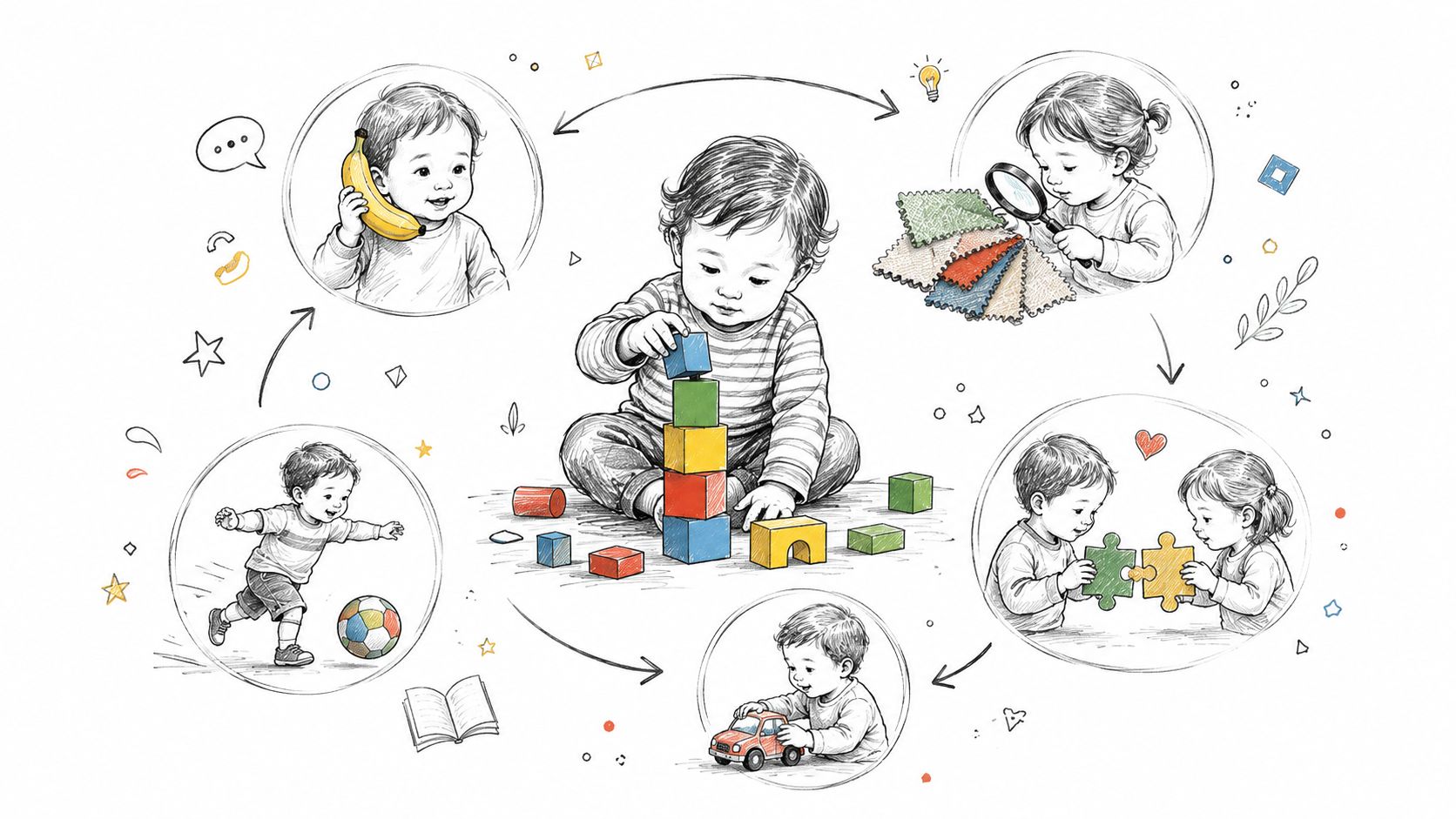
The toddler stage, from one to two, is an explosion of discovery. This is when little ones really get moving, their curiosity is boundless, and they’re bursting to communicate. A stimulating nursery can be the perfect playground to channel all that incredible energy.
Toddlers are natural explorers, and a good nursery setting provides a rich, safe landscape for them to learn through play. This is also when they start to engage in ‘parallel play’—happily playing alongside other children without necessarily interacting directly. It’s a vital stepping stone towards building more complex social skills later on.
You’ll also notice their language development skyrocketing. Being immersed in a chatty environment full of other children and encouraging adults gives them constant opportunities to practise new sounds and words, helping their vocabulary to grow at a dizzying pace.
Starting as a Pre-Schooler (3-4 Years)
By the time a child starts nursery at three or four, the focus naturally shifts towards getting them ready for school. At this point, children are usually far more independent, ready to form real friendships, and keen to cooperate on games and projects. Nursery is the ideal place to practise these skills.
Pre-school rooms are cleverly designed to support both child-led play and more focused activities that introduce the foundations of phonics, maths, and literacy in a fun, pressure-free way. It’s all about building their confidence and giving them a positive, exciting lead-up to primary school.
For pre-schoolers, nursery is about more than just childcare. It’s a foundational experience that nurtures independence, social confidence, and a genuine love of learning before they take the big step into school.
This is where children develop the social and emotional toolkit they’ll need to thrive in a busy classroom. You can see how this exciting stage is supported by reading about the journey in a 2-to-5-year-old nursery room.
Making Sense of Nursery Fees and Funding in 2026
Let’s talk about the financial side of things. For many families, the question “When can my child start nursery?” is closely tied to “When can we afford it?”. The great news is that from 2026, significant changes in government funding will make accessing high-quality early years education much more affordable, much earlier.
This support is a real game-changer. It’s designed to ease the financial strain on parents and offer more flexibility, whether you’re planning a return to work or simply want your little one to benefit from a new, stimulating social environment.
A Guide to Funded Childcare Hours
The most common form of support comes from government-funded hours. What you’re entitled to depends on your child’s age and your family’s working situation, so it’s worth getting to grips with the different tiers.
- From 9 Months Old: Working parents with children from just 9 months old can now access 30 hours of funded childcare each week.
- For 2-Year-Olds: Some families receiving certain types of government support can also claim 15 funded hours for their 2-year-old receiving additional support.
- For 3 and 4-Year-Olds: All families get a universal 15 hours per week. On top of that, eligible working parents can claim an extra 15 hours, bringing their total to 30 hours per week.
These hours are usually offered during term time (38 weeks a year). However, many nurseries provide a ‘stretched’ option. This means you can take fewer hours per week but spread them across the full year, which can be a huge help for managing childcare during school holidays.
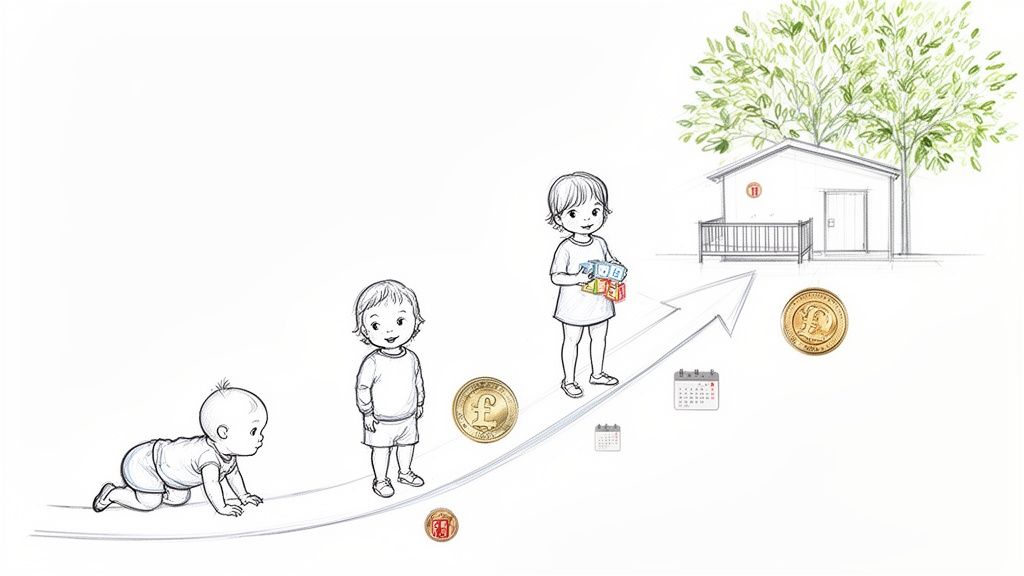
This flowchart gives a simple overview of the different stages for starting nursery.
As you can see, each age group—baby, toddler, and pre-school—represents a unique developmental phase, and a good nursery will tailor its approach accordingly.
How to Check Your Eligibility and Apply
So, how do you get this funding? To claim the hours for working parents (for children from 9 months and the extended 30-hour offer), both parents typically need to be working and earn above a certain amount. The first step is to check your eligibility on the government’s official childcare website.
If you qualify, you’ll receive a code. You simply bring this code to your chosen nursery, and they will handle the rest. These reforms are expected to help over 500,000 families with 9-month-olds, highlighting just how vital early education has become.
But the support doesn’t stop there.
Don’t forget about Tax-Free Childcare! It’s another government scheme where for every £8 you pay into an online account for childcare, the government adds an extra £2. This can give you up to £2,000 per child, per year.
Getting your head around the finances early on provides real peace of mind. It allows you to focus on what truly matters—finding the perfect, nurturing place for your child to thrive. If you’d like to dive deeper, we’ve put together a straightforward guide on government funding options for nursery.
Practical Tips for a Smooth Nursery Transition
Helping your child feel happy and secure at nursery doesn’t just happen on their first day. The real work begins beforehand, and a gentle, positive approach can make a world of difference. It’s all about turning those understandable nerves into genuine excitement for the big adventure ahead.
The secret is to slowly build a bridge of familiarity and trust. By taking small, reassuring steps together, you can help your little one feel confident and ready to embrace their new environment.
Prepare for the First Day Together
The more your child knows what to expect, the less daunting it will all feel. Making the nursery feel familiar before they officially start is one of the most powerful things you can do.
- Visit the Nursery: Always take up the offer of settling-in sessions. These visits allow your child to explore the rooms, see the toys, and meet their key person with you right there for support. It paints a picture for them.
- Talk About It Positively: Frame nursery as an exciting place for adventure. Talk about the new friends they’ll make, the messy play they’ll get to do, and the fun stories they’ll hear.
- Read Stories: Find a few lovely picture books about starting nursery. Seeing a favourite character navigate the same feelings and have a wonderful time can really help normalise the experience.
Create Comforting Goodbye Rituals
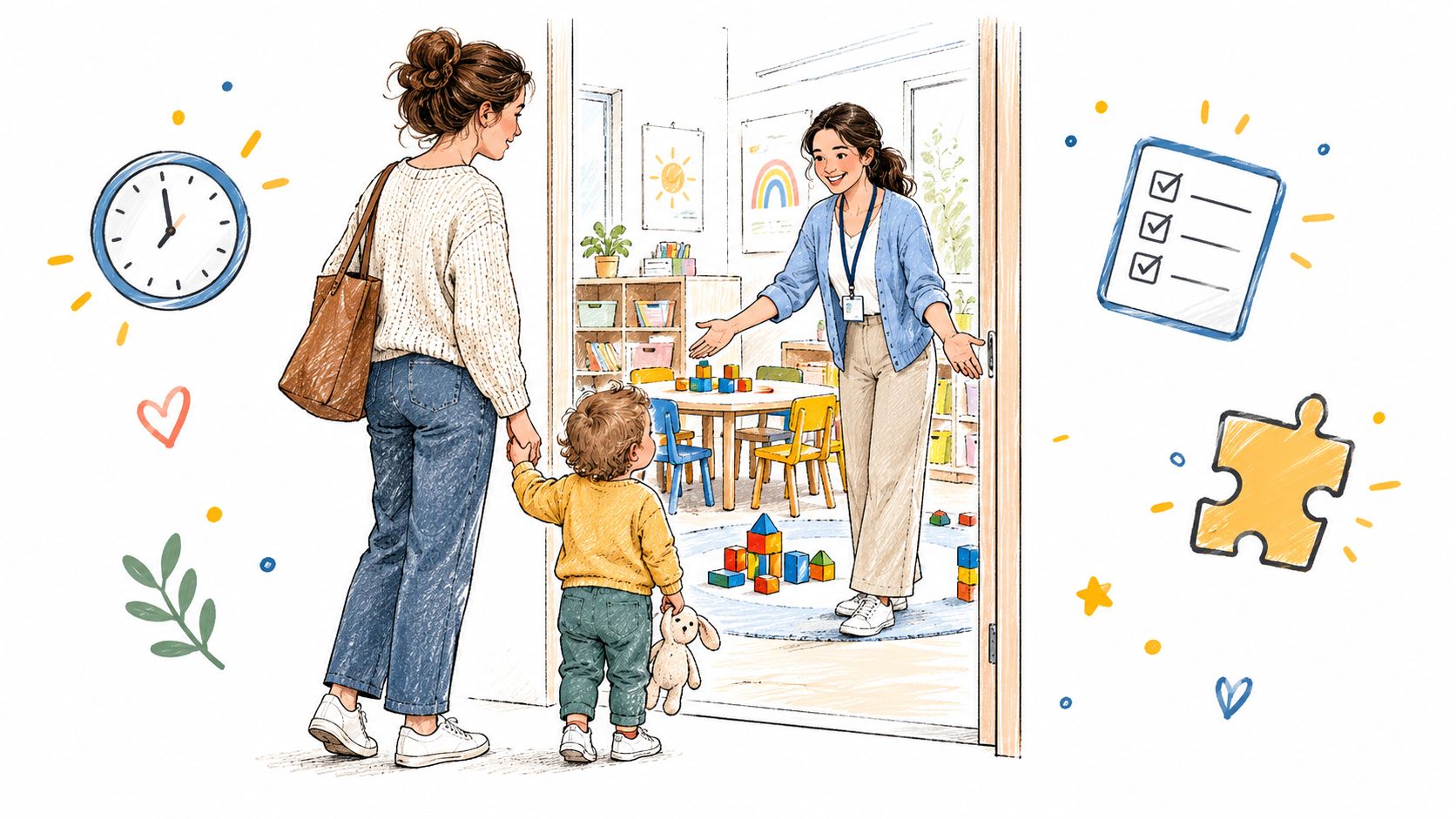
That moment of separation at the door is often the toughest part for everyone. A consistent, predictable goodbye ritual can be a powerful comfort. It doesn’t need to be elaborate—it just needs to be yours.
A quick hug, a special high-five, or a cheerful “see you after snack time!” gives your child the clear signal they need. The most important part? Once you’ve said your goodbye, it’s best to leave confidently. Lingering can often prolong the upset and make it harder for your child to settle.
A predictable goodbye ritual acts as an emotional anchor for your child. It signals that you are leaving, but it also provides a powerful, unspoken promise that you will always come back.
It’s completely normal to have a few wobbly drop-offs along the way. If you find these moments particularly tough, you might find it helpful to learn how to help a child with separation anxiety at nursery in our dedicated guide.
Trust the nursery team—they have helped hundreds of children through this and are experts at offering a comforting cuddle and gently guiding them toward a fun activity. Before you know it, those tearful goodbyes will turn into happy waves as your child can’t wait to run in and start their day.
Finding the Right Nursery for Your Child
Once you’ve got a rough idea of when you’d like to start, the real journey begins: finding a place where your child will feel safe, cherished, and excited to learn. The ‘right’ nursery isn’t just about logistics; it’s about finding a second home that shares your values and supports your little one as they take their first big steps into the world.
Nothing beats visiting a nursery in person to get a true sense of its atmosphere. The moment you step inside, listen to your gut instinct. A wonderful early years setting should have a warm, welcoming, and happy buzz about it right from the get-go.
What to Look For During Your Visit
Watch how the team members talk to the children. Are they getting down on their level to chat, eye-to-eye? Do they offer cuddles, comfort, and genuine encouragement? It’s in these small, everyday interactions that you’ll see a real culture of kindness and respect.
Try to see the space through your child’s eyes. You’re looking for a few key things:
- A Safe and Secure Haven: First and foremost, is it clean, well-maintained, and clearly designed for curious toddlers? Look for things like a secure entrance and an enclosed outdoor area for safe adventures.
- A World of Play: A brilliant nursery is brimming with age-appropriate toys, books, and messy play materials. It shouldn’t feel like a pristine showroom; it should look like a place where children are actively encouraged to explore and learn through play.
- Wonderful Outdoor Opportunities: Fresh air and freedom to move are crucial for growing bodies and minds. Do children have easy and regular access to an outdoor space where they can run, explore, and connect with nature?
As a parent, your intuition is your greatest superpower. The best nursery for your family is the one where you can instantly picture your child giggling, learning, and truly thriving.
Don’t be shy about asking questions! Ask about their settling-in process, what a typical day looks like, and how they keep you updated on your child’s day. If you’re weighing up your options, understanding the different nursery rooms and their focus can also give you a clearer picture of how your child’s journey will unfold.
For families in and around Northwood, the best next step is to see it all for yourself. Booking a tour of our Northwood nursery is the perfect way to feel the atmosphere and see how these principles come to life.
Your Questions About Starting Nursery, Answered
It’s completely normal to have a long list of questions when you’re thinking about the right time to start nursery. It’s a huge step for your whole family! We get asked these all the time, so let’s walk through some of the most common worries we hear from parents just like you.
How Long Will It Take for My Child to Settle In?
This is the big one, isn’t it? The honest answer is that every child finds their rhythm at their own pace. Most little ones take a few weeks to really feel confident and at home.
Many nurseries manage this with a gentle settling-in period, starting with short visits where you stay with them and gradually building up to longer, independent sessions. The absolute key is open communication between you and your child’s key person—together, you’ll make sure the transition feels positive and not rushed.
I’m Worried Starting Nursery Will Affect Our Bond. Will It?
This is such a common and heartfelt concern, and we want to reassure you. A warm, high-quality nursery is designed to complement, not replace, the incredibly special bond you have with your baby. Think of it as widening their circle of trust, not breaking it.
Your role as their main source of love and security is, and always will be, the most important one. The nursery team works with you, creating a supportive network that helps your child feel cherished and happy both at home and at nursery.
What Exactly Is a “Key Person” and Why Do They Matter So Much?
In all UK nurseries, your child is assigned a key person—a specific member of the team who will be the main point of contact for both your child and you. This role is fundamental to a happy start.
Your key person’s main job is to build a close, trusting relationship with your little one. They become that familiar, friendly face your child can turn to for a cuddle, a story, or help with a tricky puzzle. This consistent, one-on-one care is what helps them feel safe, understood, and ready to thrive.