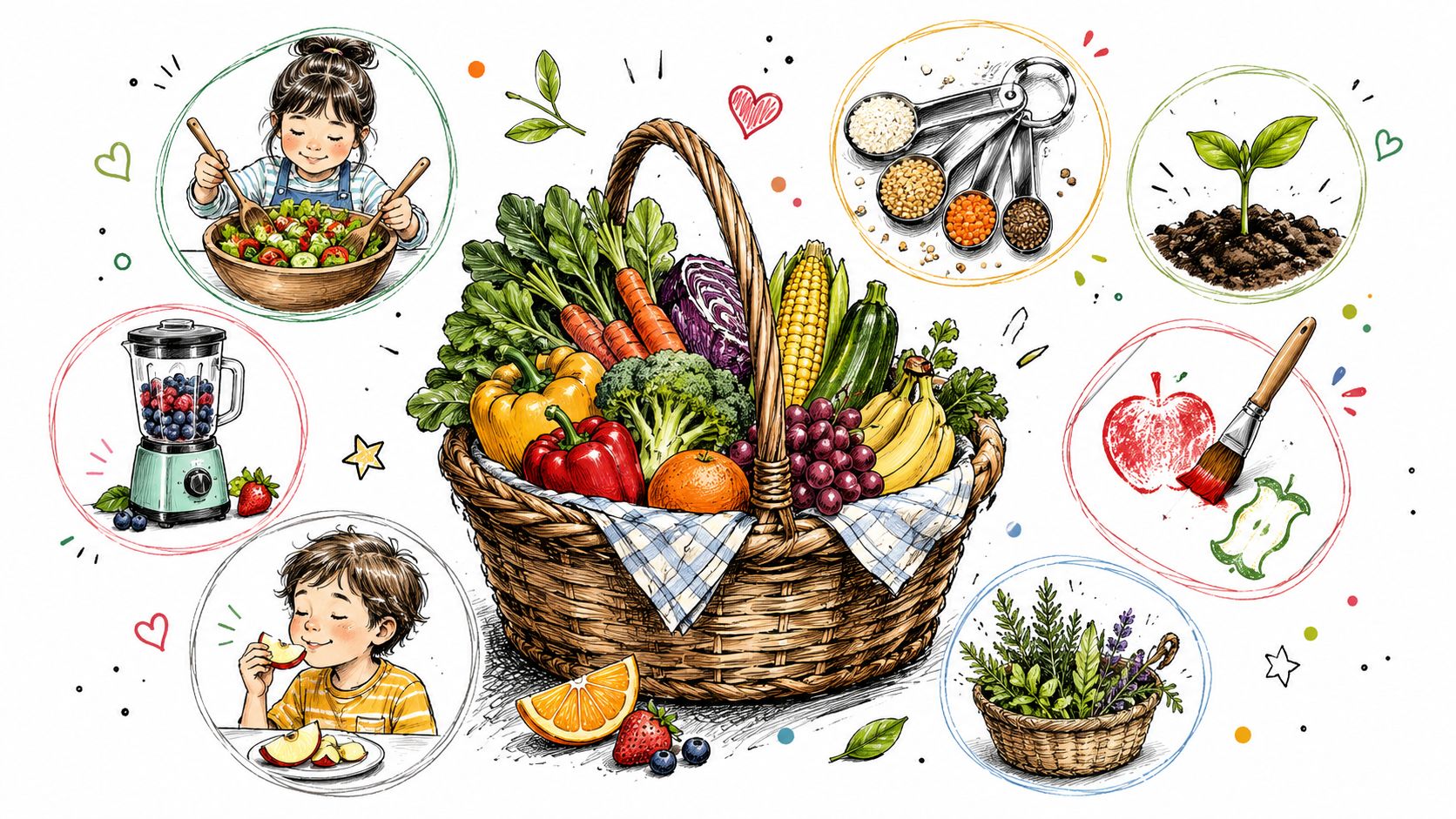

How can we encourage young children to enjoy healthy foods without turning every meal into a negotiation? Often, the answer isn't more talk at the table. It's more play before, around, and alongside food.
Children learn best when they can touch, smell, sort, pour, mix, and explore. That's why EYFS healthy eating activities work so well. They make food familiar before it ever needs to be eaten. For babies, toddlers, and preschoolers, that familiarity matters. A cucumber slice that feels cold and wet in play is often less worrying later on a plate.
This playful approach fits what we know about early learning. A review of food and nutrition interventions found that these programmes can improve children's attitudes, knowledge, behaviour, and anthropometry, and that environmental approaches are often the most effective, as outlined in this review of food and nutrition interventions. In simple terms, children usually respond better to repeated, hands-on experiences than to lectures about what's “good for them”.
Below are seven practical ideas you can adapt at home or use as inspiration from early years practice. Each one includes the why, the how, and what to notice next, so it's easier to turn a simple activity into a meaningful part of your child's learning.
1. Rainbow Food Tasting Adventure
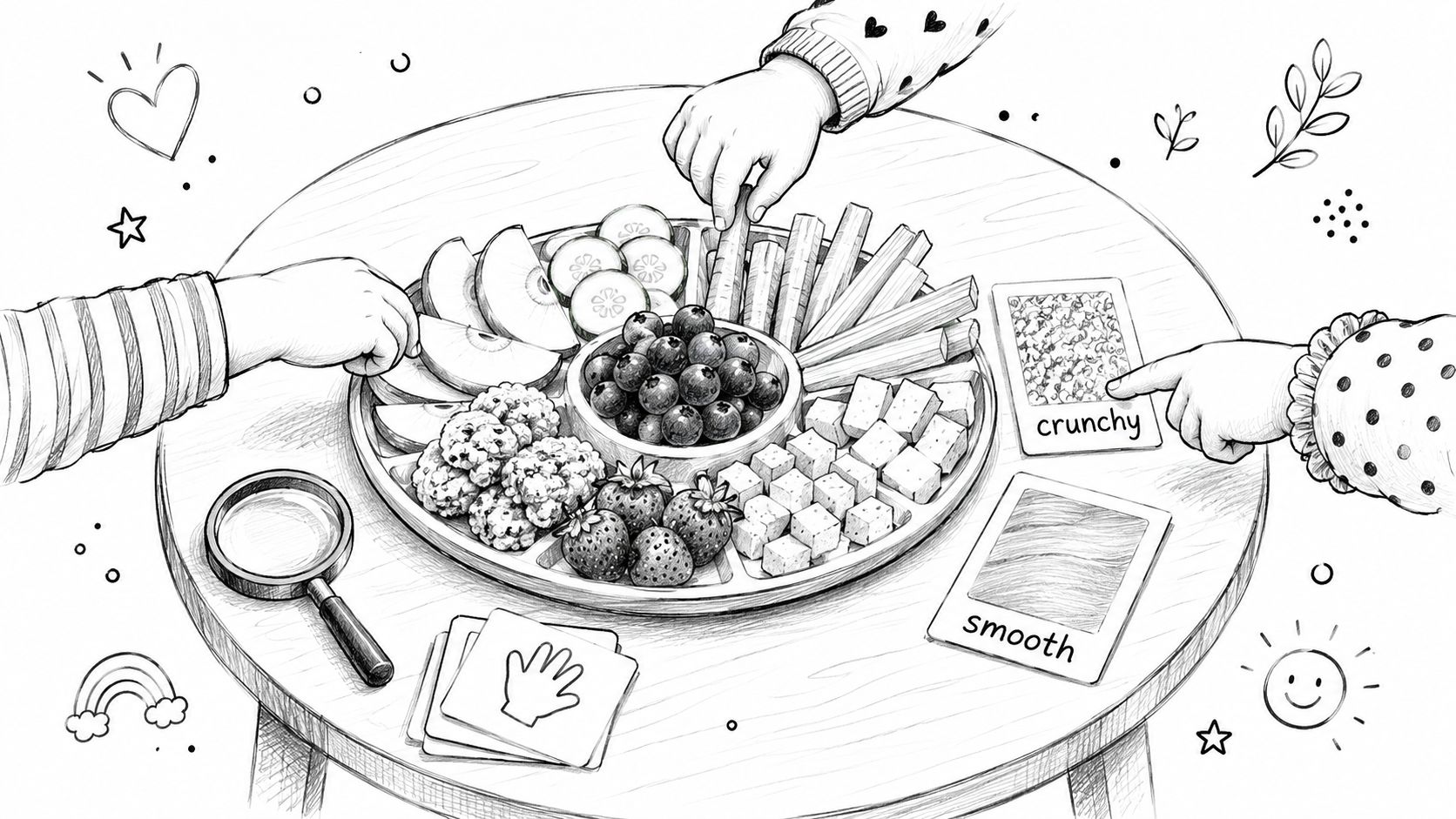
A rainbow tasting activity works because it shifts the focus away from “eat this” and towards “let's explore this”. Put out a few fruits and vegetables in different colours, such as strawberries, cucumber, sweetcorn, blueberries, and pepper strips. Children don't need to eat everything. Looking, touching, sniffing, and licking all count as useful first steps.
For a younger toddler, you might offer just two foods at a time on a tray. For an older child, you could make it into a colour hunt and ask, “Can you find something green?” or “Which one feels bumpy?”
Why it helps in the EYFS
This supports communication and language, personal, social and emotional development, and physical development. Children build vocabulary such as crunchy, juicy, smooth, soft, sour, and sweet. They also practise making choices and noticing their own preferences without pressure.
Practical rule: Keep the tone curious, not persuasive. “You can touch it if you want” is more helpful than “Just try one bite.”
That matters especially for younger children and fussy eaters. UK early years guidance around picky eating highlights repeated low-pressure exposure, sensory exploration, and avoiding force or bribery. If you'd like extra reassurance on handling food refusal calmly, this guide to food and nutrition for fussy eaters is a useful next read.
How to run it at home
Try this in a simple sequence:
- Start small: Offer a few pieces rather than a full plate.
- Use real language: Name colour, texture, smell, and temperature.
- Model gently: Let your child see you taste, but don't insist they copy.
- Repeat later: A food refused today may feel fine next week.
What to notice next is often very subtle. Your child may move from pushing a tomato away, to holding it, to squashing it, to eventually tasting it. That's progress.
2. Little Sprouts Garden Club
Food often becomes more interesting when a child has helped grow it. A pot of cress on the windowsill, herbs in a tub, or a few pea shoots in a tray can be enough to start. Young children love jobs that feel real, and watering a plant gives them exactly that.
A home garden activity doesn't need a large outdoor space. A balcony pot, a sunny kitchen ledge, or a recycled yoghurt pot can work well for simple growing.
Why growing changes the conversation
When children watch food grow, they begin to connect the natural world with what appears on their plate. Mint becomes something they picked. Tomatoes become something they checked on every day. That sense of ownership can soften resistance.
It also links beautifully with wider early years learning through movement, outdoor exploration, observation, and care routines. If your child already enjoys digging, collecting, and noticing changes outside, you may also like these ideas about the benefits of outdoor play.
Let children harvest even if the result is tiny. A single home-grown leaf can matter more to a child than a full shop-bought bag.
Keep it manageable
This works best when the task feels achievable.
- Choose quick wins: Herbs, cress, or salad leaves are easy for young children to follow.
- Build a routine: Water at the same point each day.
- Use food afterwards: Add chopped herbs to soft cheese, stir cress into an egg sandwich, or let your child place leaves on a plate.
- Talk while you do it: “This one smells strong.” “These leaves feel soft.” “We grew this together.”
What to notice next is whether your child becomes more willing to interact with the food after growing it. They may still not eat it straight away, but they often become prouder, more curious, and more open.
3. My First Cookery Session
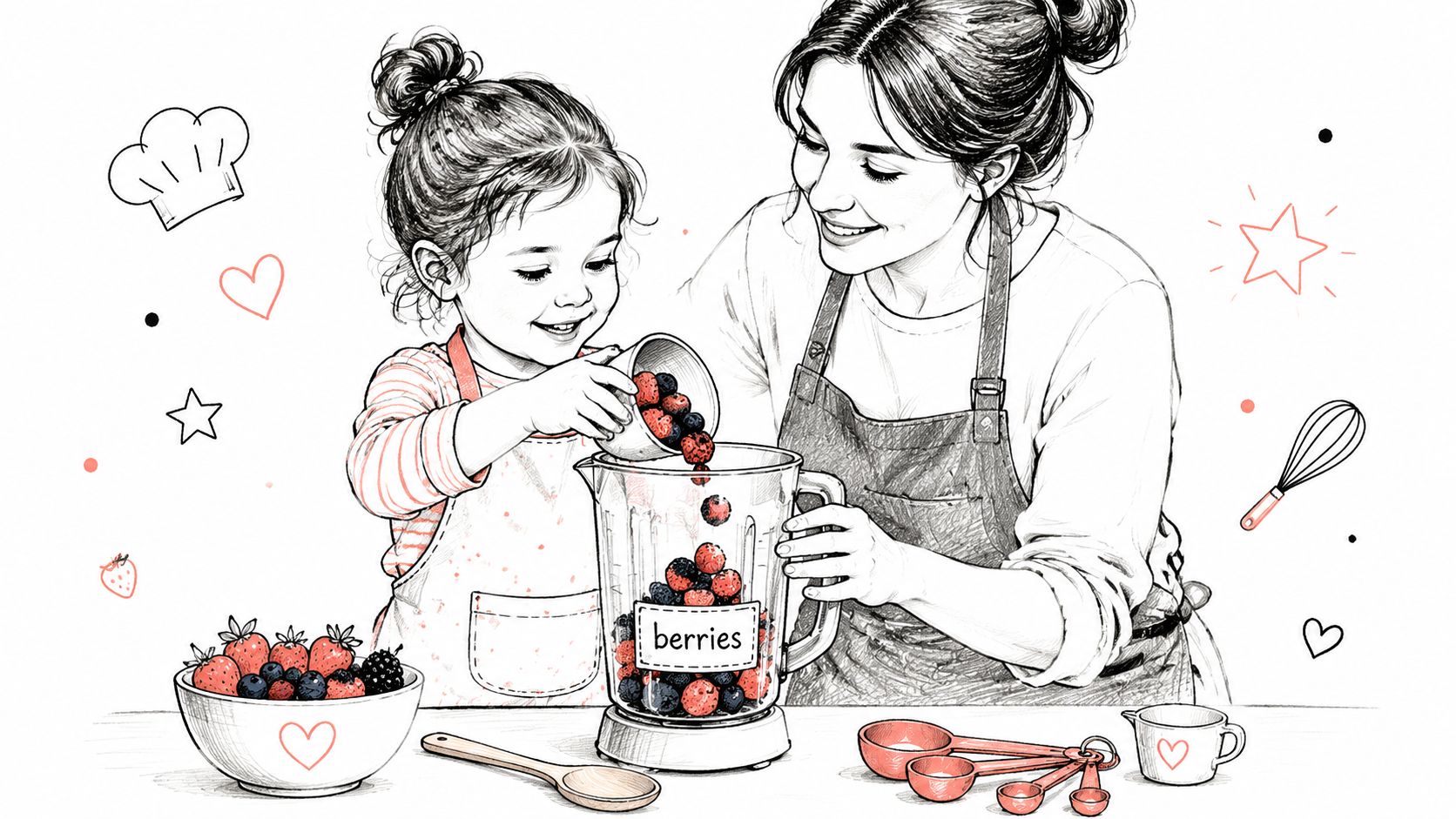
A simple cookery session gives children a role in food preparation, and that changes their relationship with the final meal. Mixing yoghurt with chopped fruit, spreading soft cheese on toast, mashing banana, or stirring oats into a bowl all help children feel involved.
The result doesn't need to look neat. In early years practice, process matters far more than presentation.
What children are learning
Cookery supports fine motor control, listening, sequencing, turn-taking, and early maths language. A child who scoops, pours, tears, and stirs is learning far more than “how to make a snack”.
There's also a wellbeing link. In England, the government's Holiday Activities and Food programme reached over 600,000 children and young people in one summer, including over 495,000 eligible for free school meals, combining nutritious meals with exercise and enrichment such as cooking classes, as described in this government update on the HAF programme. That reflects a broader picture. Food learning is often most powerful when it's practical, social, and active.
Simple ways to adapt it
You don't need special equipment. A bowl, spoon, child-safe knife for softer foods, and a wipe-clean surface are enough.
- For babies: Let them watch, smell ingredients, and handle safe pieces.
- For toddlers: Offer tearing, sprinkling, or spooning jobs.
- For older children: Add simple choices such as “apple or pear?” or “shall we mix or layer?”
If you want more ideas for playful set-ups that fit naturally into early learning, these nursery activity ideas for young children can help you think beyond one-off crafts.
Watch what happens at the end. Children often taste more willingly when they've helped prepare the food, even if it's only a nibble.
4. Food-Themed Story Time
Some children are much happier meeting a food in a story before they meet it in real life. A picture book about vegetables, markets, lunch, picnics, or growing helps children build familiarity through language and imagination first. That can make food feel less sudden and less pressured.
You might read a book and then place one related item on the table afterwards. If the story includes pears, offer a pear to hold. If it mentions soup, let your child stir a cold bowl with a spoon in pretend play.
Why stories work so well
Stories slow things down. They let children notice foods in a safe, playful context and hear positive language around them. This supports communication, listening, recall, and emotional confidence.
For children who are cautious eaters, books can also help you step away from direct mealtime pressure. You're no longer saying, “Please eat your carrot.” You're talking about what the character found crunchy, orange, or funny-looking.
“You don't have to taste it. Let's just see if it looks like the one in the story.”
That one sentence can lower tension straight away.
Making it feel natural
You don't need a themed lesson. Keep it light and conversational.
- Read slowly: Pause to notice food words and pictures.
- Follow your child's interest: If they keep pointing to bananas, stay there.
- Add one prop: A spoon, pretend food, or a real fruit can extend the story.
- Repeat favourites: Young children often learn through hearing the same story many times.
What to notice next is the language your child starts using. They may begin naming foods in books, spotting them in shops, or pretending to cook them in play. That kind of recognition often comes before willingness to taste.
5. The Play Shop or Market Stall
Role play can do a lot of quiet work around food. A pretend shop, market stall, café, or picnic gives children a chance to handle foods, name them, sort them, “buy” them, and offer them to other people. It turns healthy eating into part of everyday life rather than a special lesson.
This can be done with toy foods, empty clean packaging, baskets, paper bags, notepads, and a small till. If you use real produce for short periods, sturdier items such as apples, onions, lemons, potatoes, or peppers tend to work best.
What this builds beyond food knowledge
A play shop supports social interaction, early maths, speaking, listening, and imaginative thinking. Children count pieces of fruit, compare sizes, take turns as customer and shopkeeper, and hear the names of foods repeated naturally.
It's also a good place to widen children's awareness of what “normal food” looks like. Instead of only talking about sweet treats or familiar beige foods, they see courgettes, kiwi, lentils, rice, mushrooms, and peppers appearing in ordinary play.
Making it realistic for home
A simple version often works better than an elaborate one. Put a few items in baskets, add some coins, and let your child lead.
- Use everyday phrases: “What would you like today?” “Can I have two bananas?”
- Mix familiar and unfamiliar foods: Keep the balance comfortable.
- Include home links: Add foods your family buys when possible.
- Follow pretend play into snack time: “You bought cucumber in the shop. Shall we put some on the plate?”
The helpful part here is repetition. Children may “sell” the same apple ten times before they ever taste one. That still counts as building familiarity and confidence.
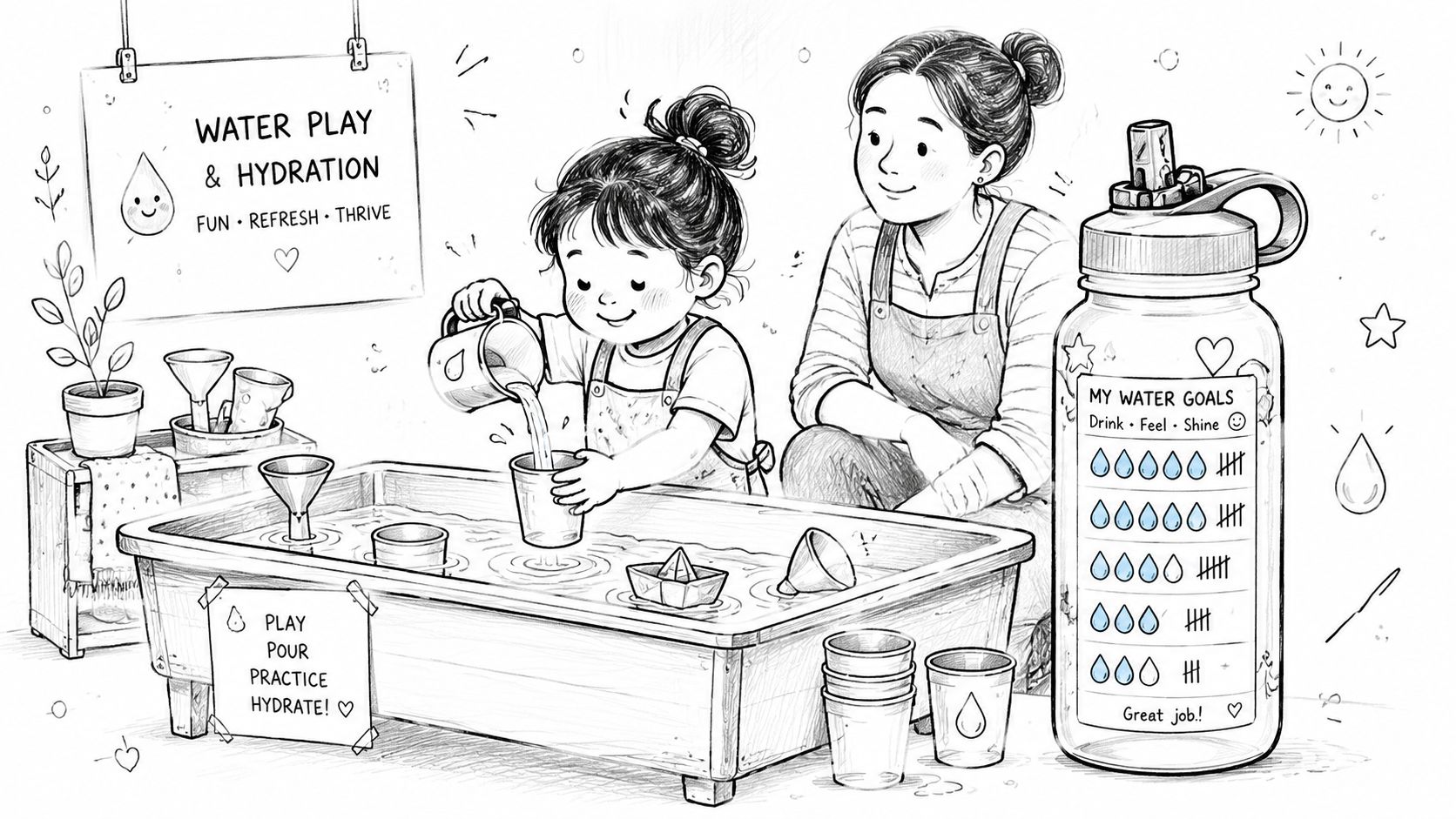
6. Hydration Station and Water Play
Healthy eating isn't only about food. Drinking water regularly matters too, and young children often respond best when water is easy to access and tied to routine. A small jug, a child-sized cup, and a consistent place to drink can make hydration feel normal rather than something adults keep reminding them about.
Water play can support that message in a playful way. Pouring, filling, emptying, and splashing all help children notice water as part of daily life.
Why this matters in practice
Many healthy eating articles focus only on fruit and vegetables, but UK guidance places wider emphasis on healthier drinks and snacks, reducing foods high in fat, salt and sugar, and seeing nutrition as part of whole-setting practice, as reflected in this UK early years food guidance from Food a Fact of Life. For parents, that means it's useful to think about food and drink habits together.
A hydration routine also supports independence. Children learn where their cup goes, how to pour with help, and when to stop for a drink after active play.
Gentle ways to encourage it
Keep this simple and visual.
- Make water visible: Use a clear jug or bottle.
- Offer small pours: This feels manageable for little hands.
- Tie it to routines: After outdoor play, after story time, or with snacks.
- Use sensory language: Cool, wet, splashing, full, empty.
Children who resist drinking from an open cup may enjoy practising in water play first. Pouring from one container to another builds hand control without the pressure of “take a drink now”.
7. Mindful Snack Time Routine
Snack time can become rushed very easily. One child is hungry, another is distracted, and an adult is trying to move the day along. But when snack time is calmer and more predictable, it becomes one of the best EYFS healthy eating activities you can offer.
A mindful snack routine doesn't need to be formal. It means slowing down enough for children to notice the food, take part in the process, and enjoy eating with less pressure.
What it can look like
A toddler might help carry a bowl to the table, choose between two snack items, sit for a short time, and hear simple comments about what's being served. An older child might pour water, hand out napkins, or help tidy afterwards.
This links well with the wider aims of the EYFS framework for early years learning, where routines are part of children's development, not separate from it. Snack time can support communication, self-care, social confidence, and independence all at once.
Parent reminder: Success isn't a clean plate. Success is a child who feels safe, included, and increasingly confident around food.
What to notice over time
The biggest change is often emotional. Children begin to know what to expect. That predictability can reduce food anxiety, especially for younger toddlers or children who are wary of new textures.
You might notice:
- More participation: Your child carries, pours, or serves.
- More language: They start naming foods and describing them.
- More tolerance: They sit near unfamiliar foods without distress.
- More confidence: They touch or taste something new in their own time.
If your child is under three and often refuses food, this calm routine matters even more. Picky eating is commonly understood as a normal developmental phase in early childhood, and low-pressure repeated exposure is usually more helpful than pushing, bargaining, or coaxing.
EYFS Healthy Eating: 7-Activity Comparison
| Activity | Implementation complexity | Resource requirements | Expected outcomes | Ideal use cases | Key advantages |
|---|---|---|---|---|---|
| Rainbow Food Tasting Adventure | Low, simple setup | Variety of colourful fruits/veg, platter, napkins | Reduced food fear; richer sensory vocabulary | Sensory exploration, introducing new foods | Low-pressure, playful, immediate engagement |
| Little Sprouts Garden Club | Medium, ongoing care | Pots/soil/seeds, tools, watering cans | Understanding plant life cycle; responsibility | Outdoor learning, seasonal projects, cross-curricular links | Hands-on connection to food; long-term engagement |
| My First Cookery Session | Medium, supervision required | Prepped ingredients, child-safe utensils, bowls | Improved fine motor skills; food preparation confidence | Small-group cooking, practical life skills | Builds independence and pride in making food |
| Food-Themed Story Time | Low, minimal prep | Food-themed books, optional real props | Enhanced vocabulary; cultural and food awareness | Literacy sessions, circle time, linking books to taste | Low-cost, accessible, links imagination to food |
| The Play Shop or Market Stall | Medium, setup and rotation | Play food, toy till, baskets, play money | Social negotiation, counting, food naming | Role-play, numeracy practice, social skills work | Encourages language, sorting, and cooperative play |
| Hydration Station and Water Play | Low–Medium, safety/supervision | Water dispenser, cups, tubs, pouring tools | Better hydration habits; fine motor practice | Outdoor warm-weather play, sensory tables | Promotes independence and physical health awareness |
| Mindful Snack Time Routine | Low, routine-driven | Daily healthy snacks, child-sized plates/cups | Social skills, self-help, mindful eating | Daily routines, group social learning | Turns snack into learning; promotes calm and routine |
Making Healthy Eating a Lifelong Adventure
Healthy eating in the early years doesn't begin with perfect meals or ideal behaviour at the table. It begins with familiarity, routine, and trust. When children can play with food ideas, grow something small, hear stories, stir a bowl, pour water, or sit at a calm snack table, they start building a relationship with food that feels safe and positive.
That's one reason play-based approaches matter so much. Children are still learning how foods look, smell, feel, and fit into daily life. They're also learning that adults around food can be calm, predictable, and supportive. Those emotional experiences shape eating habits just as much as the food itself.
For parents, it helps to remember that progress often looks modest. A child may go from refusing a pepper, to touching it, to licking it, to eventually taking a bite weeks later. Another may only accept one texture for a while, then suddenly widen their choices after repeated relaxed exposure. These small steps are not failures or delays. They're part of how many young children learn.
It's also worth taking a broad view of healthy habits. Food isn't a stand-alone topic. It connects with outdoor play, sensory learning, language, self-care, social development, and family routines. Practical food experiences are increasingly being seen as part of a wider wellbeing picture, rather than as isolated nutrition lessons.
You don't need to do all seven activities at once. Choose one that fits your child's age, interests, and temperament. A baby may enjoy sensory exploration with soft fruit. A toddler may love pouring and stirring. A preschooler may become thoroughly invested in a pretend market stall or a pot of herbs on the windowsill.
Keep the atmosphere light. Celebrate effort rather than outcome. Stay consistent, even when enthusiasm comes and goes. Over time, those ordinary moments around food can become the foundation for confidence, curiosity, and healthy habits that last well beyond the early years.
If you're exploring childcare options, speaking with your local nursery can help you understand how early years settings support children's development and encourage positive eating habits in everyday, practical ways.
If you're looking for a nurturing start for your child, Happy Tree Academy offers early years care and education in Northwood for children aged 3 months to 5 years. Parents are welcome to explore the nursery website, learn more about the day-to-day approach, and book a visit to see whether it feels like the right fit for their family.