
Nurturing Little Hands: A Parent's Guide to Fine Motor Skills
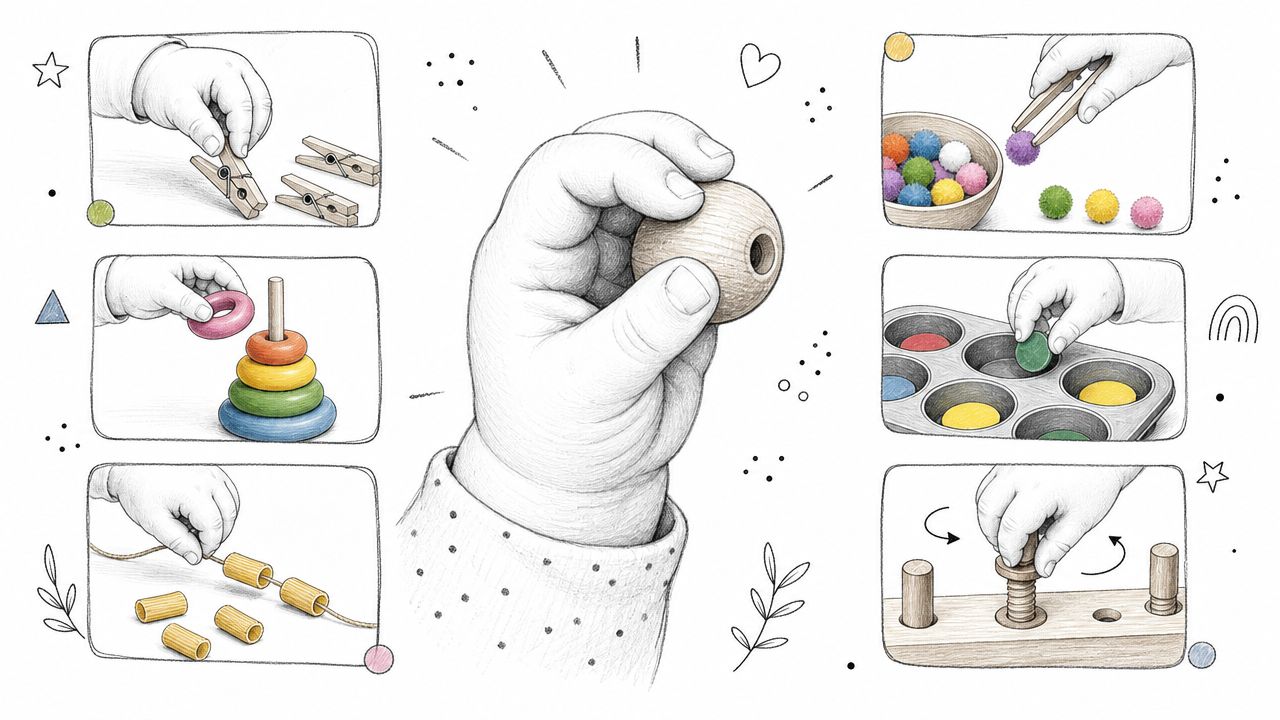
Have you ever watched your baby painstakingly try to pick up a tiny crumb, or wrap their whole hand around your finger? Those little efforts can look ordinary, but they're doing important work. They're the early building blocks of fine motor skills, which are the small, controlled movements of the hands and fingers that children later use for feeding themselves, turning pages, dressing and eventually mark-making.
The reassuring part is that supporting these skills doesn't have to mean buying lots of specialist toys. In England, the Early Years Foundation Stage guidance treats fine motor development as part of everyday learning, not an optional extra. It even encourages offering babies materials they can grasp, grip, bash, squash and poke, while older children build control through daily routines such as preparing snacks and tidying up in the government's fine motor guidance for early years.
Many of the best fine motor activities for babies use simple things you already have at home. A scarf, a wooden spoon, a shallow basket, a few cups and some paper can all become purposeful play. Below, you'll find seven easy ideas for babies and young toddlers, with age guidance, progression ideas and safety notes to help you feel confident as your child grows.
1. Treasure Baskets and Sensory Exploration
You set your baby on the floor with a shallow basket beside them. At first, they pat the rim. Then they pull out a wooden spoon, turn it over, bang it once, drop it, and reach for the soft flannel instead. It can look like simple pottering, but this is focused hand practice in its earliest form.
A treasure basket gives babies a small collection of safe everyday objects with different textures, shapes and weights to explore. A soft flannel, a wooden spoon, a large hairbrush, a cardboard tube and a silicone pastry brush can all work well.
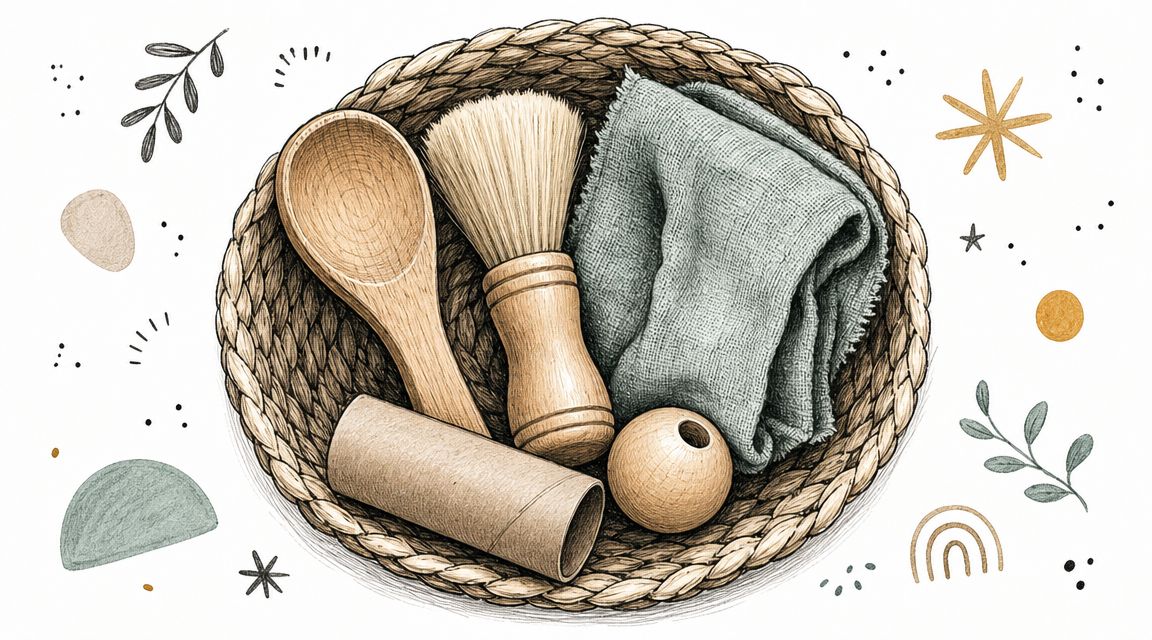
This suits many babies from around the second half of the first year, especially once they're sitting with support or sitting steadily on the floor. At this stage, babies often enjoy lifting, turning, banging and mouthing objects as they work out what their hands can do.
How to make it work
Keep the basket open and shallow so your baby can see what is available without having to dig through a pile. Too many objects can feel a bit like an overstuffed drawer. A few clear choices make it easier for a baby to notice, reach, grasp and release.
Sit close by and let your baby lead. They may pick an item up with a whole-hand grasp, wave it, tap it on the floor, transfer it from one hand to the other, or let it fall back into the basket. Those small actions are the groundwork for later control.
The progression is usually gradual. Younger babies often explore with their whole hand and mouth. Older babies may start to hold an object at the middle, pass it across their body, or place it back with more intention. By the toddler stage, the same idea can grow into simple sorting and choosing games, much like the hands-on invitations used in creative activities for toddlers.
Practical rule: Choose objects that are interesting to touch, too large to swallow, clean, and sturdy enough for plenty of banging and mouthing.
In many early years settings, treasure baskets are offered because they give babies time to investigate at their own pace. Adults stay nearby, notice what the child is drawn to, and refresh the selection rather than showing a “right” way to play. If you enjoy learning more about why simple play matters, the wider benefits of play in early childhood are worth exploring too.
- Best age range: Often most useful from about 6 to 12 months, then easy to adapt up to 24 months with more purposeful choosing and placing.
- Start small: Offer three to five objects at first so your baby can focus.
- Rotate items: Change the contents now and then to renew interest without making the basket unfamiliar.
- Watch preferences: If your baby keeps returning to smooth, crinkly or firm items, offer more of that sensory feedback.
- Stay close: Active supervision matters because babies often explore with both hands and mouth.
- Avoid hazards: Skip anything breakable, sharp, painted with peeling finish, or small enough to fit fully into your baby's mouth.
2. Grasping and Reaching with Ribbons and Scarves
Some of the earliest fine motor practice starts long before babies can pick up tiny things. It begins with reaching. A lightweight scarf or soft ribbon moves easily, so even a young baby gets a lovely sense of success when they swipe, catch or tug it.
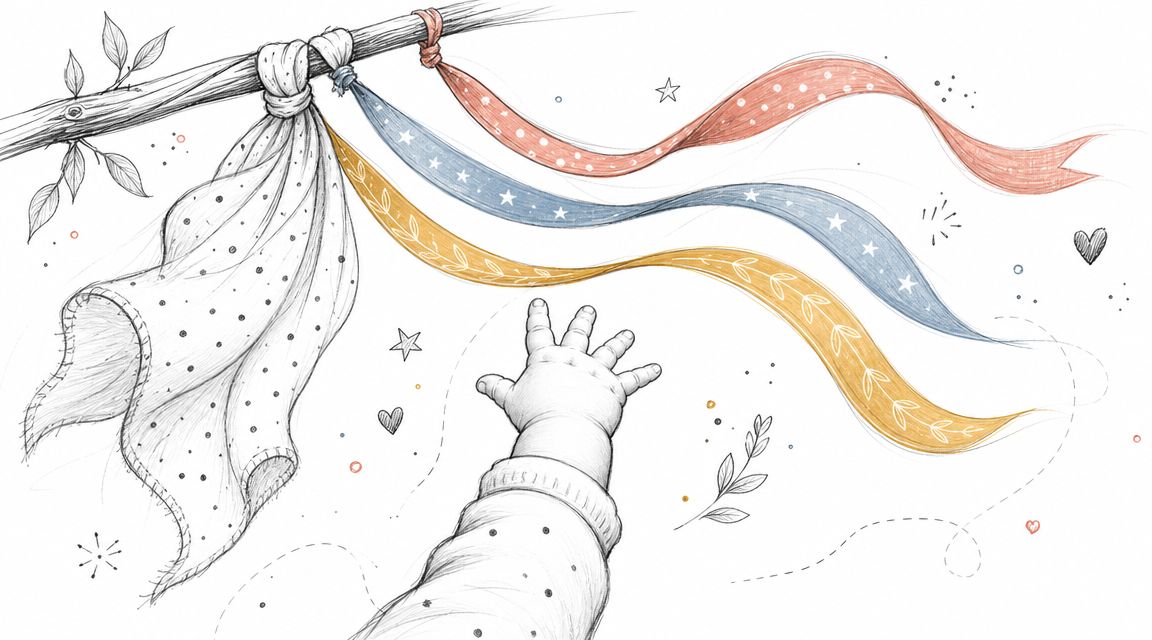
For babies in the early months, lie them on a blanket and slowly move a scarf from side to side. Pause where they can see it clearly, then wait. You're inviting visual tracking first, then a reach, then a grab.
Best ages and simple progressions
UK-relevant developmental guidance notes that babies typically begin reaching for objects at 3 to 4 months. That makes scarves and ribbons useful early tools because they're easy to catch and rewarding to move.
You can gradually make the activity more challenging:
- For younger babies: Hold the scarf near their chest or shoulder so a small arm movement is enough.
- For growing babies: Encourage cross-body reaching by moving it gently from one side to the other.
- For older babies: Tuck part of a scarf loosely into a box or basket so they can pull it out.
A common home scene is a parent singing while a baby bats at a muslin cloth. Another is draping a scarf over your own hand and waiting for your baby to pull it away. Both help build coordination without any pressure.
Keep ribbons and scarves short, secure and always closely supervised. Soft fabric play should never become unsupervised play.
If you want to add variety, try fabrics with different finishes. A silky scarf feels very different from a cotton muslin or a textured flannel. That contrast helps babies learn through touch as well as movement.
3. Finger Painting and Messy Play
Messy play can feel daunting if you're already busy, but it's one of the most satisfying fine motor activities for babies because it gives instant feedback. A hand presses down, paint spreads, fingers slide and marks appear. That cause and effect is exciting.
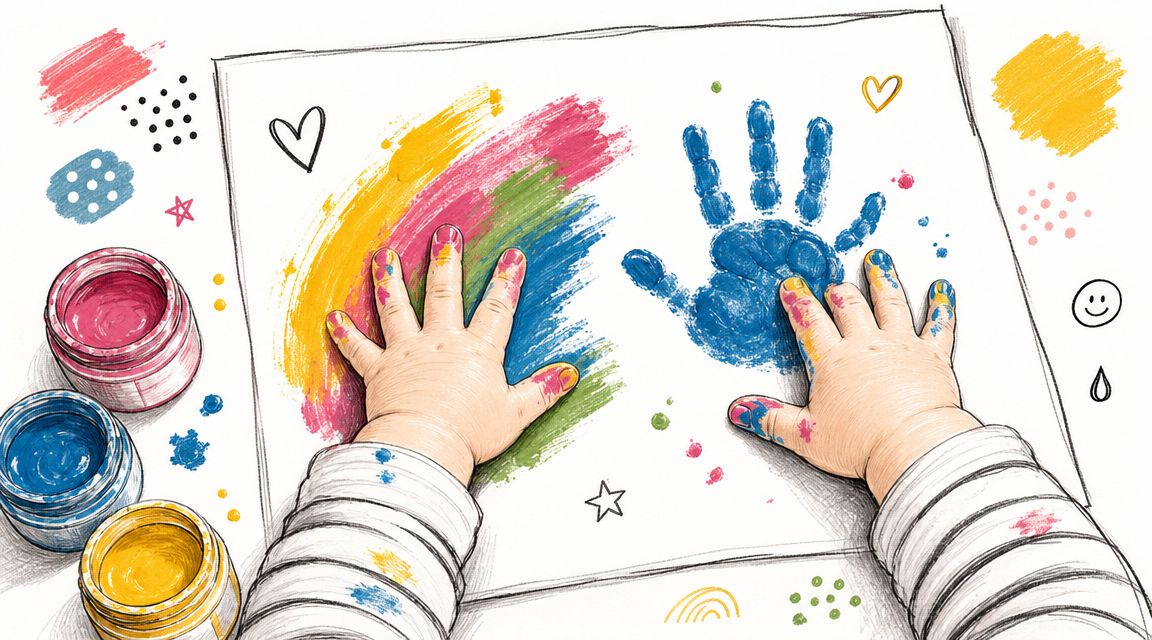
For babies who still mouth everything, many parents start with edible options such as thick yoghurt coloured with a little fruit purée. Spread a small amount on a tray or large sheet of paper taped down to the floor, then let your baby pat, smear and tap.
Keeping it calm and manageable
Start with one colour and a small area. That feels simpler for you and less overwhelming for your baby. You don't need to direct the play much. Sitting nearby and naming what's happening is enough. “You're patting.” “That feels squishy.” “You made a mark.”
UK early years thinking places real value on babies handling materials in active ways, including bashing, squashing and poking. Messy play fits naturally with that approach because babies aren't being asked to produce something neat. They're learning how their hands work.
A nursery might offer paint in a tray on the floor, while at home you might use the highchair tray, a tuff tray or a baking tray lined with paper. If you'd like more ideas beyond the baby stage, creative activities for toddlers can give you a sense of how sensory play develops later on.
“Focus on the process, not the picture.” That mindset makes messy play much more enjoyable for both parent and child.
- Use baby-safe materials: Check labels carefully and keep ingredients simple.
- Dress for mess: An old vest, bib or apron helps everyone relax.
- Offer space: Bigger paper encourages wider arm and hand movement.
- Finish before frustration: If your baby starts rubbing eyes or getting upset, wrap up and try again another day.
4. Stacking, Nesting, and Object Placement
Some babies love the moment a cup drops inside another cup. Others prefer putting a ring over a post or dropping blocks into a tub. These are brilliant activities because they ask the hand and eyes to work together with a clear purpose.
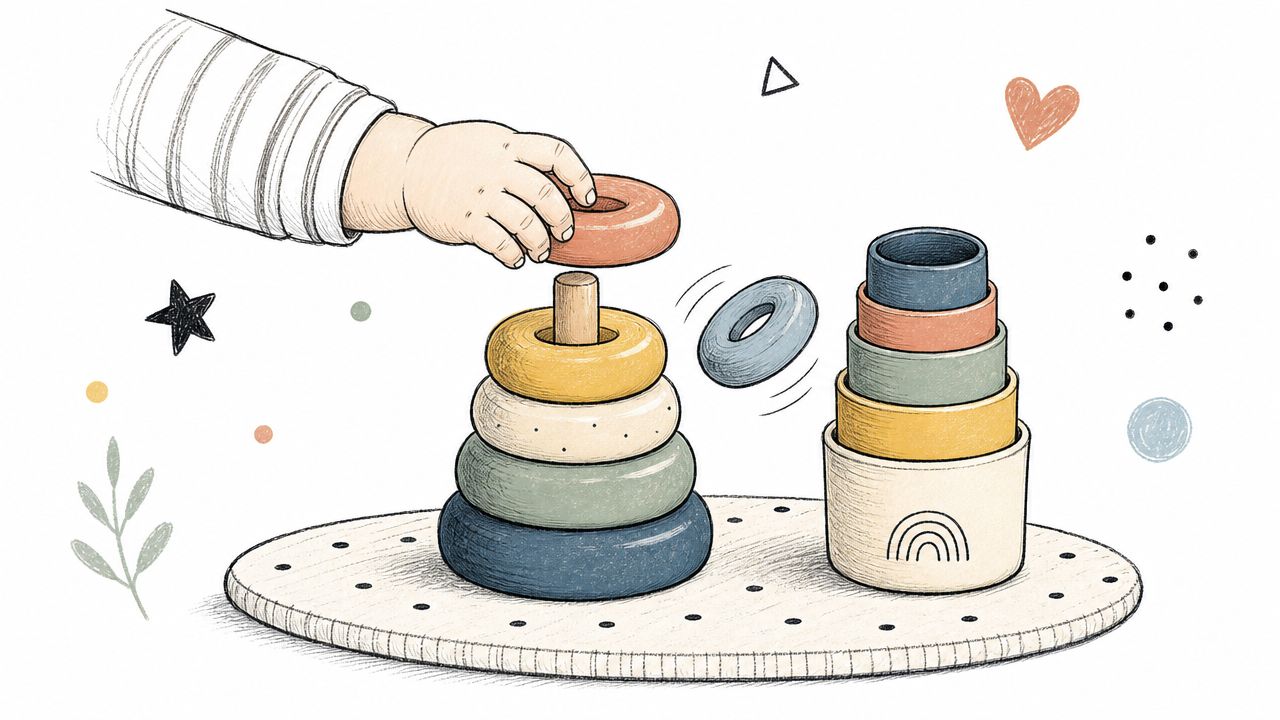
For many babies, this type of play becomes more rewarding later in the first year and into toddlerhood, when they can sit steadily and handle objects with more control. Nesting cups, large stacking rings, chunky blocks and small baskets all invite repeated practice.
Why repetition matters here
This kind of play doesn't just look repetitive. Repetition is the point. A research review included in the background material found that a goal-oriented training programme over 12 weeks led to significant improvements in motor skills, supporting the idea that structured repetition and gradual challenge matter more than the exact toy used in this technical review on motor-skill intervention.
At home, that might mean starting with simple dropping and releasing, then moving towards more precise placement. A baby may first enjoy putting a block into a wide bowl. Later, they may try to place a ring onto a stacker or fit cups carefully inside each other.
Easy ways to progress
- Begin with nesting: Putting one object inside another is often easier than balancing.
- Use wide targets: Large containers make success more likely.
- Reduce help slowly: Show once, then let your baby work it out.
- Welcome the wobble: Falling towers are part of the learning.
A familiar real-world example is bath cups. They can be stacked, nested, filled and dropped into a basin. That's one reason simple home objects often do the job beautifully. If you're looking for more playful ideas in the same spirit, nursery activity ideas for young children can spark inspiration.
5. Posting, Threading, and Insertion Activities
Once your baby becomes a young toddler, they often start wanting a more exact challenge. Not just dropping, but aiming. Not just holding, but lining something up and getting it through a gap. That's where posting and insertion play comes in.
A simple homemade version works well. Cut a slot in the lid of a sturdy tub and offer large craft sticks, chunky cards or wide wooden tokens that are far too big to swallow. Show how one goes in, then hand the tub over.
What this builds
These activities ask for more precision than earlier play. Your child has to hold an item in the right position, adjust the wrist, judge the opening and release at the right moment. They also encourage both hands to work together, one stabilising and one acting.
You can build up gradually:
- Start with posting: Large slots and flat objects are easier than shape sorters.
- Move to insertion: Put big pieces into containers with different openings.
- Try simple threading later: Thick cord and large beads or rings suit older toddlers better than fiddly pieces.
- Keep pieces large: Safety comes first with anything that could become a choking hazard.
A toddler at the kitchen table might post jumbo craft sticks into a porridge tin. In a childminding setting, the same child might work with large pegs or chunky posting boxes on a tray. The setup can vary, but the hand skills are very similar.
Aim for success you can see. Better control, fewer drops and more accurate placement matter more than how “advanced” the toy looks.
If your child gets frustrated, simplify the task rather than stopping fine motor play altogether. Bigger holes, shorter sessions and fewer pieces often make all the difference.
6. Water and Sand Play with Scooping and Pouring
Scooping and pouring are often thought of as messy outdoor fun, but they're also excellent fine motor activities for babies and young toddlers. They strengthen the hands, encourage wrist movement and help children coordinate both sides of the body.
Water play is especially inviting because children can see the result straight away. Tip a cup and the water moves. Fill a jug and it gets heavier. Try to pour into a bowl and the hand has to slow down and aim.
Everyday play with real purpose
For older babies and toddlers, set out a shallow bowl or tray with a small cup, ladle, spoon and container. You don't need a full water table. In warm weather this can happen outside. Indoors, the bath, kitchen floor with towels, or a washable mat can work just as well.
This kind of repeated action fits with a broader question many parents ask. How much structured fine motor play does a child really need? Current UK-style guidance strongly values play and routines, but it doesn't give a clear evidence-based answer on exact dose or frequency, and it doesn't clearly rank structured tasks above ordinary exploration in discussion of fine and gross motor play in daily routines. That's useful to remember because everyday handling, dressing, mealtimes and sensory play all count.
At home, a toddler may spend a long time moving water from one cup to another. In many early years environments, practitioners support the same skill with jugs, scoops and containers at child height. If your child enjoys this kind of sensory practice, the benefits of outdoor learning in early years show why these experiences can be so valuable.
- Offer different tools: Cups, spoons, ladles and funnels each change the hand action.
- Keep it shallow: Small amounts of water are easier to manage and safer.
- Use absorbent mats: Preparation helps you stay relaxed.
- Supervise closely: Water and sand play always need an adult nearby.
7. Tearing, Crumpling, and Manipulating Paper and Fabric
A baby on the floor with a clean flannel and a sheet of tissue paper often shows you exactly how fine motor learning works. First they pat it. Then they grab, squeeze, pull, and listen for the crinkle. What looks like simple play is really hand practice with instant feedback.
Paper and fabric are useful because they change shape so easily. A block stays the same however hard your child presses it. Tissue paper wrinkles. Fabric bunches. A magazine page resists a little, then gives way. That change helps babies connect hand movement with result, a bit like pressing dough and seeing the mark left behind.
A gentle progression from 3 months to 24 months
For babies around 3 to 6 months, begin with soft, washable fabrics such as muslin squares, flannels, or lightweight scarves. Hold one end and let your baby grasp or tug the other while lying on the floor or during supported sitting. At this stage, the goal is not tearing. It is learning, “When my hands pull, something moves.”
From about 6 to 12 months, offer larger pieces of tissue paper, paper napkins, or fabric squares for supervised exploration. Your baby may scrunch, wave, drop, and pass them from one hand to the other. These actions build hand strength and help both hands learn to work together.
From 12 to 24 months, many toddlers are ready for more resistance and more purpose. They can tear a large sheet into pieces, stuff paper into a box, pull fabric squares from a container, or crumple paper “balls” and drop them into a basket. Those are early versions of the same hand skills later used for turning pages, holding crayons, and managing clothing.
As noted earlier, strong shoulders and a steady trunk help the hands do finer work. That is why floor-based play with paper and fabric can be so effective. Your child is not only using fingers. They are building control through the whole upper body.
In nurseries and other early years settings, practitioners often offer baskets of safe textured materials, fabric pull-through games, and supervised collage scraps for older toddlers. The idea is simple. Start with easy-to-hold materials, then slowly increase challenge as the child's control improves.
A straightforward home version works well. Sit nearby with a few safe items only. Offer a clean flannel, a muslin square, and one piece of tissue paper. For a toddler, try a sheet of recycled paper and a small box for posting in the crumpled pieces.
Simple materials can do a lot of work here. The value comes from safe textures, close supervision, and giving your child time to repeat the action.
- Match the material to your child's age: Soft cloth is best for younger babies. Save easier tearing tasks for older babies and toddlers.
- Use large pieces: Bigger sheets are easier to hold and less likely to become a choking risk than lots of tiny scraps.
- Avoid risky extras: Skip glitter, staples, laminated paper, sharp edges, and anything that breaks into small bits quickly.
- Stay close during mouthing: Many babies explore with their mouths first, so remove wet or torn pieces straight away.
- Show one action at a time: Crumple, pull, or tear once, then pause so your child can try in their own way.
7 Baby Fine Motor Activities Comparison
| Activity | Implementation complexity | Resource requirements | Expected outcomes | Ideal use cases | Key advantages |
|---|---|---|---|---|---|
| Treasure Baskets and Sensory Exploration | Low, gather and rotate safe items; supervise | Shallow basket, household/natural objects, regular cleaning | Grasp pattern progression, hand strength, sensory discrimination | 6–24 months independent floor play; nursery sensory corners | Low-cost, adaptable, eco-friendly, promotes autonomy |
| Grasping and Reaching with Ribbons and Scarves | Low, hang or hold fabrics; close supervision needed | Soft scarves/ribbons, secure attachment points, baby-safe materials | Early reaching, hand-eye coordination, visual tracking | 3–18 months reaching practice; tethered to frames or caregiver | Safe for very young infants, immediate movement feedback, bilateral practice |
| Finger Painting and Messy Play | Medium, requires preparation, containment and cleanup | Non-toxic/edible paints, large paper/trays, aprons, wipes | Fine motor control, bilateral coordination, colour recognition | 6–24 months sensory/art sessions; scheduled messy play | Highly engaging, promotes exploration and sensory integration |
| Stacking, Nesting, and Object Placement | Medium, scaffold progression and demonstrate calmly | Soft blocks, stacking rings, nesting cups, clear floor space | Pincer grip, spatial awareness, problem-solving | 9–24 months focused skill-building and persistence practice | Teaches spatial relations, offers clear feedback, supports resilience |
| Posting, Threading, and Insertion Activities | Medium–High, graded difficulty and close supervision | Large beads/pegs, thick cords, shape-sorters, small table/tray | Refined pincer grip, precision, sustained concentration | 12–24 months pre-writing dexterity and fine-motor training | Directly supports writing readiness, improves finger isolation |
| Water and Sand Play with Scooping and Pouring | Medium–High, setup, hygiene and space management required | Water/sand table or tray, scoops/cups, aprons, cleaning supplies | Hand/wrist strength, bilateral coordination, proprioception | 12–24 months outdoor/indoor sensory exploration and repetition | Engaging, calming sensory input; encourages repetitive practice |
| Tearing, Crumpling, and Manipulating Paper and Fabric | Low, simple materials and supervision for mouthing | Tissue/newspaper/fabric scraps, low basket, tidy-up plan | Hand/finger strength, finger isolation, bilateral coordination | 6–24 months calming transitions, rhythmic hand-strengthening | Very low-cost, multisensory (sound/texture), easy to vary |
Every Small Movement is a Big Step Forward
A baby drops a wooden spoon from the highchair. Then does it again. A toddler spends five calm minutes pushing lids into a tin and pulling them back out. To an adult, these can look like very ordinary moments. In early development, they are practice sessions. Each small action strengthens the hands, builds control in the fingers and teaches the brain how to plan and repeat a movement.
Fine motor development grows in layers, much like building a wall brick by brick. Before a child can turn pages neatly or hold a crayon with more control, they first need simpler experiences such as reaching, grasping, squeezing, releasing and transferring objects from one hand to the other. That is why the activities in this guide start at different points between 3 and 24 months and include ways to make them easier or more challenging as your child grows.
Progress rarely looks tidy. Some babies are drawn to sensory play straight away. Others prefer posting, filling and emptying, or carrying objects around the room. This does not usually mean one child is ahead and another is behind. It often means they are practising through the kind of play that suits them best.
What helps most is regular, safe practice.
That practice does not have to come from a formal setup every day. Everyday routines offer many chances to strengthen little hands. Picking up soft food, holding a spoon, turning a board book page, pulling socks off, lifting flaps, dropping blocks into a basket and helping tidy toys all give useful repetition. In strong early years settings, adults plan for this carefully. They choose age-appropriate materials, watch for readiness, adjust the level of challenge and keep safety in mind, especially with mouthing, small parts and messy play.
If you are unsure where to start, begin with the age band and the activity your child is most likely to enjoy. A younger baby who is just learning to reach may do well with scarves or a small treasure basket. An older baby may be ready for stacking and simple object placement. A toddler often enjoys more precise actions such as posting, scooping, pouring or tearing. Repeating a favourite activity is useful. It is how skill becomes steadier and more controlled.
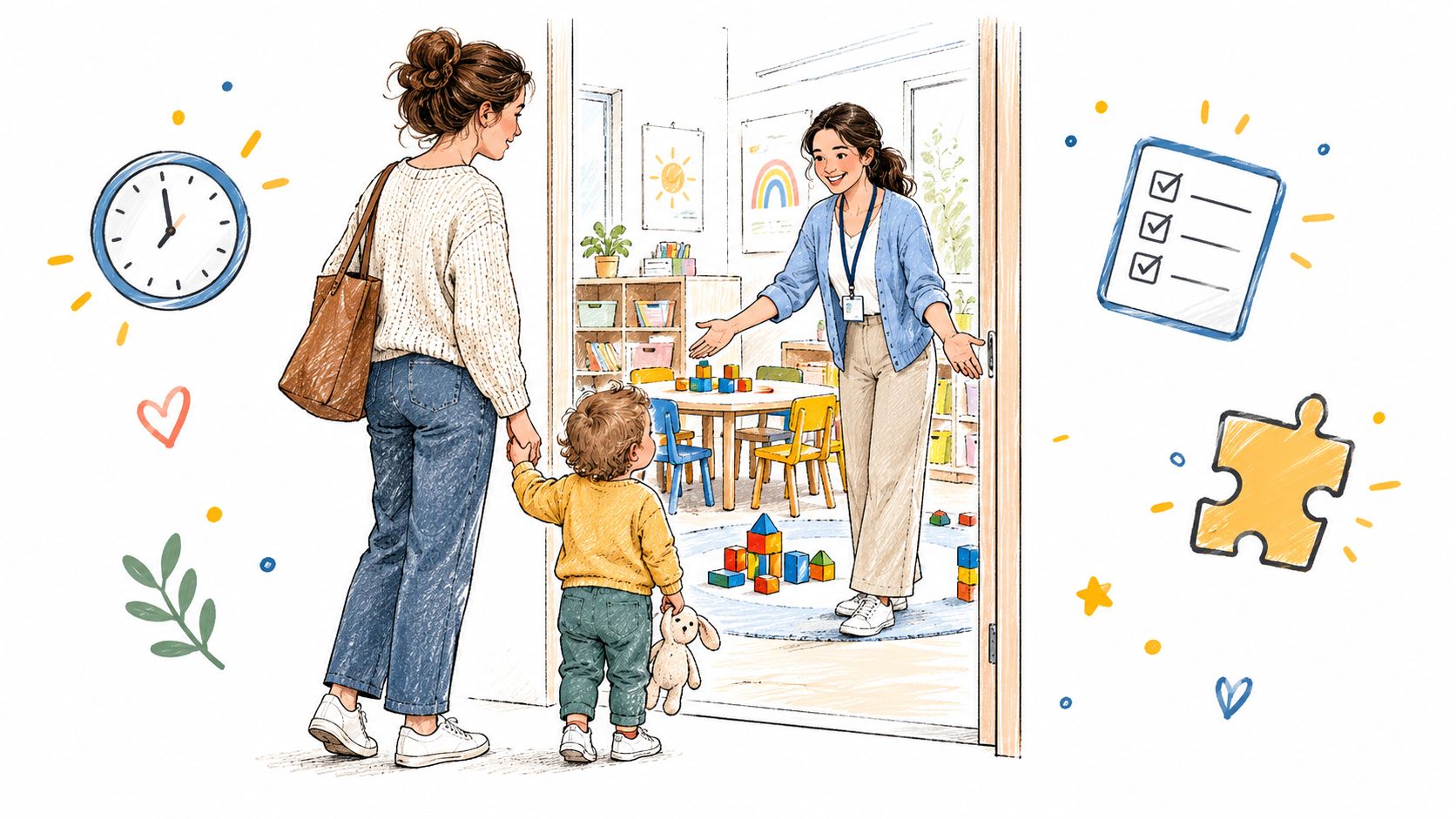
If you have concerns about your child's hand use, coordination or overall development, speak with your health visitor, GP or another trusted professional. For day-to-day reassurance, it can also help to ask local nurseries how they support fine motor development through play, routines and the environment. Happy Tree Academy in Northwood is one option for children aged 3 months to 5 years, and any nursery you consider should be able to explain, in practical terms, how they match activities to children's ages and stages.