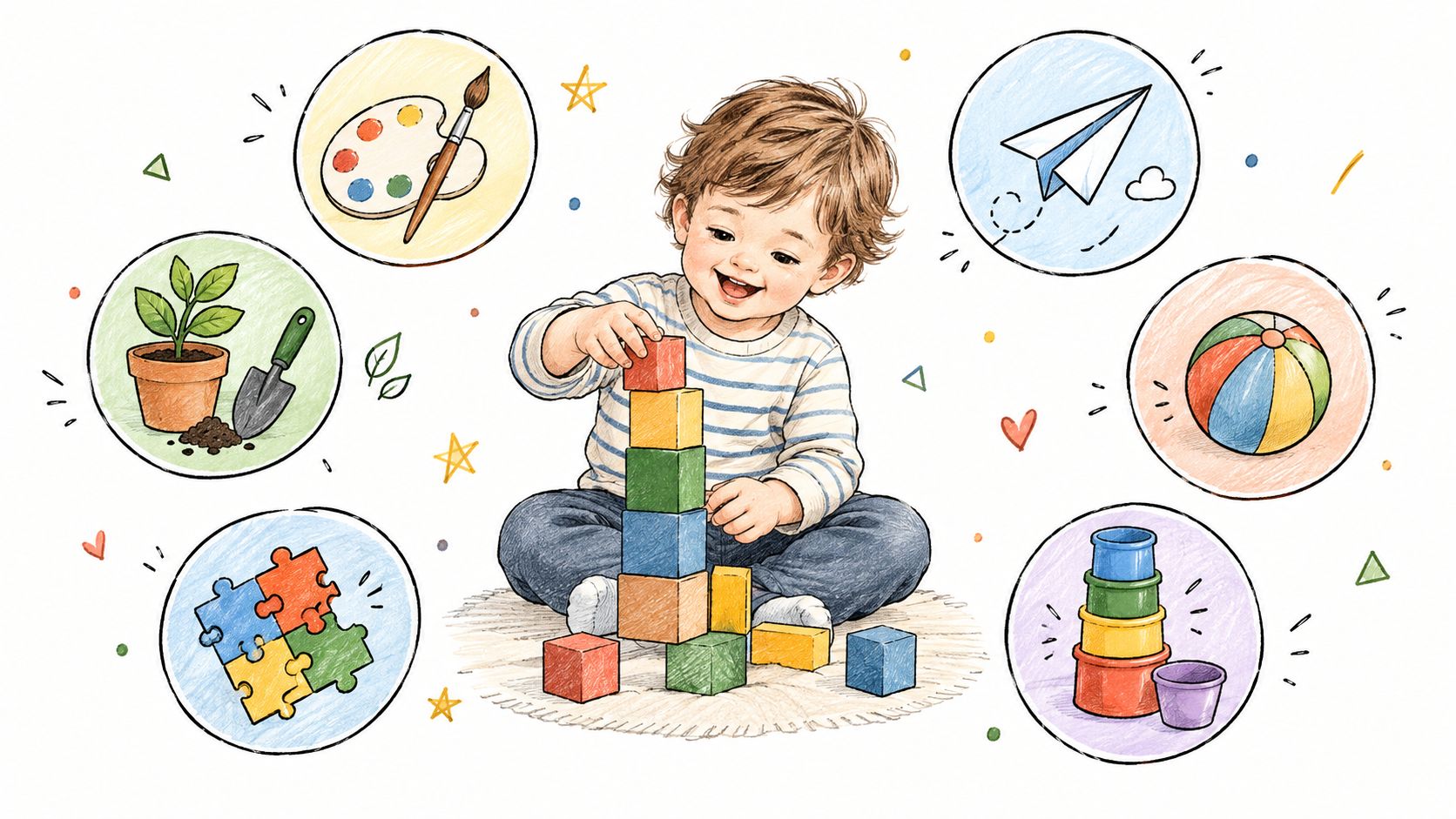

As a parent of a toddler or preschooler, finding simple yet stimulating activities can feel like juggling a dozen tasks at once. One minute your child is asking for something to do, and the next you're trying to clear the kitchen table, answer a message and prevent felt-tip pens from reaching the carpet. Whether it's pouring rain outside or energy levels are through the roof, these children's home activities need little preparation and can be adapted for indoor or outdoor play.
The best activities don't need to look like formal lessons. Reading, singing, pretend play, talking and drawing already form much of the home-learning routine for young children. In England, 65% of parents reported looking at books or reading with a child aged 0 to 5 at least once a day in 2025, while songs, poems and nursery rhymes reached 59%, and pretend play or turn-taking games reached 58%. These figures come from the Childcare and Early Years Survey of Parents.
Try one idea for five or ten minutes, follow your child's interest and stop while they're still engaged. Small, repeatable moments can support curiosity, confidence, communication and creativity without adding another demanding task to your day.
1. Nature Exploration and Outdoor Play
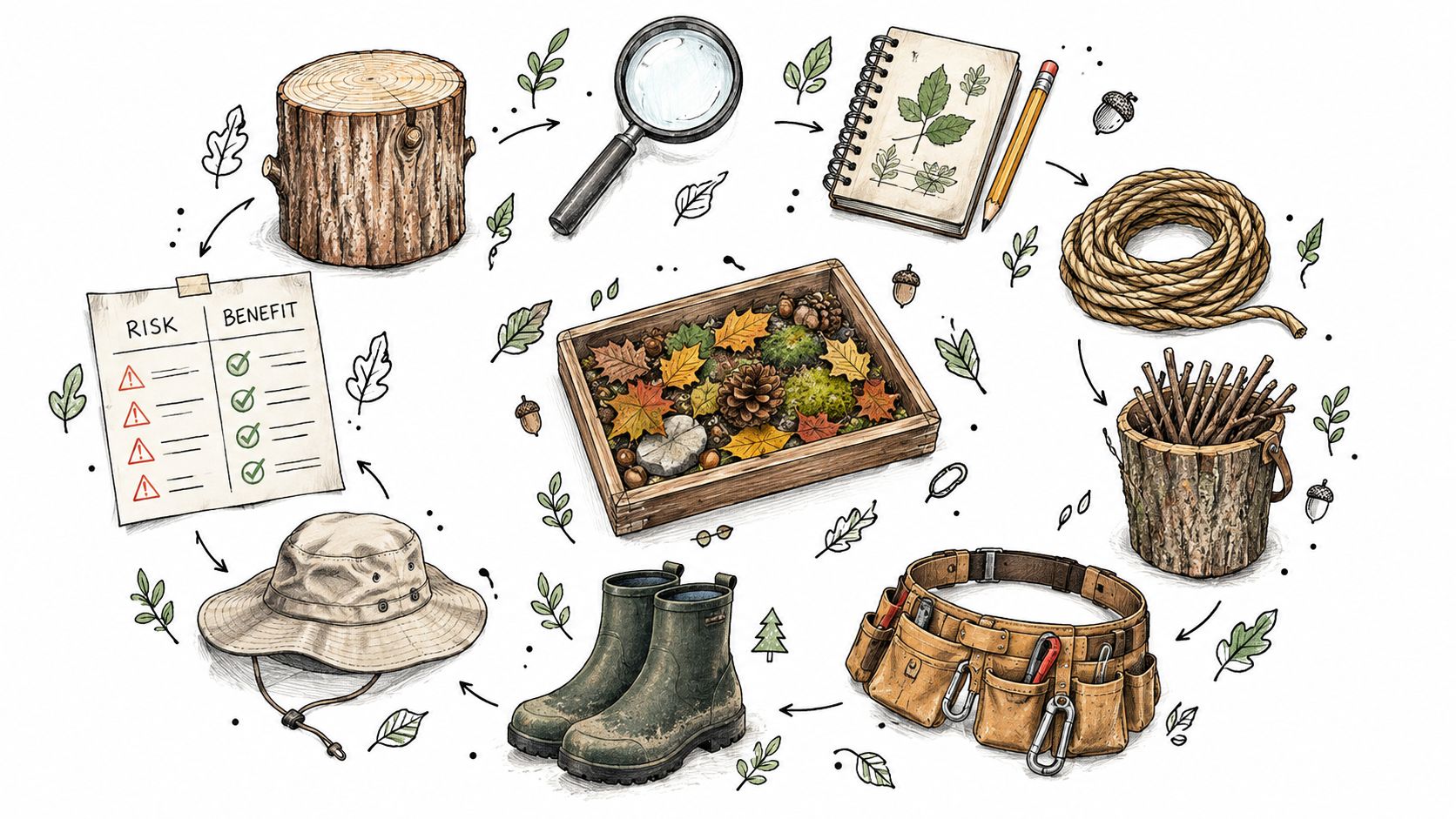
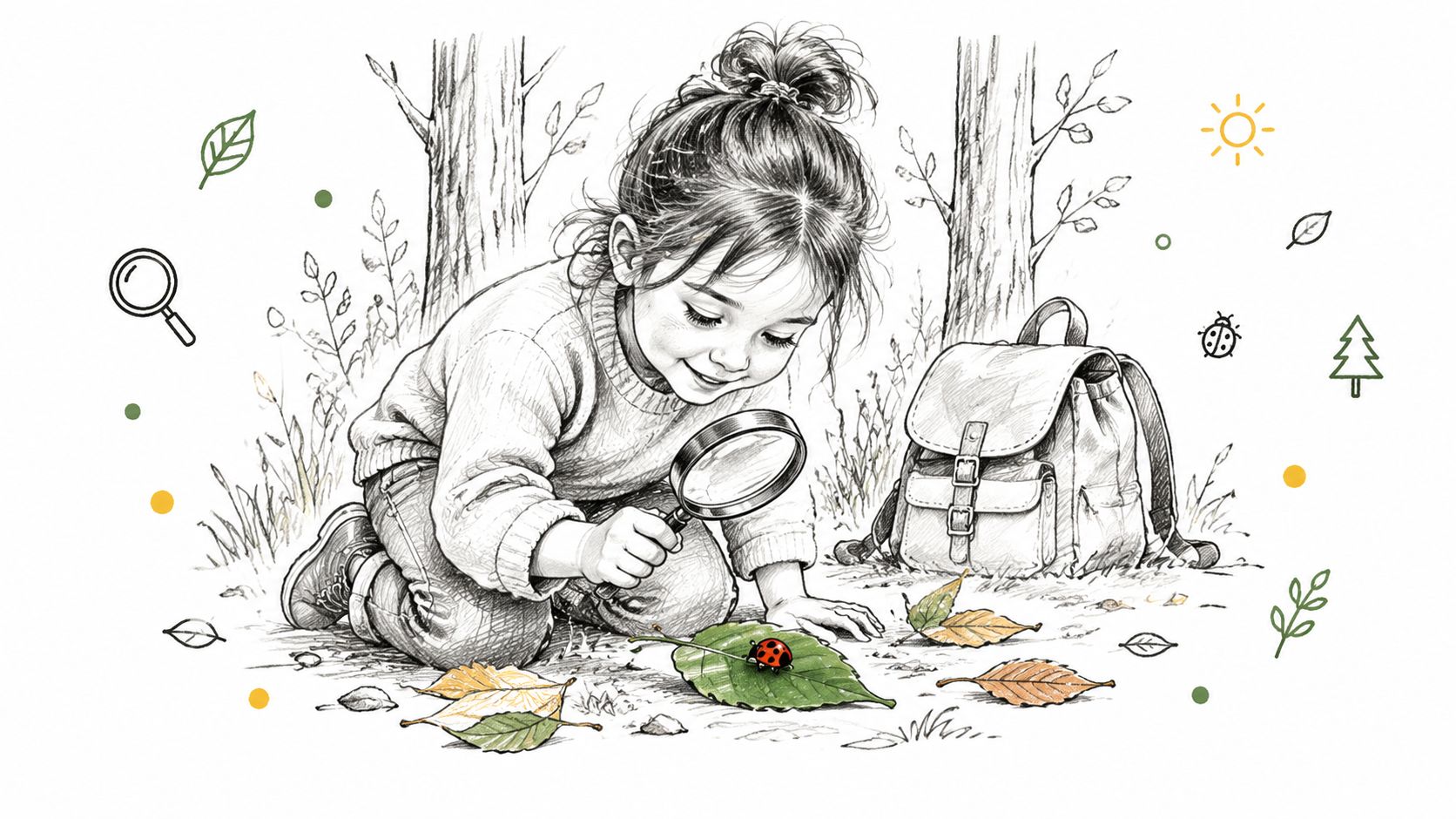
Nature play gives children space to investigate at their own pace. A short garden wander, a visit to a local green space or a walk along a tree-lined path can become an open-ended hunt for leaves, bark, pebbles, feathers or signs of insects. Your child might notice that one leaf feels dry and crisp while another is smooth and damp. That simple comparison supports sensory awareness, language and early scientific thinking.
Children also develop physical confidence when they walk over uneven ground, dig, carry natural objects or stretch to look at a plant. Outdoor learning is already a familiar part of early years provision in the UK. Research cited by NatureScot on outdoor teaching, learning and play found that children in early years settings spent 39% of their day outdoors in 2022, compared with 36% in 2014 and 23% in 2006.
Make discovery child-led
Offer a magnifying glass, a small collecting basket or a sheet of paper for drawing what your child notices. Don't turn the activity into a test. Ask, “What do you think made that hole in the leaf?” or “How does the ground feel after the rain?” and accept imaginative answers.
Seasonal changes keep the same walk feeling new:
- Spring: Look for buds, blossom and signs of new growth.
- Summer: Listen for birds and compare warm and cool surfaces.
- Autumn: Sort leaves by colour, size or texture.
- Winter: Look for frost, bare branches and puddle reflections.
Practical rule: Dress for the weather and protect the activity from becoming a battle about getting muddy. Children explore for longer when they're comfortable.
For more ideas about the developmental value of nature-based experiences, explore this guide to the benefits of outdoor learning in the early years.
2. Creative Arts and Crafts Activities
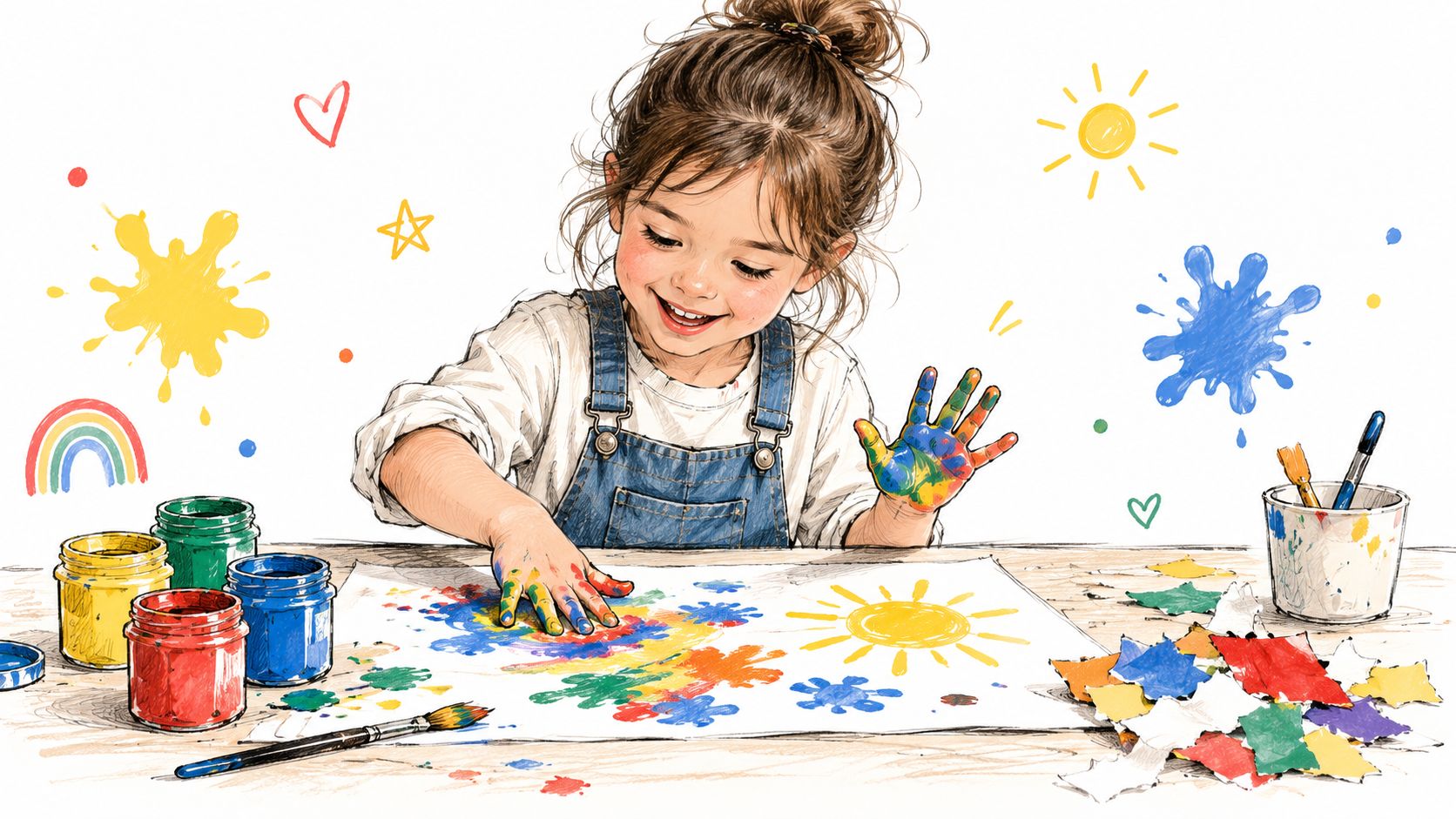
Creative play works best when children can decide what their picture, collage or model becomes. Put large sheets of paper on the floor or table, add washable paint, chunky crayons, glue sticks, cardboard and safe natural materials, then let your child experiment. A toddler may make broad marks with a sponge, while a preschooler might turn a paper plate into a moon, animal or dinner plate for a teddy.
The developmental value comes from the process. Holding a crayon, squeezing a glue bottle or rolling playdough strengthens hand control. Choosing colours and explaining a drawing encourages decision-making, vocabulary and imaginative thinking. Try saying, “Tell me about this part,” rather than asking, “What is it?”
Keep the set-up manageable
A low box or tray makes materials easier to reach and limits the amount you'll need to clear away. Use supplies labelled as suitable for young children, and supervise closely around small pieces. You don't need a large collection. A few versatile materials, such as cardboard tubes, tissue paper and modelling dough, can support many ideas.
Seasonal adaptations can make familiar crafts more engaging:
- Rainy days: Paint raindrops, make paper umbrellas or print with a sponge.
- Summer: Create sun pictures with yellow collage materials.
- Autumn: Press leaves into playdough or make a colour collage.
- Winter: Use cotton wool and white chalk to explore snowy textures.
Display your child's work at their eye level, even if it's unfinished. That communicates that their ideas matter. Avoid correcting the shape of a person or completing the picture for them. A perfect adult-made result offers less learning than a child who has tested materials independently.
For age-appropriate inspiration, see these creative activities for toddlers.
3. Sensory Play and Exploration
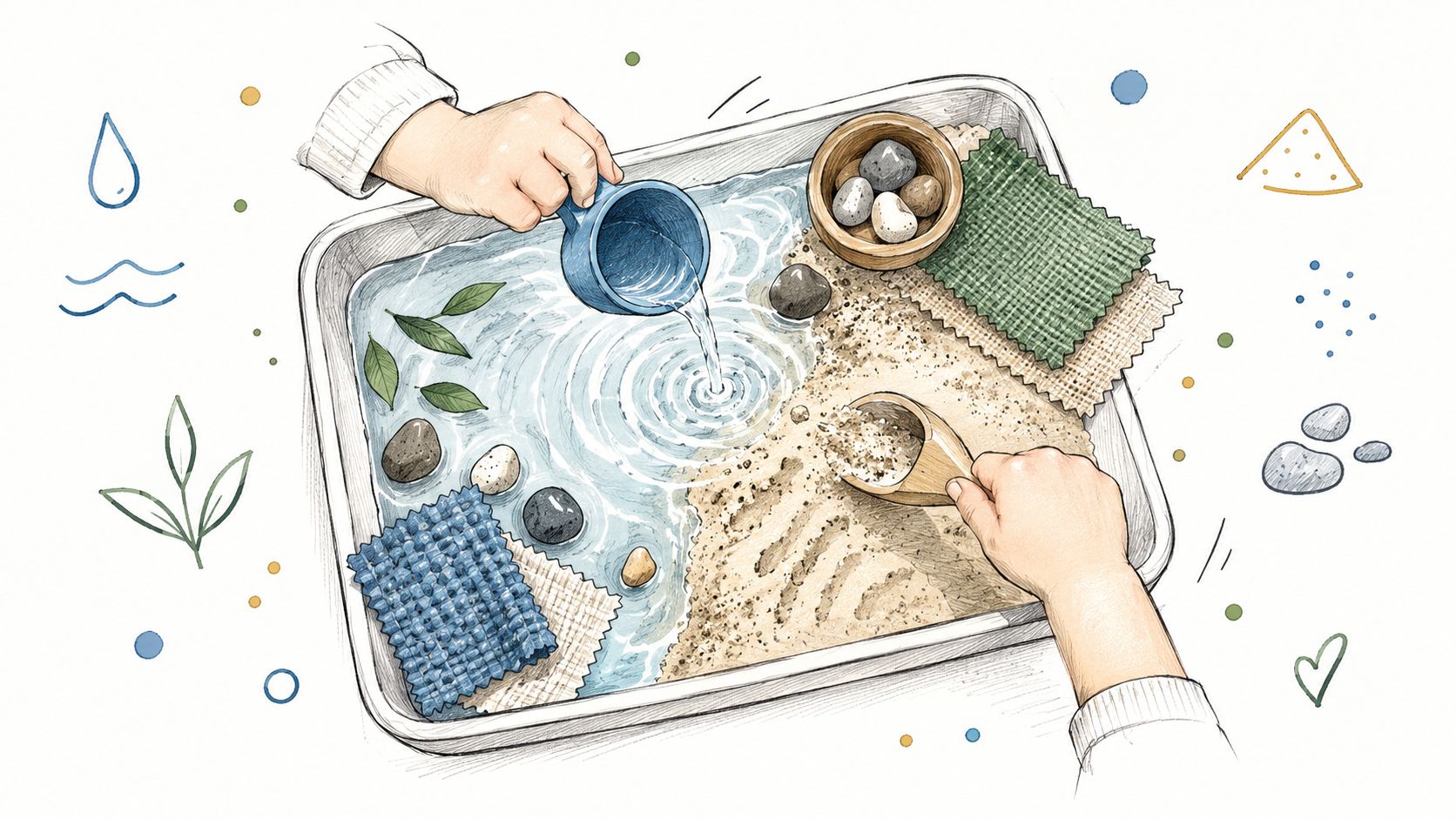
Sensory play invites children to explore how materials feel, move, sound and change. A shallow tray of water with cups and funnels can occupy a toddler while they practise pouring, filling and emptying. A bowl of dry pasta, large scoops and containers can encourage sorting and comparison, provided the materials are appropriate for your child's age and used with close supervision.
Babies and toddlers often learn through touching and mouthing, so safety matters more than elaborate presentation. Avoid small objects for children who may put them in their mouths, check materials regularly and never leave water play unattended. Some children love messy textures, while others prefer dry, predictable materials. Respecting those preferences helps sensory play remain enjoyable rather than overwhelming.
Add language without taking over
Use words such as smooth, rough, sticky, heavy, light, warm and cool. You might say, “The water is moving through the funnel,” or “This fabric feels soft against your hand.” Then pause. Your child may respond with a word, a gesture or another experiment.
A seasonal tray could include:
- Spring: Damp soil, large leaves and toy gardening tools.
- Summer: Water, ice cubes and containers for melting experiments.
- Autumn: Pinecones, dry leaves and textured fabrics.
- Winter: Warm water, cold spoons and safe household objects to compare.
Essential oils aren't necessary and may irritate young children, so avoid adding scented products unless you've checked that they're suitable. Open-ended materials usually work better than a complicated activity with one correct outcome. The aim is exploration, not a finished sensory display.
4. Music and Movement Activities
Music can change the atmosphere quickly. A familiar rhyme may help a tired child reconnect, while energetic music can give a restless child a safe way to move. Sing action songs such as “If You're Happy and You Know It”, clap a repeated rhythm or dance with a scarf while your child copies, changes or invents movements.
Singing supports communication because children hear repeated sounds, phrases and rhymes in a memorable context. Movement adds balance, coordination and body awareness. You don't need musical instruments. A wooden spoon and an upside-down saucepan can become a drum, although a quieter shaker made from a securely sealed container may be kinder to everyone's ears.
Use repetition as a strength
Young children often request the same song repeatedly. That repetition helps them anticipate what comes next and join in with greater confidence. Try stopping before the final word so your child can complete the phrase, or change one action and see whether they notice.
Music also fits naturally into routines:
- Morning: Choose a wake-up song with stretching.
- Tidy-up time: Use a short repeated song to signal the transition.
- Rainy afternoons: Create a movement path from cushions or masking-tape lines.
- Bedtime: Slow the tempo and use quieter singing to support calm.
Give your child control over some of the music. Ask whether they'd like fast or slow, loud or quiet, or a song with actions. Avoid expecting them to perform on demand. The social enjoyment of making music together matters more than keeping perfect time.
Government guidance for families with young children also includes active indoor ideas such as dancing and movement games. You can find further examples in this UK guidance for helping children aged 2 to 4 learn at home.
5. Imaginative and Pretend Play
Pretend play turns ordinary objects into opportunities for communication. A blanket can become a tent, a cardboard box can become a bus and a teddy can need a check-up. Your child is practising how people relate to one another, how problems can be solved and how feelings can be expressed through a story they control.
Set out a few props for a pretend home, shop, café, post office or veterinary clinic. You might add a notepad, reusable shopping bags, empty food packaging or fabric for dressing up. Avoid filling the space with too many toys. A smaller selection often leaves more room for children to decide what each object represents.
Follow the storyline
Join briefly, then let your child lead. If they hand you a toy cup, accept the role they offer and add language to the play: “The baby is thirsty. Shall we find a cup?” If your child changes the story, follow the change instead of directing it towards your own idea.
Pretend play can also help children process everyday experiences. A child who's preparing for a nursery visit might act out saying goodbye, finding a familiar adult or choosing an activity. Keep the tone reassuring and avoid forcing the scenario if your child doesn't want to continue.
Seasonal themes are easy to add:
- Spring: Open a pretend garden centre.
- Summer: Run a picnic or ice-lolly shop.
- Autumn: Create a woodland animal rescue centre.
- Winter: Set up a post office for imaginary cards and parcels.
Children don't need expensive role-play furniture to build a rich story. A scarf, a box and a willing listener can be enough.
6. Cooking and Food Preparation Activities
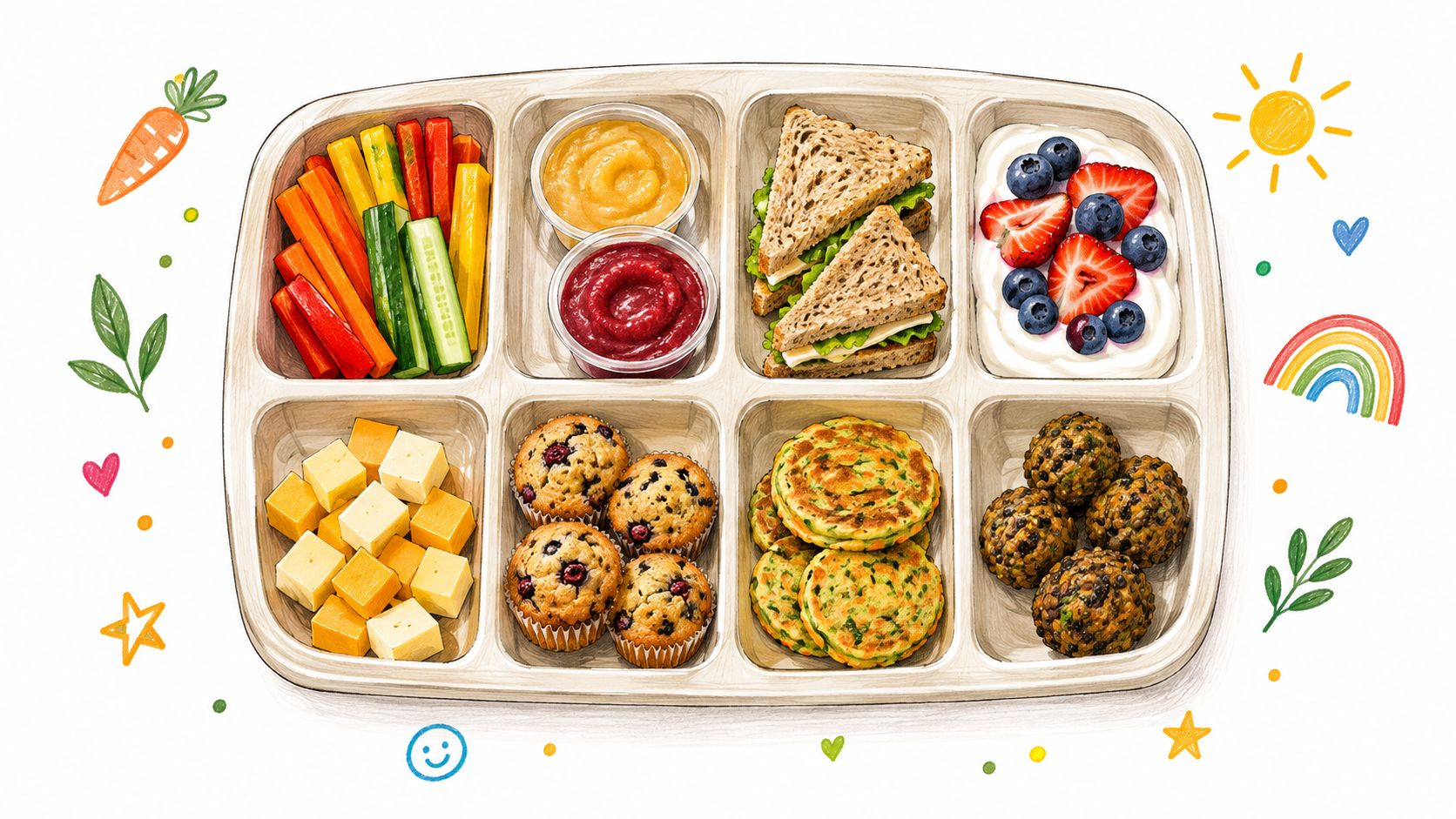
Cooking gives children a reason to count, compare, follow instructions and describe change. Let your child add pre-cut fruit to a bowl, spread soft toppings on bread, tear lettuce or mix ingredients with a large spoon. They may notice that flour feels powdery, dough becomes stretchy or fruit smells different once it's cut.
Choose tasks that match your child's stage and supervise throughout. Young children should stay away from hot surfaces, sharp blades and powered appliances unless an adult is handling them. Wash hands before preparing food, check allergies and dietary requirements, and choose ingredients that are safe for your child to eat.
Turn preparation into conversation
Use everyday mathematical language: “We need one more spoonful,” “Which bowl is fuller?” or “Can you find the larger banana?” Guidance for children aged 0 to 2 also recommends using cooking to explore counting, measuring, melting and mixing, as described in this early-learning guidance for babies and toddlers.
Try simple activities such as fruit kebabs using soft, age-appropriate pieces, sandwiches, yoghurt and fruit bowls, or decorating biscuits with spreads. For babies and younger toddlers, the learning may be watching, touching and hearing you describe what you're doing rather than completing the recipe.
Seasonal ingredients provide a natural talking point. Compare the colours of summer berries, smell herbs in warmer months or explore the shape and texture of autumn fruit. Don't worry if the final result is untidy. Shared preparation builds independence more effectively when children are allowed to take part rather than only watching an adult do everything.
For more ideas, explore these healthy eating activities linked to the EYFS.
7. Reading and Storytelling
Books create a reliable opportunity for closeness, language and imagination. Let your child choose between a picture book, a rhyming story and a simple non-fiction book about an interest such as animals or vehicles. Re-reading a favourite is useful, not boring. Your child learns to anticipate repeated phrases, notice details in the illustrations and remember the order of events.
The National Literacy Trust's survey of parents of children aged 0 to 5 found that 50.5% of parents said they read with their child daily in 2024. A separate report on two-year-olds found that 56% of parents read to their child seven times a week, while 2% never did so, as reported in the same UK evidence summary. These figures show that families already value reading, but they also underline the importance of making story time realistic and enjoyable.
Make the book interactive
Use expression, point to details and pause before a repeated phrase. Ask questions that invite thought rather than testing memory: “What might happen next?” “How do you think the bear feels?” or “What can you see behind the tree?” Babies benefit from hearing your voice and looking at pictures, even when they don't yet answer.
A cosy corner with a small basket of books can encourage independent browsing. Place books where your child can reach them, rotate a few titles and keep favourites available. You can also retell a story with a teddy, homemade picture cards or objects found around the house. In summer, read outdoors. On dark winter afternoons, use a torch to explore illustrations and make the routine feel special.
8. Building and Construction Play
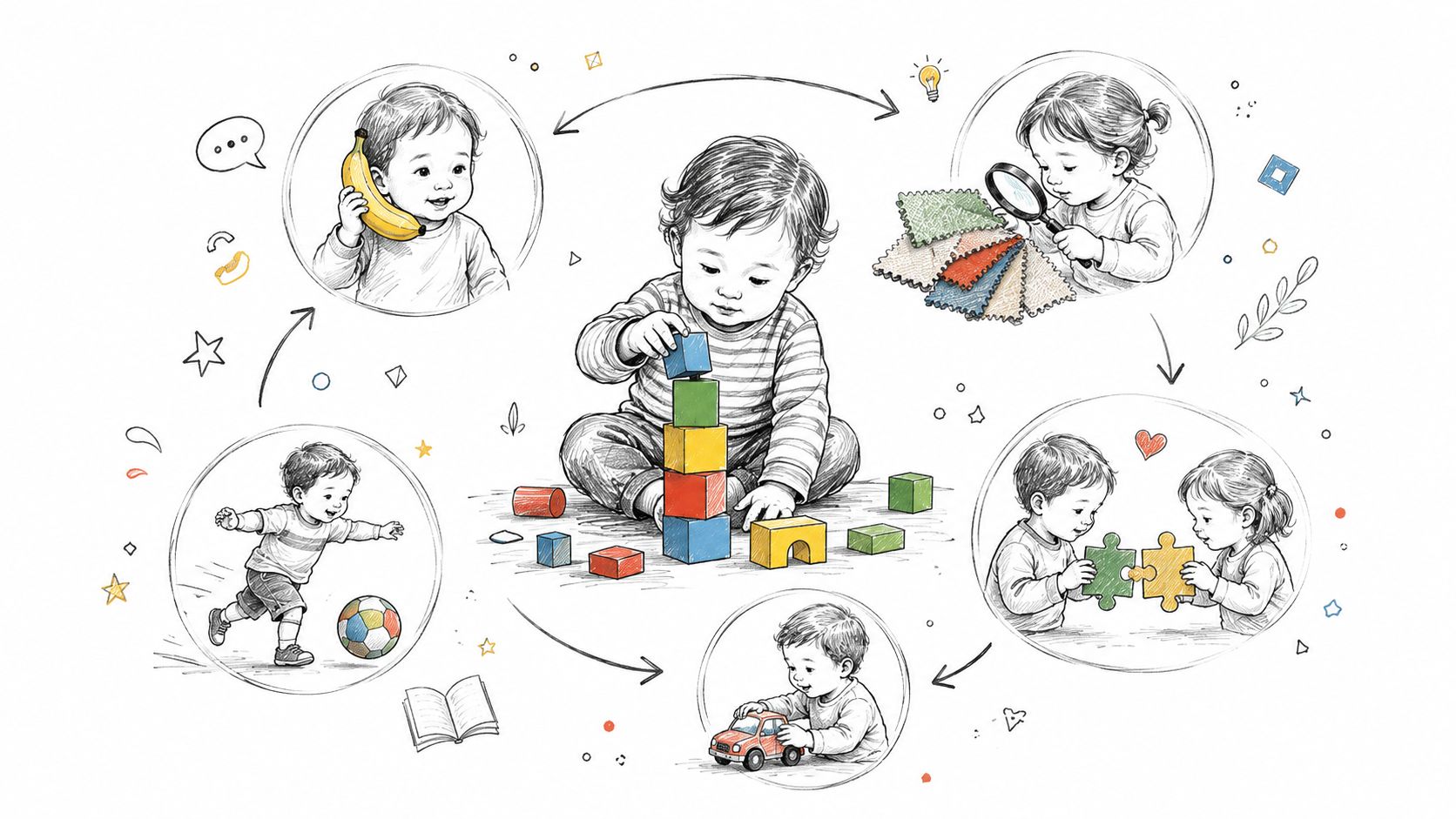
Construction play starts with a simple question: “What could you build?” Blocks, cardboard boxes, tubes and interlocking pieces let children test balance, size and stability without needing a prescribed model. A toddler may stack two blocks and knock them down repeatedly. A preschooler may design a bridge for toy cars, then change it when the cars won't pass underneath.
Give children a clear, stable surface and enough space to leave a structure standing. Moving it too soon can end a valuable line of thinking. Instead, ask what they'd like to add or whether the tower needs a wider base. Use words such as tall, short, wide, narrow, heavy, steady and balance.
Let failed designs teach something
A collapsing tower isn't a failure to be fixed immediately. It gives your child information about weight and support. Offer a small prompt, such as, “What could make the bottom stronger?” and wait. If you build the solution yourself, your child may watch but miss the chance to reason through it.
Fresh variations keep construction interesting:
- Indoor challenge: Build a shelter for a favourite toy.
- Outdoor challenge: Make a line of stepping stones from flat, safe objects.
- Rainy-day challenge: Turn cardboard boxes into a bus, train or house.
- Seasonal challenge: Build a nest for a toy bird or a den for a soft toy.
Take a photograph before dismantling a large creation. Looking at it later helps children describe what they made and remember the decisions they took. Construction is especially satisfying when adults value the thinking behind the structure, not just how long it stays standing.
9. Physical Games and Gross Motor Play
Children need regular chances to move their whole bodies. Running, jumping, kicking, rolling, balancing and crawling develop coordination and body confidence, while active games can help release energy that might otherwise appear as frustration or restlessness. A hallway, garden or clear patch of floor can become a movement space with a little planning.
Start with activities that match your child's ability. Roll a soft ball back and forth with a young toddler. Invite an older child to kick towards a target, jump over a line or move like different animals. Indoors, cushions can mark a route, but keep them stable and avoid encouraging children to climb on furniture.
Offer challenge without pressure
Not every child enjoys competition. Mix races with cooperative games, such as carrying a ball together, copying each other's movements or completing an obstacle route as a team. Let your child repeat an easier movement before introducing a new challenge. Confidence grows when children feel successful enough to try again.
Useful adaptations include:
- Small indoor space: Use marching, animal walks, dancing and balloon tapping.
- Garden play: Add rolling, kicking, throwing and chasing games.
- Wet weather: Create a movement story, such as jumping over puddles or crawling through a cave.
- Quiet follow-up: Move from vigorous play to stretching, breathing or a story.
The gross motor skills development guide offers further ideas for supporting large-muscle movement. Comfortable clothing and suitable footwear make participation easier, and close supervision remains important wherever children are moving quickly.
10. Science and Nature Discovery Activities
Young children are natural investigators. They notice that some objects float, that plants change and that shadows move, even before they know scientific vocabulary. Your role isn't to give every answer. Provide something interesting to observe, ask an open question and allow time for your child to test an idea.
A jar of water and a selection of large, safe household objects can prompt predictions about floating and sinking. Growing beans or watercress lets children observe change over time. A magnifying glass can turn a leaf, stone or insect into an object of close study. Keep investigations simple and avoid materials that could be swallowed, inhaled or handled unsafely.
Record what your child notices
A drawing, photograph or short conversation can help your child revisit an observation. Ask, “What changed?” “What stayed the same?” or “What could we try next?” If their prediction is wrong, respond with curiosity rather than correction. “That one sank. What do you think happened?” keeps the investigation open.
Seasonal discovery ideas include:
- Spring: Observe new leaves and compare plant growth.
- Summer: Test which objects make the biggest splash in water.
- Autumn: Sort natural objects by colour, shape or texture.
- Winter: Look at ice, frost and the changing length of daylight.
Nature discovery can also build care and responsibility. Children might water a plant, return a stone to the ground or watch an insect without touching it. The experience becomes richer when adults model gentle handling and explain that living things need space, shelter and care.
Comparison of 10 Childrens Home Activities
| Activity | Implementation complexity | Resource requirements | Expected outcomes | Ideal use cases | Key advantages |
|---|---|---|---|---|---|
| Nature Exploration and Outdoor Play | Low–Medium, needs supervision and weather planning | Safe outdoor space, weather-appropriate clothing, simple tools (magnifiers, baskets) | Gross motor skills, sensory processing, curiosity, resilience | Free play outdoors, seasonal learning, group exploration | Sensory-rich, promotes fitness and environmental awareness |
| Creative Arts and Crafts Activities | Low, setup and cleanup required | Variety of art materials, dedicated craft area, storage | Fine motor control, creativity, self-expression, language | Quiet focused sessions, indoor workshops, collaborative projects | Fosters creativity, fine motor development, emotional expression |
| Sensory Play and Exploration | Medium, hygiene and safety management | Water/sand trays, textured materials, cleaning supplies, rotation plan | Sensory integration, calming/regulation, vocabulary, motor skills | Early years, children with sensory needs, calming activities | Multi-sensory learning, regulation, supports language growth |
| Music and Movement Activities | Low–Medium, needs space and adult facilitation | Simple instruments, music/audio, open movement area | Motor coordination, rhythm awareness, language, social connection | Group circle time, transitions, energetic breaks | Boosts coordination, memory, social engagement |
| Imaginative and Pretend Play | Medium, requires props and role-play setup | Props, costumes, themed play areas, rotation system | Social-emotional understanding, language, creativity, negotiation | Role-play corners, group social learning, storytelling | Enhances social skills, language development, imagination |
| Cooking and Food Preparation Activities | Medium–High, safety, allergies, logistics | Kitchen access or no-cook setup, child-safe utensils, ingredients, supervision | Practical life skills, measuring/sequencing, fine motor, food awareness | Small groups, family-style sessions, maths through real tasks | Teaches life skills, math concepts, positive eating habits |
| Reading and Storytelling | Low, routine and book choice matter | Age-appropriate books, cosy reading corner, occasional props | Vocabulary expansion, listening, imagination, early literacy | Circle time, quiet reading, language-development sessions | Strong language and literacy benefits, bonding and attention |
| Building and Construction Play | Low–Medium, material management and supervision | Blocks, construction kits, flat surfaces, storage | Spatial reasoning, problem-solving, fine/gross motor skills | Free-build periods, STEM introductions, cooperative projects | Encourages spatial/mathematical thinking, persistence, creativity |
| Physical Games and Gross Motor Play | Medium, safety and space requirements | Open safe space, equipment (balls, hoops), safe surfaces | Gross motor development, fitness, coordination, emotional regulation | Outdoor playtimes, PE sessions, energy-release activities | Improves fitness and coordination, supports regulation and social play |
| Science and Nature Discovery Activities | Medium, prep and longer-term observation | Observation tools, simple experiment supplies, plants, recording tools | Scientific thinking, curiosity, observation skills, environmental awareness | Discovery corners, long-term plant projects, guided experiments | Promotes inquiry, real-world connections, environmental stewardship |
Putting Play into Practice
These children's home activities offer a flexible way to combine learning with ordinary family life. You don't need to complete every activity in a week, and you don't need to prepare a themed activity every day. A book before bed, a song while getting dressed, a short outdoor search or a child helping to mix ingredients can all become meaningful learning moments.
Reading is a particularly strong starting point for many families. In England, the 2024 survey found that 66% of parents reported someone at home looked at books or read with a child aged 0 to 5 at least once a day, up from 62% in 2023, according to the nationally representative Childcare and Early Years Survey of Parents. The same evidence supports a practical principle for busy households: repeatable activities that fit around care routines are more sustainable than elaborate projects requiring specialist equipment.
At the same time, don't let reading become the only activity. Songs, pretend play, movement, sensory exploration and conversation give children different ways to practise communication, social understanding, coordination and independence. Outdoor play deserves deliberate attention too. UK survey evidence has found that daily outdoor play is less consistently embedded at home than reading and other indoor activities, so a short walk, garden search or puddle observation can help bring more balance to the week.
A routine can stay very small:
- Choose one dependable moment: Link an activity to breakfast, bath time, nursery collection or bedtime.
- Offer two choices: Ask whether your child wants to paint or build, sing or read.
- Follow their interest: If a cardboard box becomes a train, develop the train story rather than returning to your original plan.
- Stop before frustration grows: An activity can be successful even when it lasts only a few minutes.
- Repeat familiar ideas: Children often deepen their learning through returning to the same play.
Children aged 2 to 4 can learn through everyday routines, make-believe play, games involving numbers or letters, shared reading and household chores accompanied by conversation. Babies and toddlers can explore through talking, sorting, building, cooking and noticing nature during walks or garden play. The activity should match your child's development, energy and mood on that particular day.
Pay close attention to what your child is trying to communicate. A child who keeps filling and emptying a cup may be exploring capacity. A child who repeats the same pretend doctor game may be working through an experience or practising caring language. A child who abandons a craft may be telling you that the texture, instructions or timing didn't suit them.
There's no need to compare your home with anyone else's. Keep materials accessible, adapt ideas for the season and celebrate effort, questions and persistence. When adults make room for children to lead, ordinary spaces can support rich play, warm relationships and a growing sense of confidence.
If you're considering childcare, ask local nurseries how they involve families in children's learning and how they support play, communication, movement and outdoor experiences. In England, three- and four-year-olds receive 15 hours of funded childcare a week for 38 weeks a year, while eligible working families may receive up to 30 hours a week for 38 weeks a year, as explained by the House of Commons Library guide to funded childcare entitlements.
Happy Tree Academy offers early years care and play-based education for children aged 3 months to 5 years in Northwood, near Pinner, with funding options for eligible families. To learn how the setting could complement your child's home activities, visit Happy Tree Academy and arrange a personal visit.