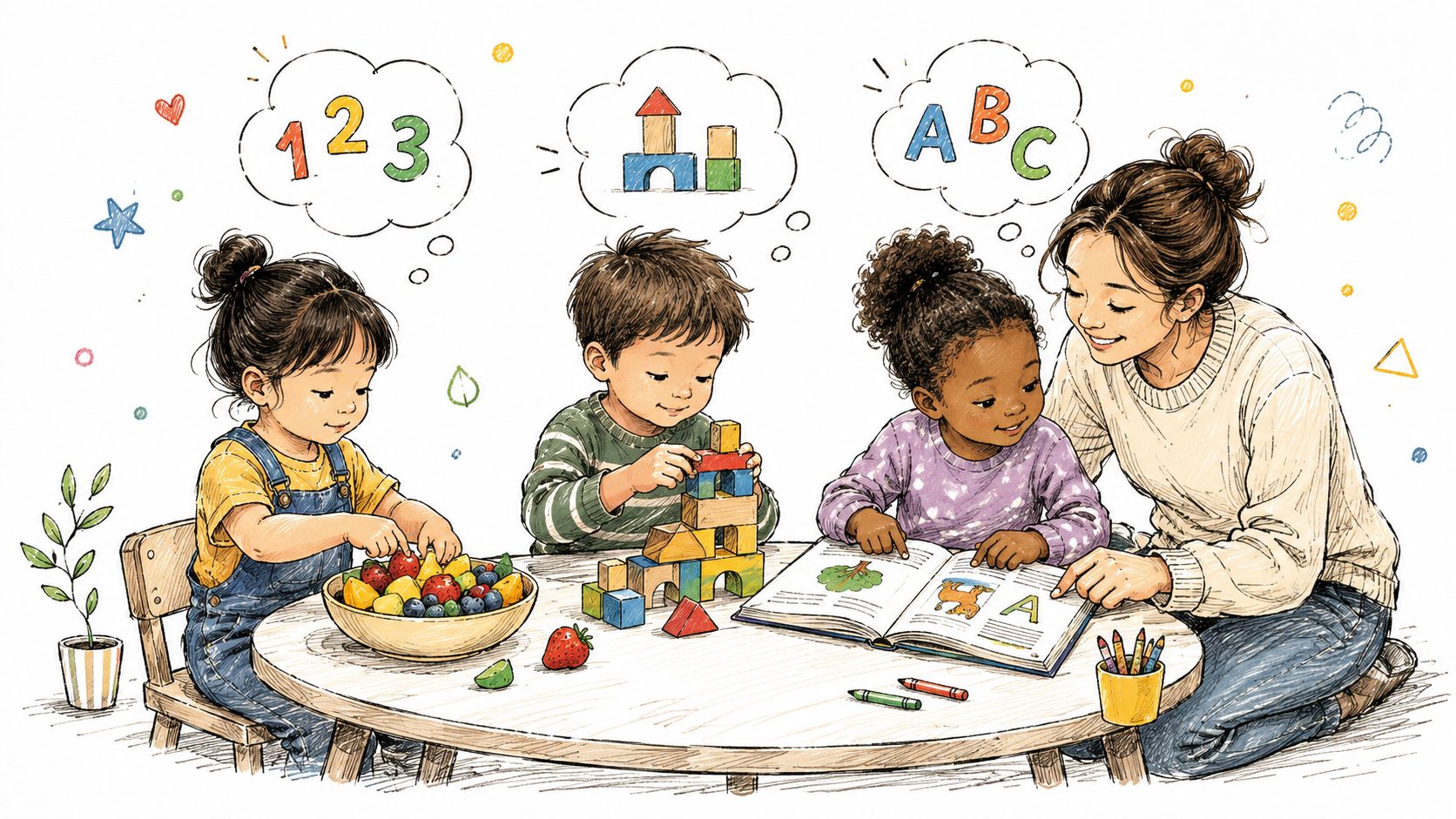

You're probably familiar with this moment. Your child arrives at preschool with a tiny coat half-zipped, spots the snack table, and immediately starts counting grapes, while another child is busy “selling” blocks from a make-believe shop. It can look like ordinary play from the outside, yet something much more intentional is going on.
That's why so many parents ask the same quiet question after drop-off, what is my child learning here? The short answer is that learning in preschool is built into play, language, movement, relationships, and daily routines. In England, that matters even more because preschool is part of the wider education system, with 15 hours a week of free early education for all 3- and 4-year-olds, and 30 hours a week for eligible working parents, with take-up for funded early education reported at around 96% in recent years (UK early childhood education statistics).
For many families, that makes preschool feel both practical and developmental. It's childcare, yes, but it's also a stage where children are building the foundations for talking, listening, concentrating, sharing, and getting ready for the next steps in school life.
A Morning at Preschool and the Bigger Question
The morning often begins before anyone says the word “lesson”. A child hangs up a coat with a little help, another heads straight for a puzzle, and someone else turns snack time into a counting game by lining up apple slices one by one. None of that looks like a worksheet, yet it is full of learning.
That is why parents often notice the value of preschool in the smallest moments. Young children learn by doing, repeating, watching, trying again, and talking through what they are doing with patient adults nearby. It is a bit like learning to ride a small bike with training wheels. The child keeps moving, wobbles, corrects, and slowly gains confidence.
Why parents notice the learning after the fact
A preschool day can look messy while it is happening. One child is pretending, another is negotiating over a toy, and a third is whispering a story into a teddy bear's ear. Those little scenes are where children practise language, self-control, early number sense, and social understanding.
The wider context matters too. In England, funded hours begin after a child turns 3, which helps explain why this stage carries so much weight. Children are not only being looked after, they are spending time in a structured setting during years when habits, confidence, and communication are changing quickly (UK early childhood education statistics).
Practical rule: if it looks like a child is simply “playing”, ask what skills that play is building. Very often, the answer is conversation, turn-taking, counting, problem-solving, or emotional regulation.
That is the core question behind a preschool morning. The point is not whether learning is happening, because it is. The question is what kind of learning is happening, and how adults make it meaningful without turning childhood into school too soon.
What Learning in Preschool Really Means
At preschool age, learning is less about memorising facts or sitting through formal instruction and more about absorbing language, learning routines, figuring out how other children work, and beginning to understand how the world fits together.
The National Academies review of preschool science describes children learning through active exploration, observing others, and adults explicitly sharing knowledge, while also learning through play that follows their interests. That gives a clearer way to read the everyday noise of a preschool room. The child stacking cups, the child listening to a story, and the child asking “why” for the fifth time are all learning in different ways.
A simple way to think about it
Learning in preschool works like learning to use a knife and fork. No one gets it right in one go. A child watches, copies, drops food, tries again, and slowly becomes more confident. The same pattern shows up when children practise taking turns, listening to a story, or using new words in a conversation.
Preschool learning is a distinct stage with its own important work, rather than a simplified version of school. A child at this age may be ready for early literacy experiences, yet that does not mean they should be expected to behave like an older pupil. Developmentally appropriate practice is about how something is taught, not pressing the same content into a younger child's day.
The NCBI chapter on educational practices also points to the value of varied groupings, because children need regular chances for extended conversations with peers and teachers (NCBI educational practices chapter). That detail matters. Those conversations are where children learn to explain, negotiate, wait, listen, and respond.
If you want a single takeaway, it's this. Preschool learning is a different stage with its own important work.
The Core Areas Children Explore in Preschool
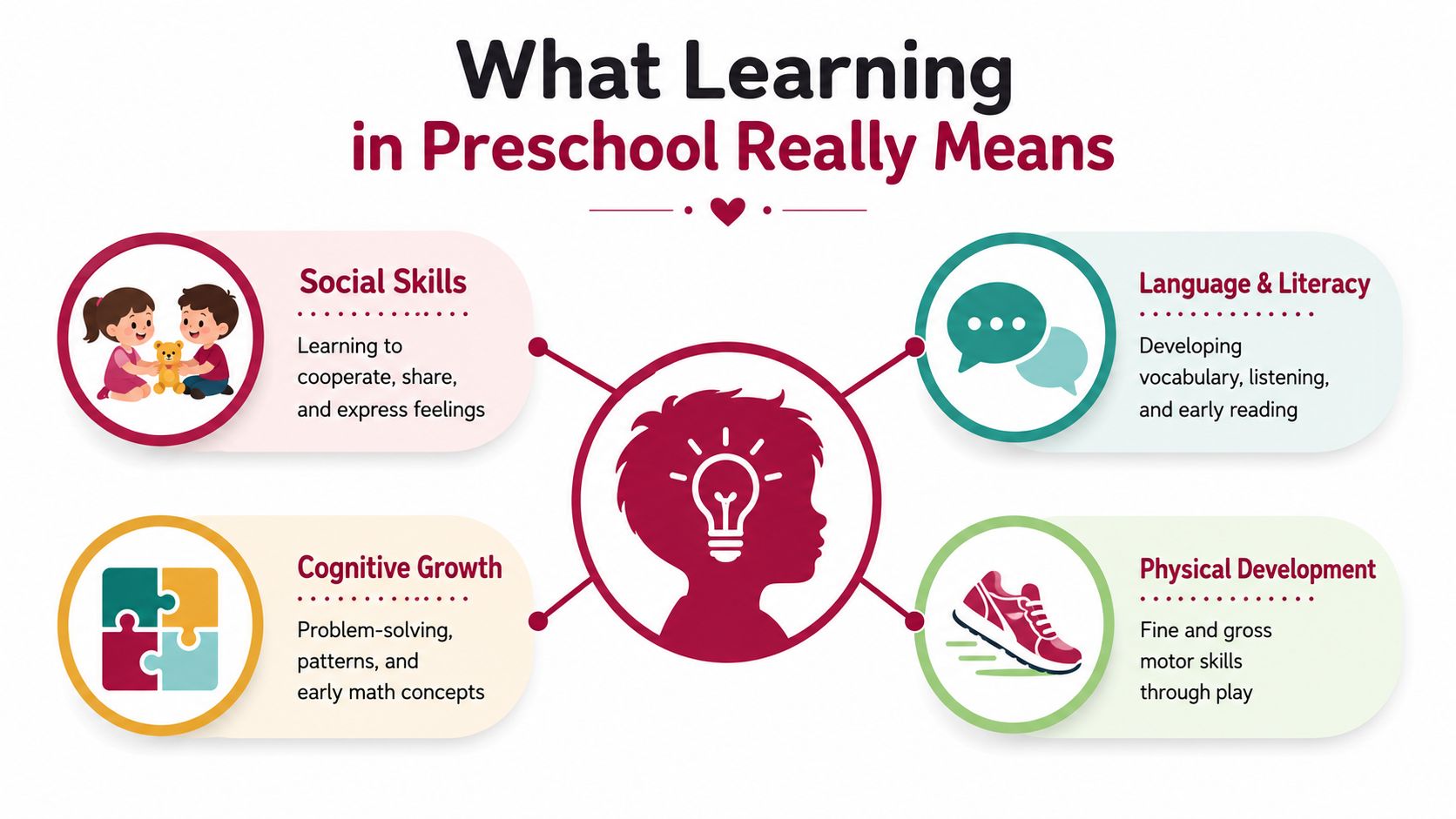
Preschool learning usually centres on seven broad areas, and they work together rather than separately. A child listening to a story is also building vocabulary, attention, memory, and confidence. A child helping to tidy toys is also learning responsibility, sequencing, and cooperation.
The everyday building blocks
Communication and language grows when a child listens to a story, joins in with songs, or tells you about a picture they made. Repeating favourite books matters because children love predictability, and repetition helps language stick.
Personal, social and emotional development shows up when a child waits for a turn, says they're cross, or accepts comfort after a wobble. These moments are often the hardest for parents to spot as “learning”, yet they shape daily life more than many people realise.
Physical development includes climbing, jumping, threading, holding a pencil, and learning to dress themselves. If you'd like a deeper look at the smaller movements behind those tasks, this guide on fine motor skills development is a useful companion.
Literacy starts long before reading fluency. It includes enjoying books, noticing print, hearing sounds in words, and understanding that stories have a beginning, middle, and end.
Mathematics appears in counting snacks, sorting blocks by size, comparing “more” and “less”, and recognising patterns.
Understanding the world grows when children notice rain, ask about plants, or talk about family routines and different places. A walk to the window can become a science lesson if someone notices the weather and wonders aloud.
Expressive arts and design lets children experiment with colour, sound, pretend play, and materials. A child painting a “rocket” might be mixing shades, telling a story, and solving a planning problem at the same time.
A preschool day can look uneven from the outside, but children are often working in several developmental areas at once.
The reassuring part for parents is this. You don't need to create special teaching moments at home to support these areas. Your child is already building them through ordinary life, and preschool gives those skills a richer place to grow.
Why Play-Based Approaches Matter So Much
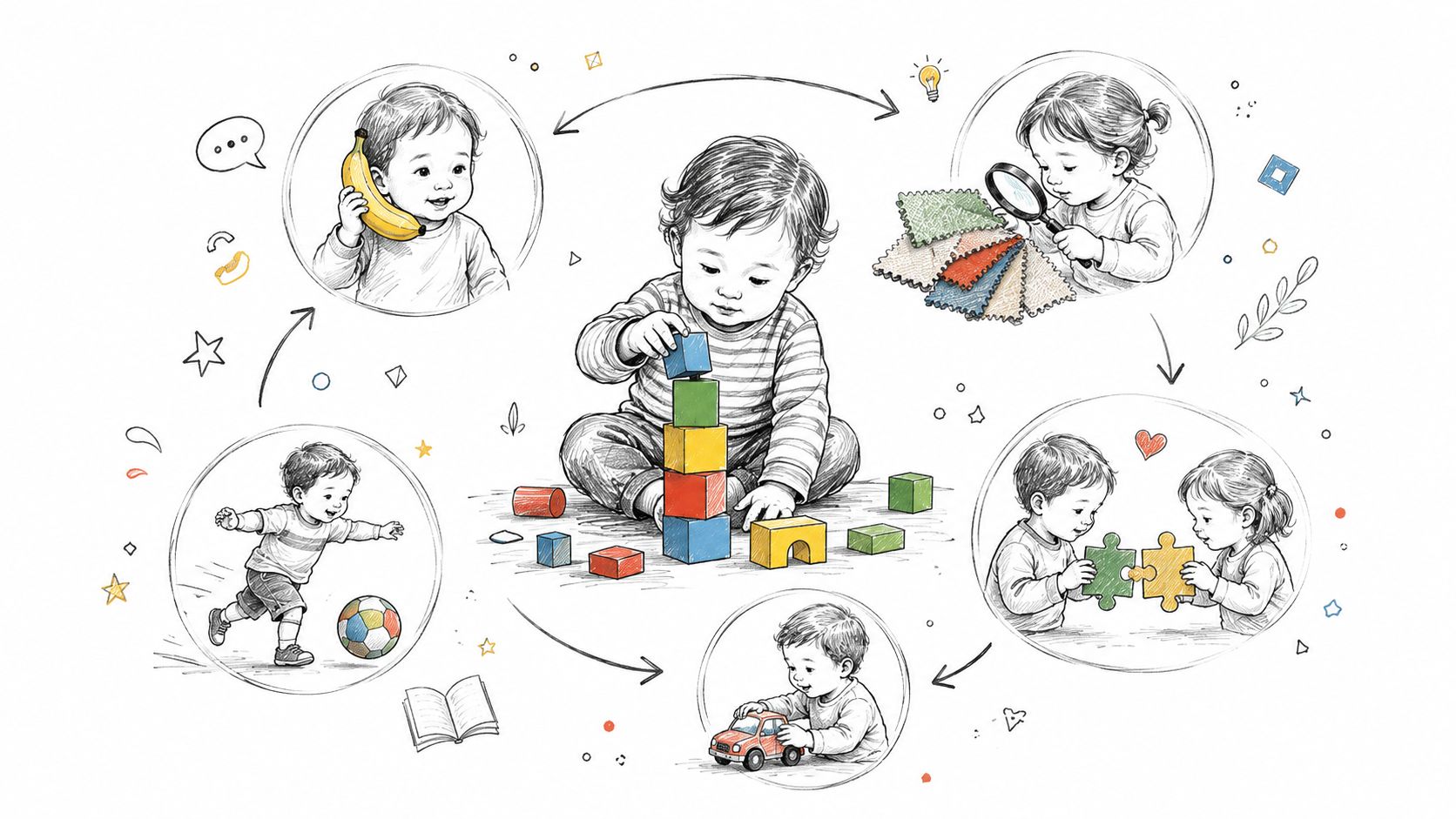
Play isn't a break from learning in the early years, it's one of the main ways learning happens. A block corner, a tray of sand, a pretend shop, a song circle, or a story session can all build the same foundations that adults sometimes assume only come from direct teaching.
That matters because the quality of the interaction is doing a lot of the work. The Education Endowment Foundation says high-quality early years teaching is associated with a large impact, and the strongest settings combine purposeful adult interaction, sustained shared thinking, and carefully chosen play-based tasks rather than relying too heavily on whole-group or transition time (EEF summary via NIEER). In plain English, children learn more when adults join the play with purpose, ask good questions, and stretch thinking without taking over.
What this looks like in real life
A child playing shop might say, “I need three apples”, while handing over blocks as pretend money. That one moment can involve counting, language, turn-taking, imagination, and social negotiation. If the adult joins in by asking what the shop needs next, the play becomes even richer.
The same principle shows up in the research base. A synthesis of 84 preschool evaluations found average gains of about 0.35 standard deviations in language, reading, and maths after preschool, roughly equal to one-third of a year of additional learning, and large-scale programmes in Tulsa and Boston produced gains of half to a full year of extra learning in reading and maths (preschool evidence review). Those numbers don't mean every preschool day should be formal or academic. They show that well-designed preschool can support real development before primary school begins.
Key point: play works best when adults are intentional, not absent. Child-led doesn't mean adult-free.
For parents who worry that play sounds vague or unstructured, that's the important correction. Good play-based learning has rhythm, purpose, and skilled adult support. It just doesn't look like a row of desks and a pile of worksheets.
If you'd like a parent-friendly explanation of this idea in a nursery context, this overview of the power of play offers a useful starting point.
A Look Inside a Typical Preschool Day
A typical preschool day is built around routines that children can recognise. Arrival, free play, group time, snack, outdoor play, a focused activity, story and song, lunch, rest, and home time all give children repeated chances to practise the same skills in different ways.
The learning inside ordinary routines
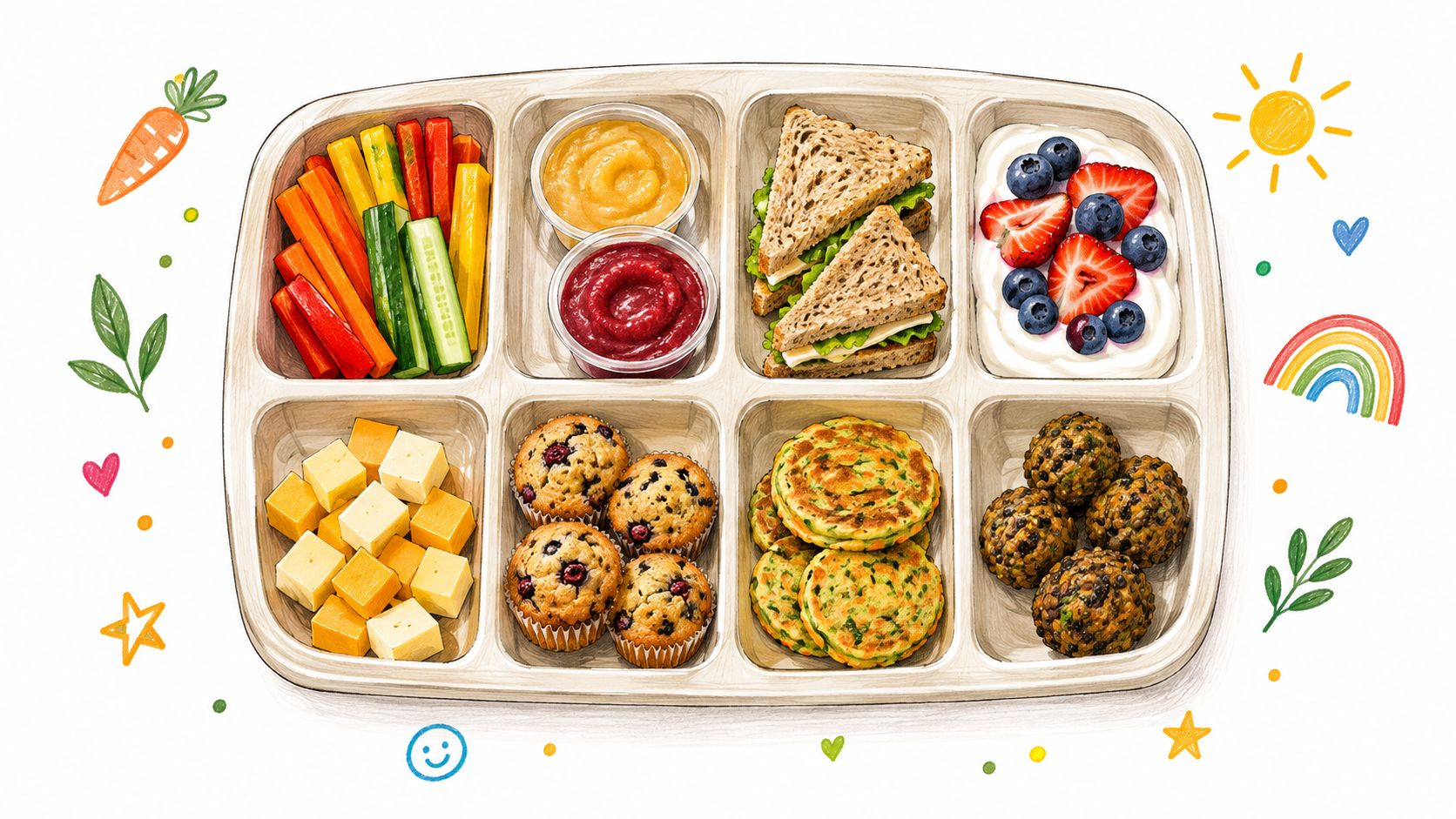
Arrival helps children separate from parents, settle emotionally, and choose an activity. Free play gives them time to practise independence and make decisions. Snack time may look simple, but pouring water, passing bowls, and talking about food all build confidence and communication.
Lining up for outdoor play teaches patience and self-regulation. Tidying together teaches responsibility, and it also gives children a shared job with a clear finish. Those are not small habits, they're the foundations of group life.
A calm rhythm matters because preschoolers need predictability. High-quality settings minimise long waiting times and repeated transitions, because that's not where the strongest learning tends to happen. When the day moves smoothly, children have more energy for interaction, exploration, and language.
| Routine | What children are practising |
|---|---|
| Arrival | Settling, independence, separation confidence |
| Snack | Fine motor control, turn-taking, counting, conversation |
| Outdoor play | Gross motor skills, risk awareness, cooperation |
| Tidying up | Responsibility, sequencing, shared routines |
| Story and song | Listening, memory, vocabulary, enjoyment of language |
Children often remember the feeling of the day more than the exact activity. If the day feels calm and predictable, they're more likely to take part, ask questions, and try again when something feels tricky.
A nursery day doesn't need to be packed with constant novelty. In fact, familiar routines often help children learn better because they can focus on the task instead of worrying about what happens next.
How Progress Is Assessed Without Tests
Many parents expect some kind of score or report card in preschool, and then worry when they don't see one. In early years, progress is usually tracked through ongoing observation, notes from adults, samples of work, and conversations with families rather than formal tests.
That approach makes sense because young children don't always show what they know in the same way from one day to the next. A child might say almost nothing during group time, then spend twenty minutes building, explaining, and solving problems during play. If staff only looked for test-style answers, they would miss a lot.
What good assessment usually includes
Practitioners watch how a child joins in, how they use language, how they manage feelings, and how their skills change over time. Time-stamped, consistent observations matter because they help staff tell the difference between normal variation and a pattern that needs more attention. The ERIC guidance on early childhood data systems recommends collecting child demographics, attendance, developmental screening, and curriculum-based assessment data so educators can identify patterns early and adapt support (ERIC guidance on early childhood data systems).
That doesn't need to feel clinical or intimidating. It means adults are paying close attention and recording what they see clearly enough to notice change.
What parents can expect
- Regular conversation: You should hear about how your child is settling, playing, talking, and relating to others.
- Specific examples: Good feedback sounds like, “She joined the group song today” or “He asked for help and then tried again”.
- A chance to raise concerns: If something feels off at home, that's worth discussing early rather than waiting.
The EYFS framework shapes this approach in England, and this overview of what the EYFS framework is is helpful if you want to understand the wider context without getting lost in jargon.
If you're ever unsure, ask your child's key person for two or three concrete examples of progress they've noticed. Specific examples are far more useful than general reassurance.
Practical Ways Parents Can Support Preschool Learning at Home
You don't need extra worksheets or elaborate activities to support preschool learning. The strongest support usually comes from ordinary life, repeated often enough that your child gets lots of practice.
Everyday moments that do the work
| At Home | What It Builds |
|---|---|
| Talking during bath time | Vocabulary, back-and-forth conversation, attention |
| Counting socks while sorting laundry | Early maths, sorting, one-to-one counting |
| Naming feelings when a child is upset | Emotional language, self-regulation |
| Reading the same favourite book again and again | Memory, language, story structure, confidence |
| Letting a child help in the kitchen | Independence, sequencing, fine motor control |
Those same kinds of experiences are why many families find simple nursery activity ideas easy to copy at home, because they fit into daily routines rather than demanding extra time. You can also look at nursery activity ideas if you want inspiration that stays practical and low-pressure.
A few quiet habits that help
Sleep matters because tired children struggle to listen, manage feelings, and join in. Screen time is best kept in balance with conversation, movement, and shared play, because young children learn most from people, objects, and experiences they can interact with directly.
Letting your child dress themselves, tidy a few toys, or carry their own small bag may take longer, but those moments build independence. They also mirror the same self-care and responsibility skills children practise in preschool.
Simple reminder: if your day already includes talking, reading, counting, and helping, you're doing more for learning than you might think.
You don't have to turn home into school. You just need to stay curious, talk things through, and make space for your child to try.
A Calm Way Forward for Families
Preschool learning makes more sense when you stop looking for a single subject and start noticing the whole pattern. Children are learning through play, relationships, routines, movement, and conversation, and they're doing it in ways that build confidence as well as knowledge.
If you're thinking about school readiness, hours, or whether a setting feels right, the most useful next step is usually simple: watch how your child responds, ask questions, and stay in touch with the adults who see them each day. A good preschool relationship should feel like a partnership, not a test you have to pass.
The role you play at home still matters most. You're the person who knows your child's moods, interests, and tiny victories, and that's powerful information.
Happy Tree Academy supports early years learning through play, daily routines, and caring interactions that help children build confidence, communication, and independence. If you're exploring a nursery in Northwood, visit Happy Tree Academy to see how a day nursery can support your child's development day to day.