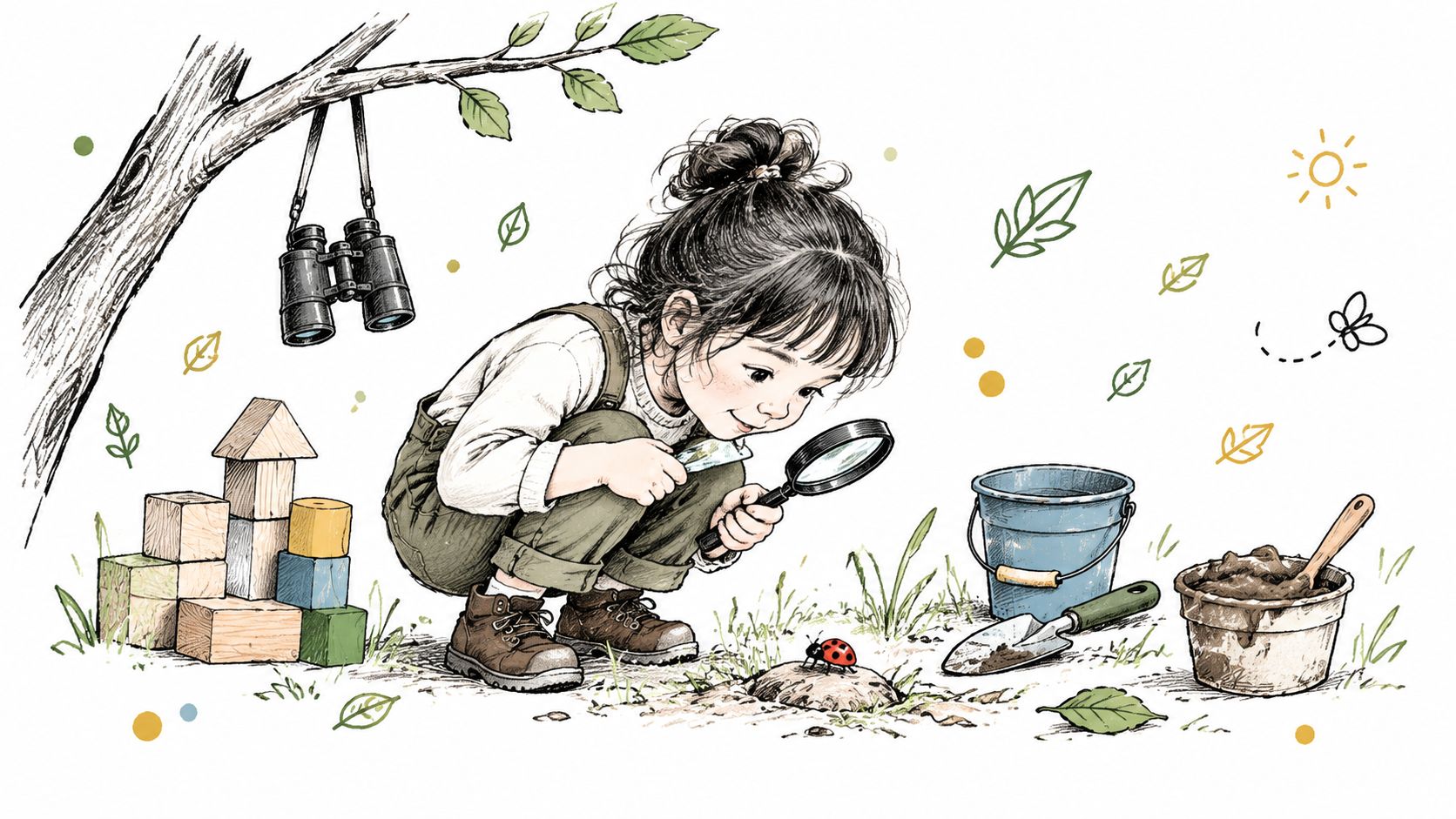

You've set aside time to go outdoors, but after a few minutes your child has tipped over a bucket, lost interest in a ball and started asking for a screen. That doesn't mean outdoor play has failed. Often, children need a simple invitation to investigate, build, move or pretend before the space begins to feel exciting.
The best outdoor learning toys don't follow a rigid lesson plan. They give children something to do with their hands and bodies while leaving room for questions, trial and error and imagination. A cardboard tube can become a telescope, a container can become a pond for pretend creatures, and a few wooden blocks can turn into a bridge, a house or a road.
Why Outdoor Learning Matters More Than Ever
Outdoor learning is about much more than fresh air. A child who carries a bucket is developing strength and coordination. A child who watches water flow around a stone is beginning to notice cause and effect. A child who works out how to reach a toy without falling is testing balance, planning and confidence.
These experiences can support all seven areas of learning in the Early Years Foundation Stage, including communication and language, physical development, personal, social and emotional development, literacy, mathematics, understanding the world, and expressive arts and design. Outdoor environments give children space to repeat actions, change their ideas and learn through real experiences rather than only through explanation.
UK children are also having fewer opportunities for independent outdoor activity. Recent play research found that children now begin unsupervised outdoor play at an average age of 10.8 years, compared with 9.7 years for their parents' generation. The same report says children aged 5 to 11 spend less than half of their play time outdoors, with street play averaging under 25 minutes per week, as reported by recent UK play research.
That change doesn't mean young children should be left to manage outdoor play alone. It means adults can create safe, welcoming opportunities for children to practise independence gradually. A carefully chosen toy can provide a starting point, while your calm presence helps your child decide what to try next.
Outdoor play builds more than physical confidence
Children encounter manageable problems outdoors. The tower falls, the water spills, the den needs another support and the muddy mixture becomes too runny. Each small setback gives them a chance to adjust, persist and try again.
You can find more ideas about the wider benefits in this guide to outdoor learning in the early years. The important point is that the toy itself isn't the learning outcome. Repeated interaction, conversation and freedom to explore create the learning.
The Building Blocks of Outdoor Play
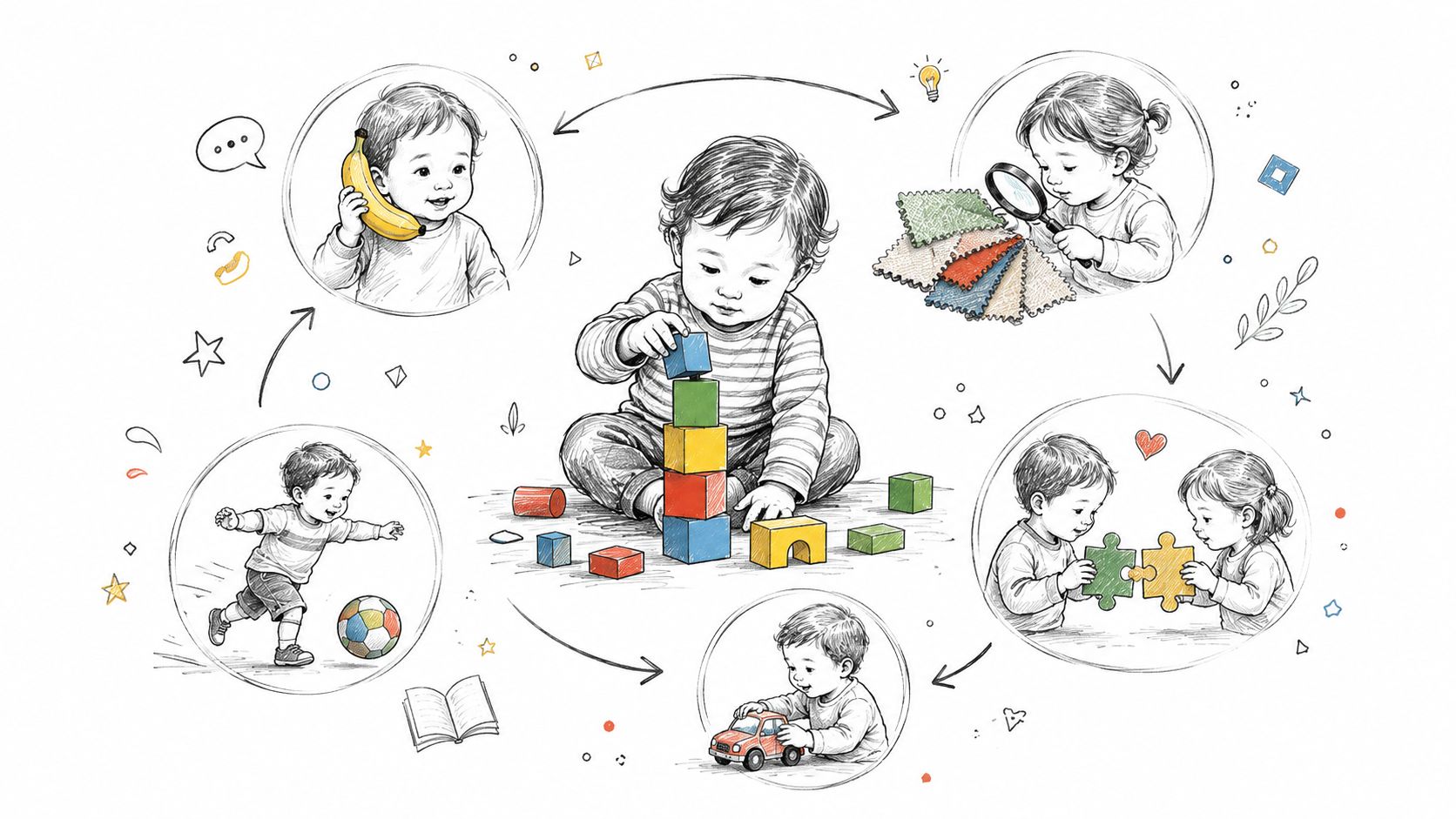
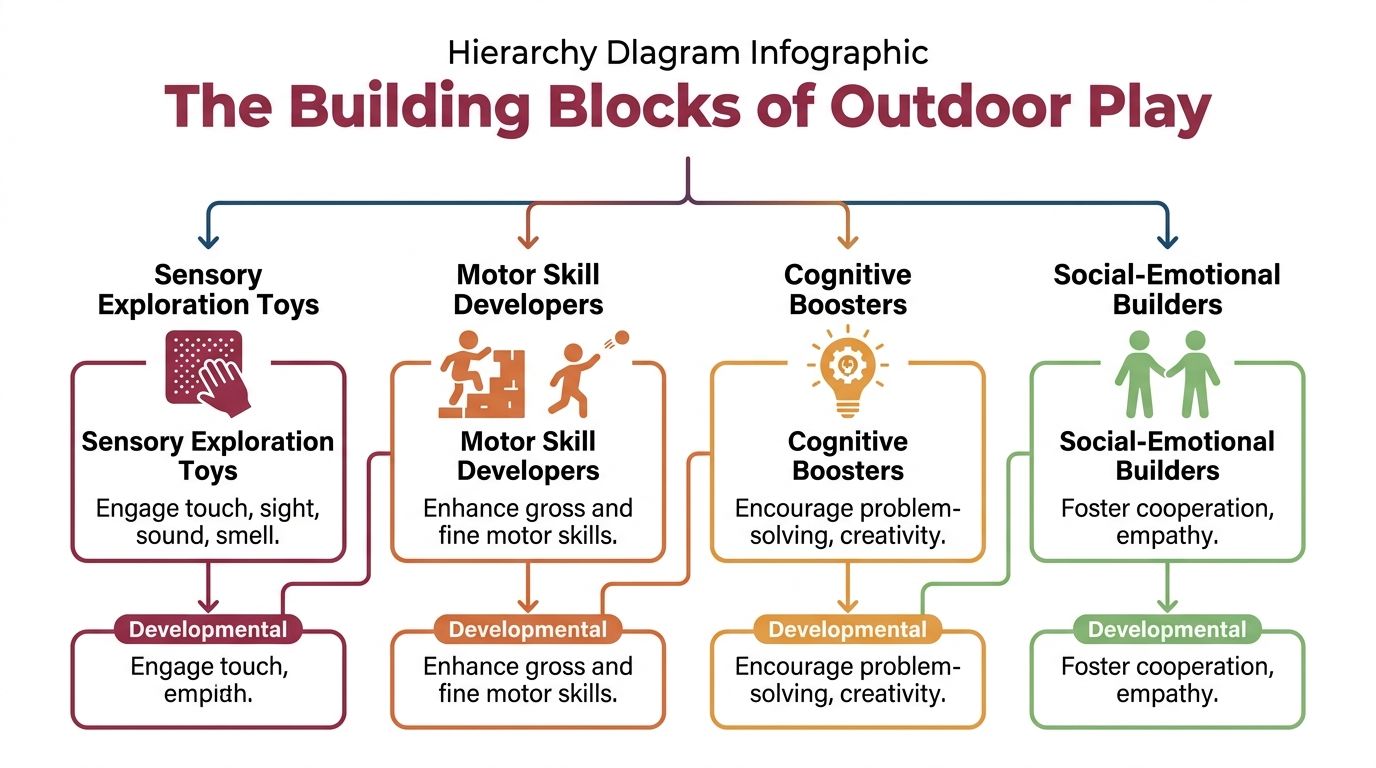
A balanced collection of outdoor learning toys doesn't need to be large. It needs to offer different kinds of experiences, including movement, sensory discovery, construction, investigation and shared pretend play.
Toys for building and creating
Wooden blocks, crates, buckets, spades, tubes and large cardboard boxes encourage children to make something that didn't exist before. They might build a wall, fill a container, create a track or design a shelter.
This kind of play strengthens hand control and coordination, but its deeper value lies in planning and problem-solving. Your child has to decide which piece belongs where, what will make the structure stable and how to change the design when it collapses. Avoid correcting every decision. Asking, “What could you try next?” keeps ownership with your child.
Tools for exploring and discovering
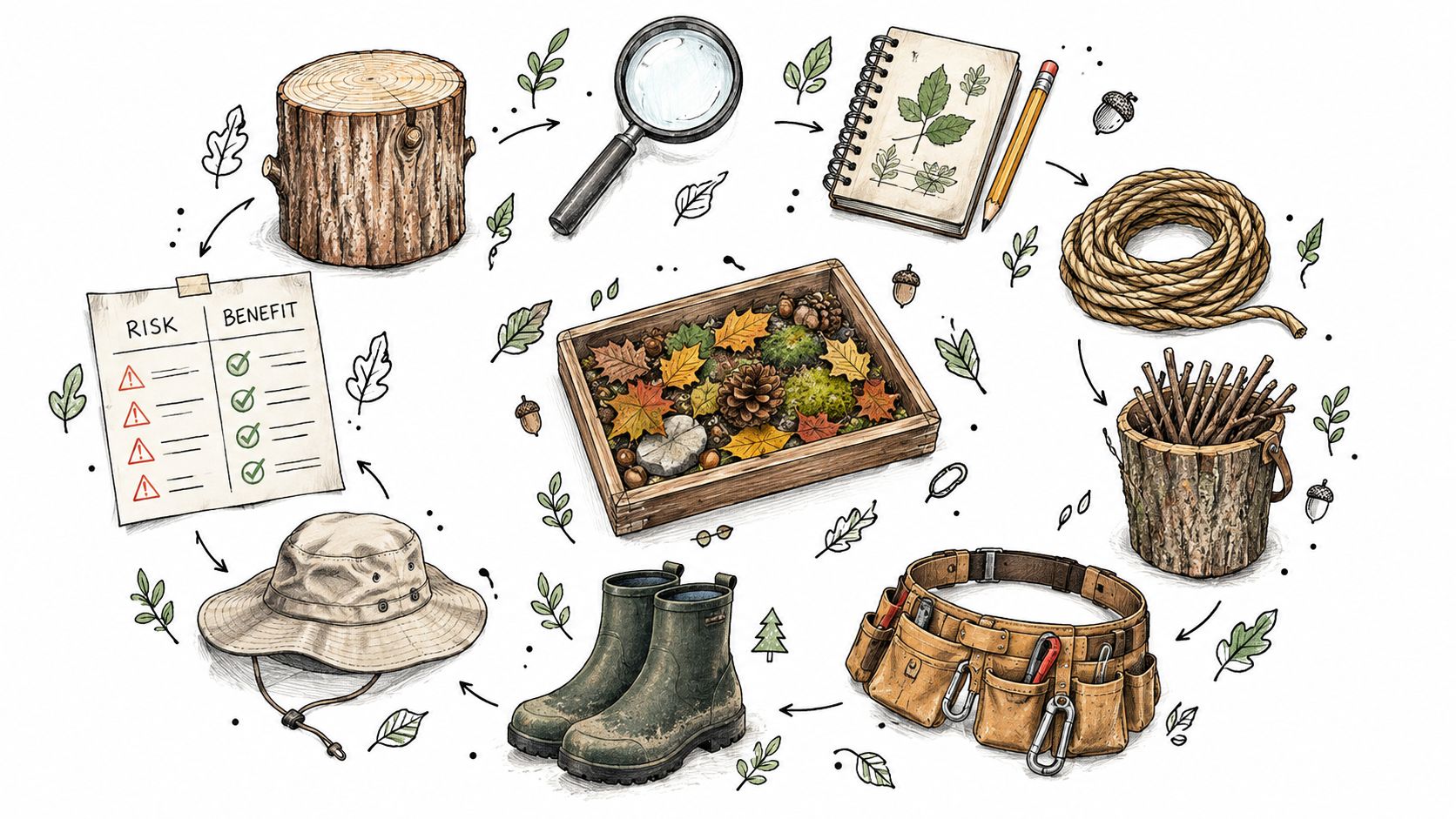
A child-sized magnifying glass, bug viewer, binoculars, a torch for shaded areas and a simple collection tray can turn an ordinary garden or park visit into an investigation. Children may compare leaves, notice different textures or look closely at how water moves across soil.
You don't need to provide answers immediately. Try, “What do you notice?” or “How are these two stones different?” These questions develop vocabulary and curiosity while helping children understand that observation comes before explanation.
Materials for sensory and messy play
Water containers, funnels, scoops, sand, mud, herbs and natural materials invite children to mix, pour, squeeze and transform. A pretend café may involve counting cups, negotiating roles and describing smells. A mud mixture may lead to comparisons about thick, thin, wet and dry.
Ofsted guidance describes outdoor play in all weather as making a significant contribution to children's progress, especially in personal, social, emotional and physical development. That supports choosing resources that can withstand regular use and stay useful across changing conditions, as explained in the official guidance on maximising outdoor learning.
For ideas linked to movement, see this practical guide to gross motor skills development. Choose toys that can be lifted, carried, moved, combined and reinvented rather than items with only one prescribed purpose.
Choosing Safe and Durable Outdoor Toys
A toy can be educational and still be unsuitable for your child's environment. Before buying, think about what your child can safely manage, where the toy will be used and whether you'll be able to check and maintain it regularly.
Start with safety
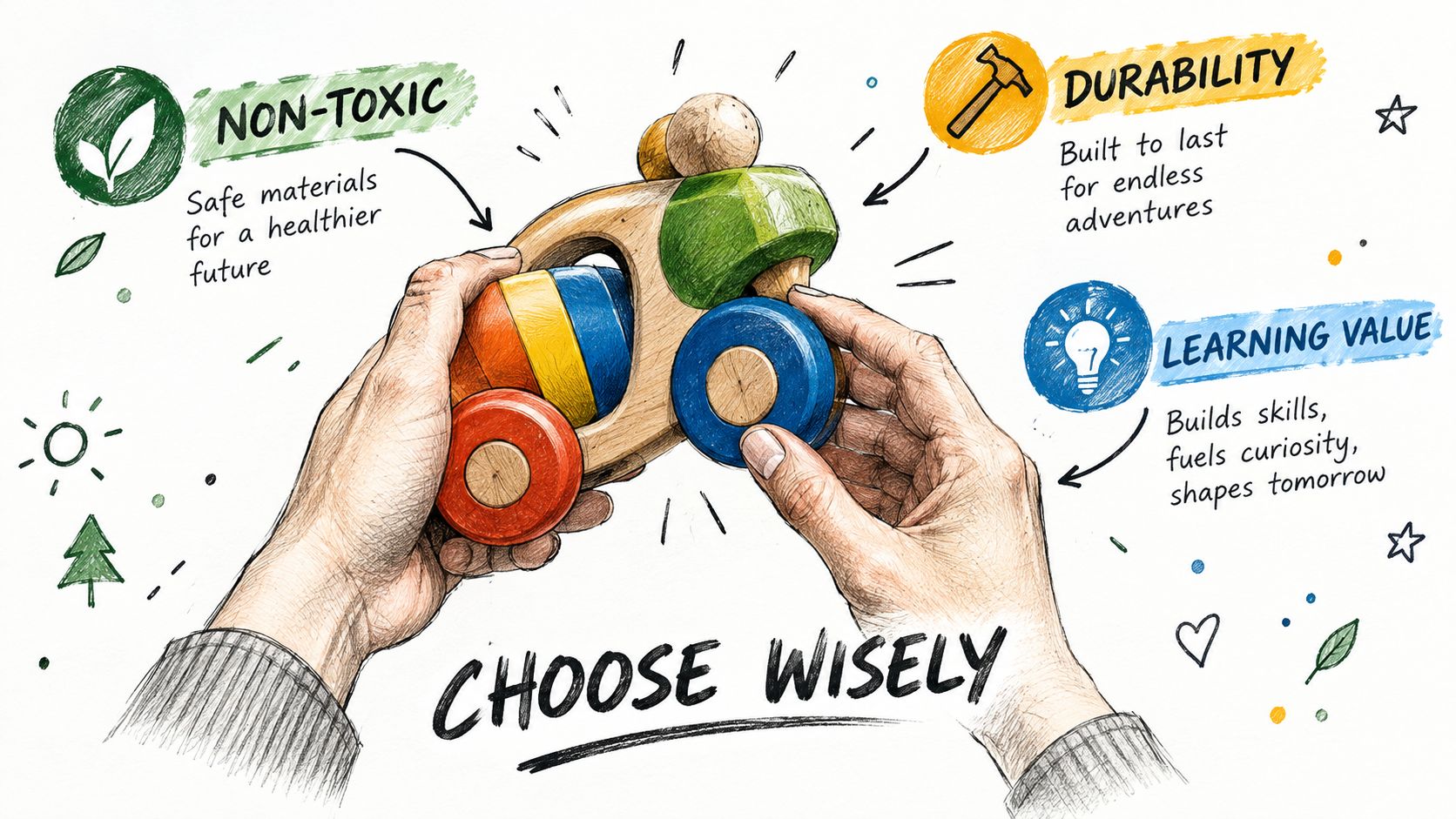
Look for clear age guidance, secure parts and materials intended for children's use. Check that wooden items are smooth, edges aren't sharp and components can't become loose hazards. Avoid small detachable pieces for children who still explore by putting objects in their mouths.
Supervision needs to match the toy and the child. A low object that helps a toddler practise stepping may require close support, while a preschooler using a bucket and scoop may need more space to experiment. Always inspect outdoor resources after wet weather, heavy use or storage.
Consider the weather
Outdoor toys need to cope with moisture, sunlight, mud and repeated handling. Sealed wood, durable plastic and washable materials can be practical choices, but no item should be treated as maintenance-free.
Create a simple routine. Empty water containers, clean items that have become dirty, dry wooden toys properly and store resources where they won't become trip hazards. Durability isn't only about how long a toy lasts. It's also about whether children can return to it in different seasons and use it in fresh ways.
Choose open-ended challenge
A single-purpose toy may entertain your child briefly. An open-ended item can support a longer chain of ideas. A plank can become a bridge, a shop counter or a boundary. A collection of containers can become cooking equipment, building materials or sorting tools.
The UK play survey data places this choice in a wider context. Children now start independent outdoor play at an average age of 10.8 years, more than a year later than their parents' generation, which makes safe opportunities to practise confidence, problem-solving and managed risk especially valuable, according to Exeter's coverage of the British Children's Play Survey.
A useful rule: Choose the least complicated resource that gives your child something meaningful to work out.
Managed risk doesn't mean removing all challenge. It means choosing a challenge that fits your child, staying close enough to help and allowing them time to assess what they can do. You might say, “The ground looks uneven. Where could you place your foot?” rather than lifting your child immediately.
Age-Appropriate Ideas for Outdoor Exploration
Children of the same age can have very different movement, communication and sensory needs. Use age guidance as a starting point, then watch how your own child responds. A toy is appropriate when it invites exploration without creating frustration or avoidable danger.
Babies from 6 to 18 months
For babies, outdoor learning begins with looking, listening, reaching, touching and moving. A washable mat, outdoor-safe mirror, bubbles, textured fabric and large natural objects that can be safely handled may be more valuable than a complicated toy.
Place one object nearby and give your baby time to notice it. Bubbles can encourage visual tracking and reaching, while listening for birds or rustling leaves introduces sound and shared attention. If your baby is crawling or beginning to stand, position interesting objects just far enough away to encourage movement, always staying close.
Research on outdoor provision for babies and toddlers in English early-years settings found the evidence base was sparse. Most settings reported outdoor access, but year-round free-flow access was reported for only 14% of babies, highlighting the need for thoughtful guidance about sensory exploration, crawling and standing for under-2s, as described in the study of outdoor provision for babies and toddlers.
Toddlers from 18 months to 3 years
Toddlers often benefit from toys that connect movement with a clear purpose. A small watering can, push-along vehicle, sturdy scoop, large chalk or collection basket can turn walking, carrying and pouring into an engaging activity.
Offer simple choices rather than many resources at once. You might ask whether your child wants to water a plant or collect leaves, then follow their lead. Expect repetition. Filling and emptying a container several times is how toddlers explore quantity, control and cause and effect.
Nature hunts work well when the instructions stay manageable. Look for something smooth, something green or a leaf bigger than your hand. Avoid turning the activity into a test. The conversation matters more than finding the “right” object.
Preschoolers from 3 to 5 years
Preschool children can combine materials, take on roles and negotiate shared ideas. Blankets, large boxes, sticks gathered safely with an adult, containers, child-sized gardening tools and washable art materials can support den building, pretend shops, nature collections and outdoor storytelling.
A child may begin by making a pretend meal and then decide to create a café. Another may build a shelter, discover that it falls down and redesign it with a wider base. These moments bring together language, early mathematics, physical coordination and creativity.
For further inspiration, explore these nursery activity ideas. Keep the experience flexible, especially when several children are playing together. One child may want to lead the story, another may prefer collecting materials and another may watch before joining in.
Creating Your Own Outdoor Learning Treasures
You don't need to buy every resource. Some of the most engaging outdoor learning toys begin as ordinary household objects that children can transform through play.
An old saucepan, wooden spoon, plastic bowl and a few containers can become a pretend café or mud kitchen. Add water, soil, leaves and petals, then let your child decide what they're making. You can support language by asking, “What's on the menu?” or “How will you make it thicker?” Avoid glass, sharp tools and anything that could contain harmful residue.
A potion-making station can use herbs, coloured water and large measuring containers. Children can smell, stir, pour and describe their mixtures. Keep the focus on exploration rather than producing something that looks a certain way, and supervise closely so that play materials aren't mistaken for food.
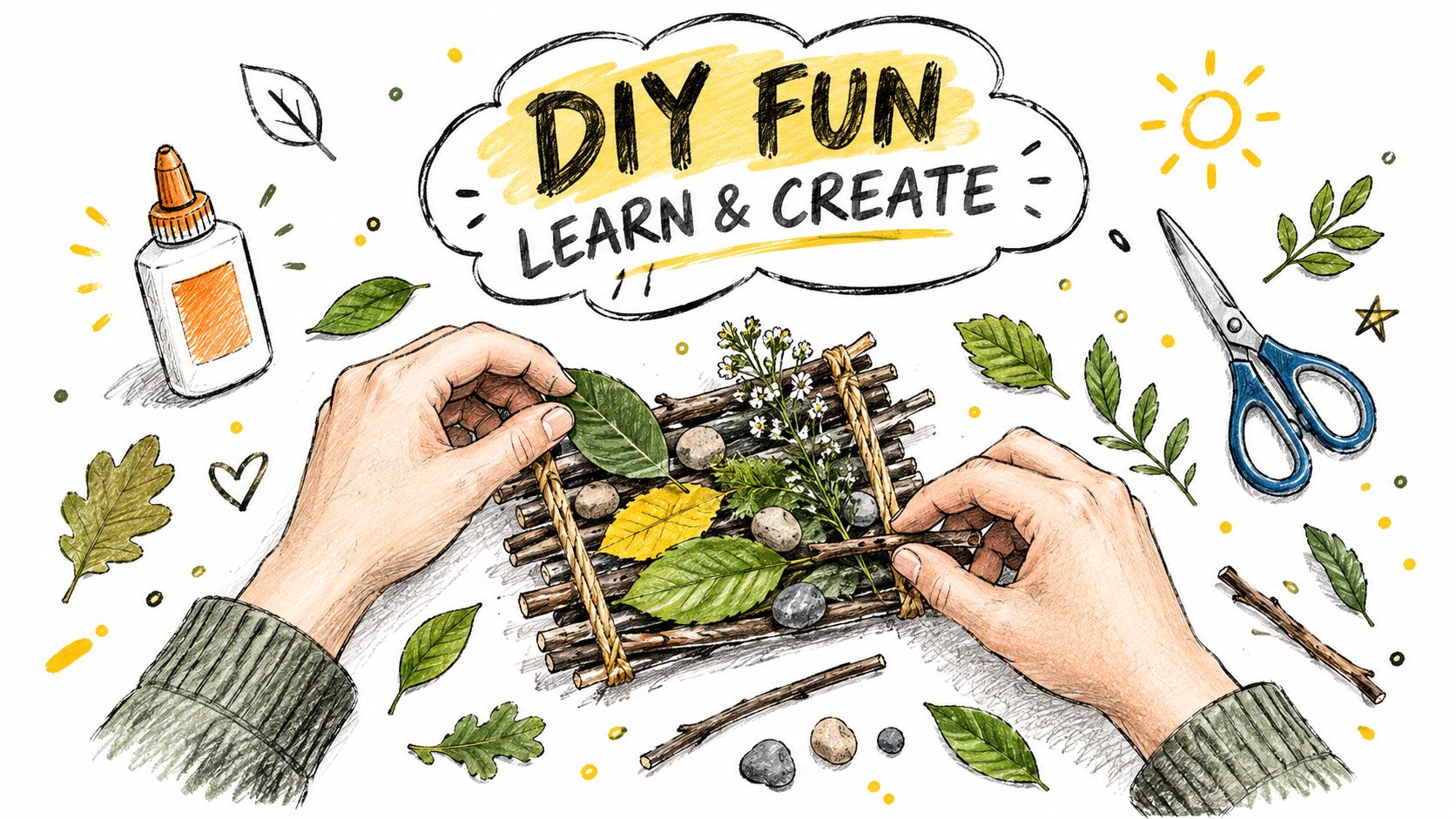
For a nature treasure board, place strips of double-sided tape on card and invite your child to attach fallen leaves, grass, petals and small pieces of bark. This creates a simple sorting and composition activity, but it also encourages careful looking. Use only safe, freely fallen materials and avoid disturbing living plants or wildlife.
A British study found that children spend about 1 hour 45 minutes playing outdoors daily, while indoor play centres supported the most adventurous play. The finding suggests that outdoor environments may benefit from resources that add challenge and variability, and that DIY materials can help because children can move, combine and reinterpret them, as discussed in the British research on children's outdoor play.
Let the materials stay changeable
If a child can use an object in several ways, they're more likely to practise creativity and decision-making. A cardboard box can be a bus one day and a wildlife shelter the next. A rope can mark a path, outline a shape or become part of a pretend rescue game, provided it's used with close supervision.
For more low-cost ideas, try these creative activities for toddlers. The best DIY setup is one you can reset easily, so outdoor play remains realistic rather than becoming another task for you.
Nurturing a Lifelong Love for the Outdoors
Outdoor learning toys are invitations, not answers. They give children something to carry, pour, build, inspect or imagine, but your child's curiosity decides where the play goes.
You don't need expensive equipment or a perfectly organised outdoor area. A small collection of safe containers, a few natural materials and time to follow your child's ideas can support problem-solving, resilience, creativity, communication and physical confidence.
Your role is simple but important. Stay nearby, notice what your child is trying to do, offer words when they need them and resist solving every problem too quickly. Children build independence when adults provide a secure base while allowing space for genuine effort.
Outdoor learning works best when children feel safe enough to try, and free enough to change their minds.
If you're exploring childcare, speaking with a local nursery can help you understand how its indoor and outdoor environments support children's development, how staff encourage child-led exploration and how outdoor learning fits into everyday routines.
Happy Tree Academy offers play-based early years care for children aged 3 months to 5 years, with opportunities for learning through both indoor and outdoor experiences. To discuss your child's needs and arrange a visit, contact Happy Tree Academy and speak with the team.