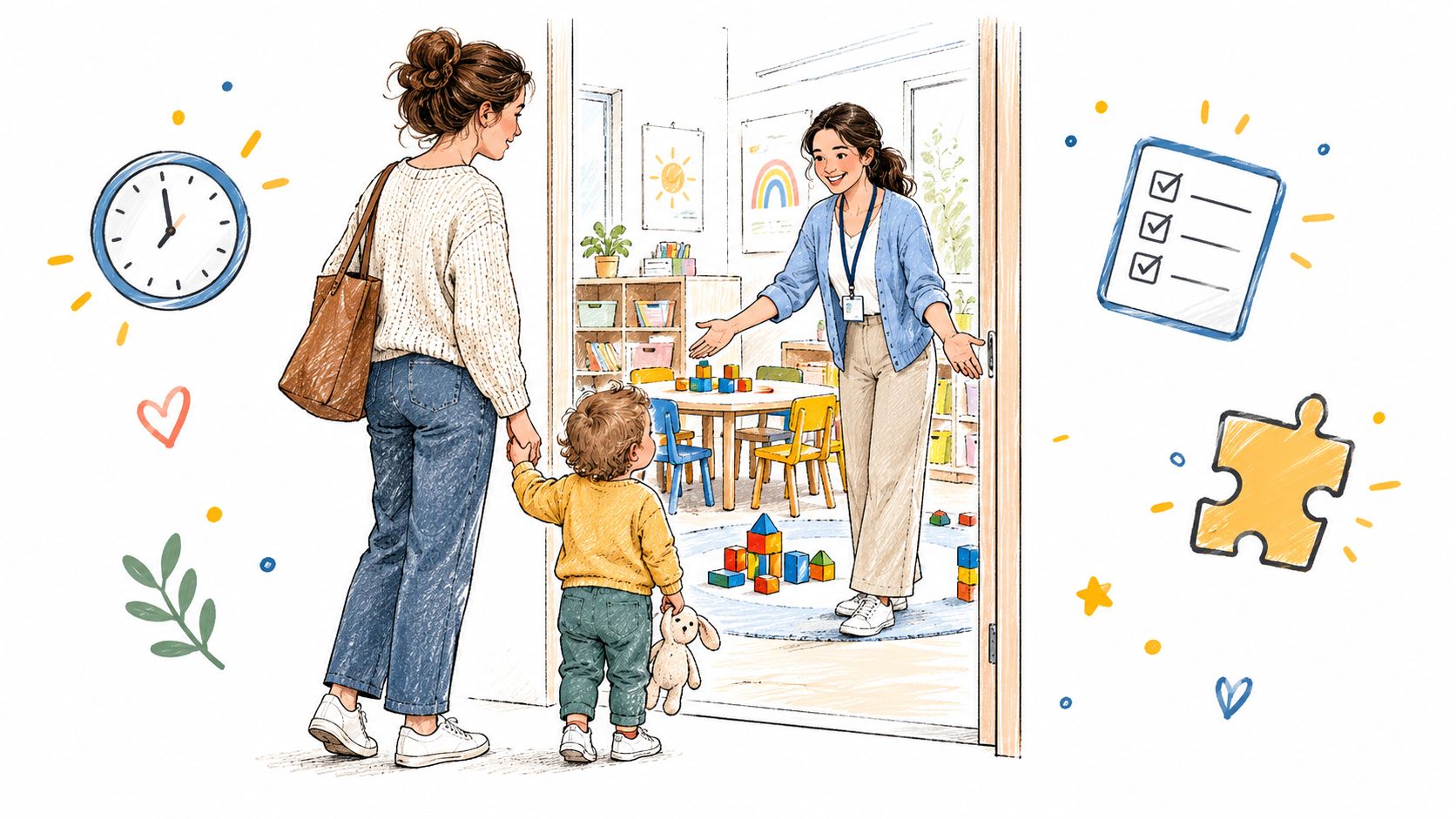
You're standing in the kitchen watching your toddler stack blocks, knock them over and start again. The nursery application is open on your phone, but the thought of leaving your child with unfamiliar adults feels much bigger than an ordinary childcare arrangement. You may be wondering whether they're ready, whether you're ready, and whether nursery will support your family or make daily life more complicated.
There isn't one correct answer to “Should I send my child to nursery?” Nursery can offer valuable relationships, routines and learning experiences, but waiting, using a childminder, relying on family care or combining several arrangements can also be sensible choices. The right decision depends on your child, your circumstances, the quality of the setting available and how the practical details work for your household.
Why This Question Feels So Big for Parents
Nursery decisions often bring several separate worries into one conversation. A parent may want to return to work, but also feel guilty about being away from their child. A partner or grandparent may have strong views about what young children need. The cost may be difficult to calculate, while local places may be limited. Underneath all of this sits the emotional question, “Will my child feel safe and loved without me?”
Those feelings don't mean you're making the wrong choice. Attachment matters, and so does your child's opportunity to form trusting relationships with other adults. A warm nursery doesn't replace a parent. It adds another consistent relationship around the child, provided the setting has the time, staffing and understanding to get to know them properly.
Some parents also fear judgement. Families who choose nursery can be told they're rushing childhood, while families who wait can be asked whether their child is missing out. Neither assumption is fair. Children develop through responsive relationships, play, conversation and everyday care in many different environments.
Start with the question behind the question
Try separating the decision into smaller questions:
- What does my child need now? Consider temperament, sleep, feeding, communication, mobility and any additional support.
- What does our household need? Look at work, study, travel, family help and the hours that would make the week manageable.
- What can we realistically afford? Include funded hours, paid hours, meals, deposits and care during holidays.
- What choices are available? A setting that sounds suitable isn't useful if it has no place or can't meet your child's needs.
The decision can change as your child grows. A plan that feels unsuitable during infancy may become helpful later, and a planned nursery start may need to move if your family's circumstances change.
A useful principle: you're not choosing between being a good parent and using childcare. You're choosing the care arrangement that best protects your child's wellbeing and your family's stability.
This guide is intended to make that choice clearer. It considers what nursery means in the UK, what high-quality early education can contribute, why some families wait, how funding works and what to look for when you visit.
What Nursery Actually Means in the UK
“Nursery” can describe several different types of early years provision, which is why parents can receive confusing answers when they ask about places. A day nursery may offer care across much of the working day. A pre-school may provide shorter sessions. A school-based nursery is attached to a school, while a childminder offers care in a home-based environment. Local names vary, so ask each provider exactly what hours, ages and services it covers.
Early years providers in England work within the Early Years Foundation Stage, commonly called the EYFS. The framework gives settings a shared structure for children's learning, development, welfare and safeguarding before they start school. You can read a plain-language explanation of what the EYFS framework covers before visiting providers, then ask how the setting turns those principles into everyday interactions.
What a nursery day may involve
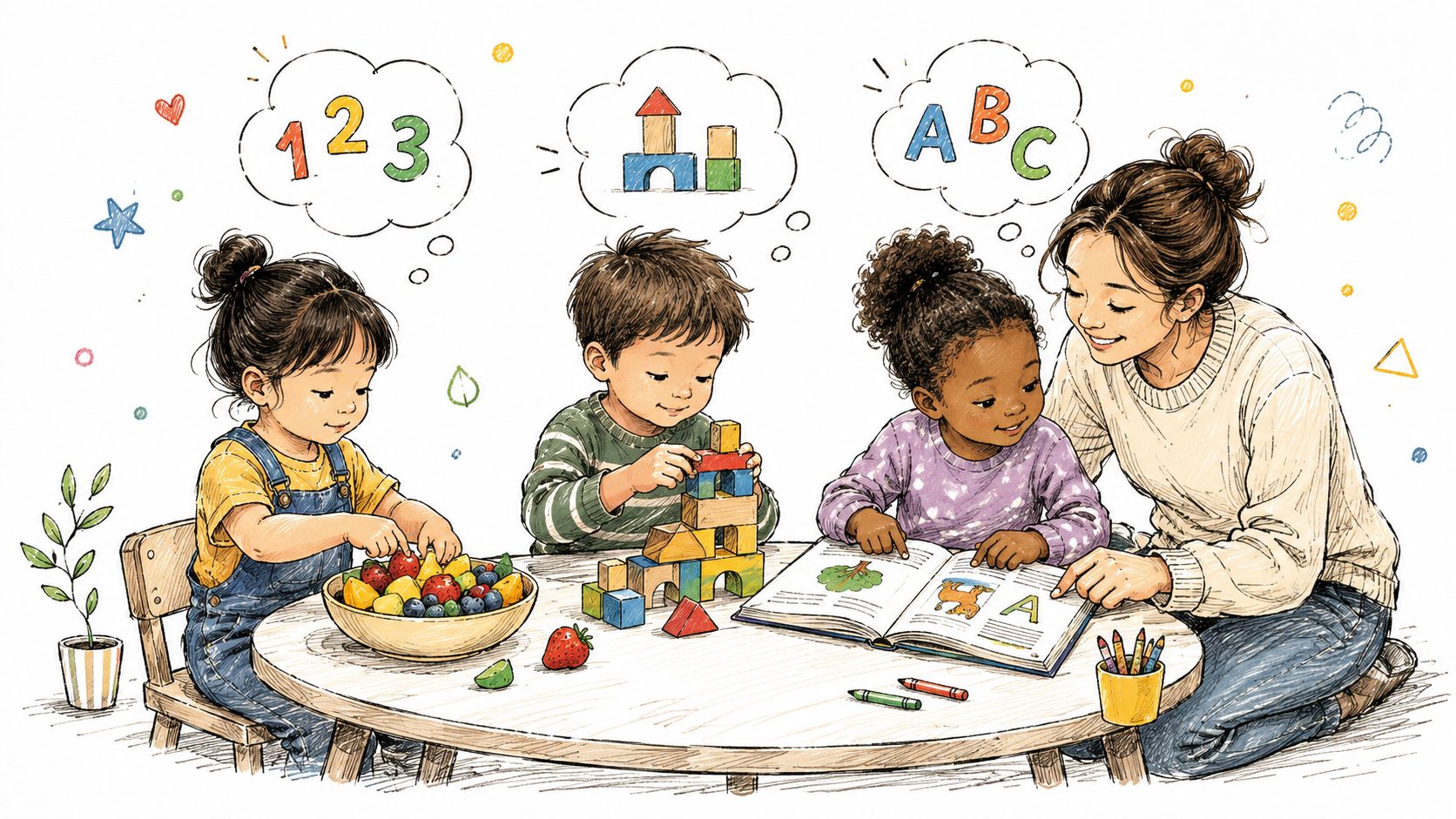
A typical day isn't just a timetable of lessons. Children may move between free play, adult-supported activities, meals, rest, outdoor exploration, stories, songs and personal care. Staff observe children's interests and development, then use those observations to decide how to extend communication, movement, independence and social understanding.
Babies need responsive care, including communication during feeds, changes and settling. Toddlers need opportunities to explore safely, practise language and manage strong feelings with adult support. Older pre-school children may spend more time developing self-help skills, listening, mark-making, early mathematical thinking and confidence in group situations.
Staffing arrangements also matter. In England, the statutory ratio for children under two is one member of staff for every three babies, while the minimum ratio for two-year-olds changed from one adult to five children in September 2023, as set out in the Early Years Foundation Stage framework. For children aged three and over, the minimum is one adult to eight children where no suitably qualified teacher-level professional is working directly with them, and one to thirteen where a person with QTS, EYPS or EYTS is working directly with them, subject to how the provision is organised according to the Department for Education's explanation of staff-to-child ratios.
Why the label can mislead
A funded place doesn't always mean a full day, and a nursery place may not cover every hour a parent works. Some settings stretch funded hours across longer periods, while others offer term-time patterns or charge for additional hours and services. Ask for the full schedule rather than relying on the word “nursery”.
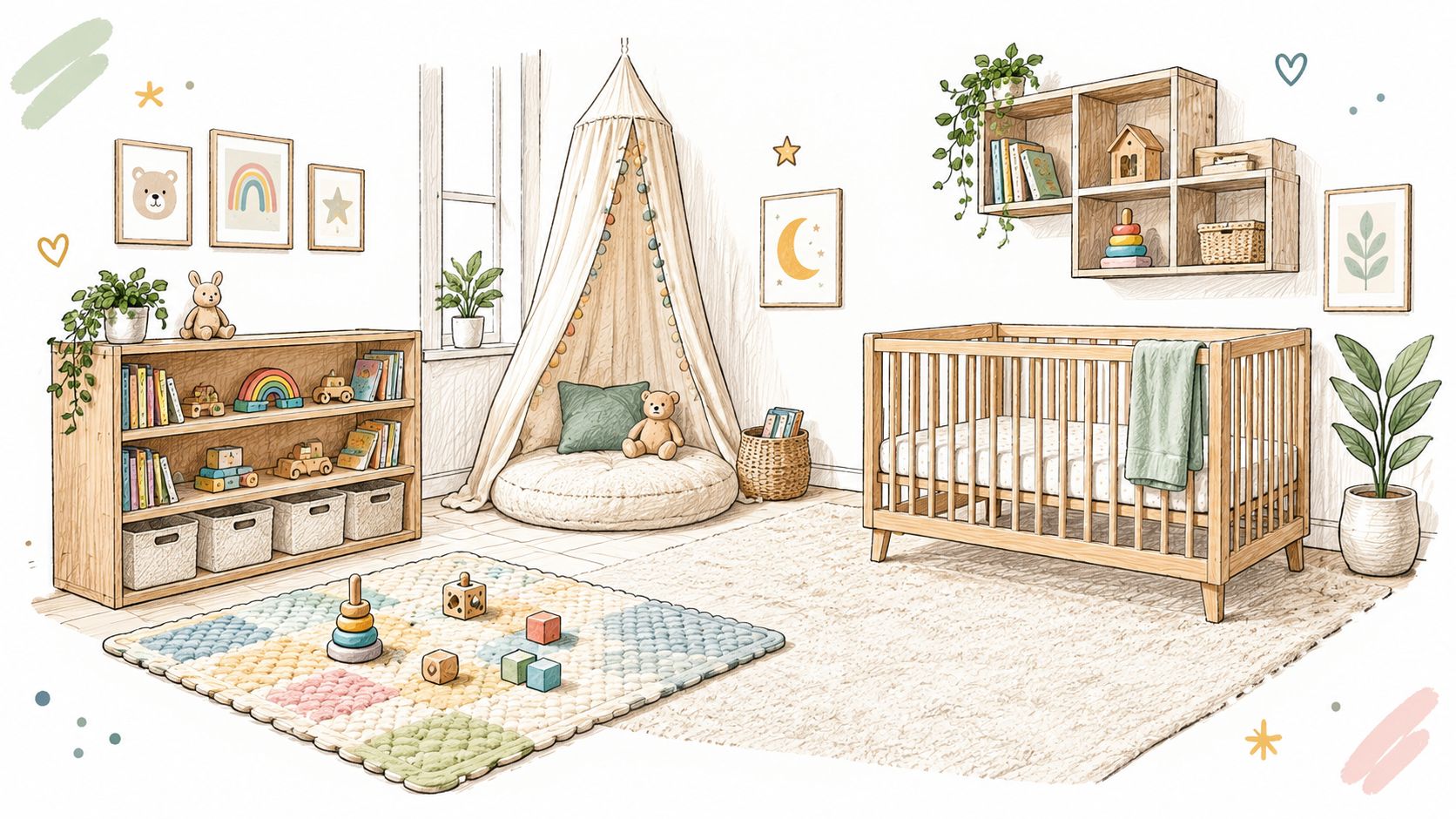
Quality also varies. Look beyond decorations and equipment. The important questions concern how adults respond to children, how securely the setting manages safeguarding, how well staff understand development and whether the environment feels calm, attentive and organised.
The Developmental Benefits of Attending Nursery
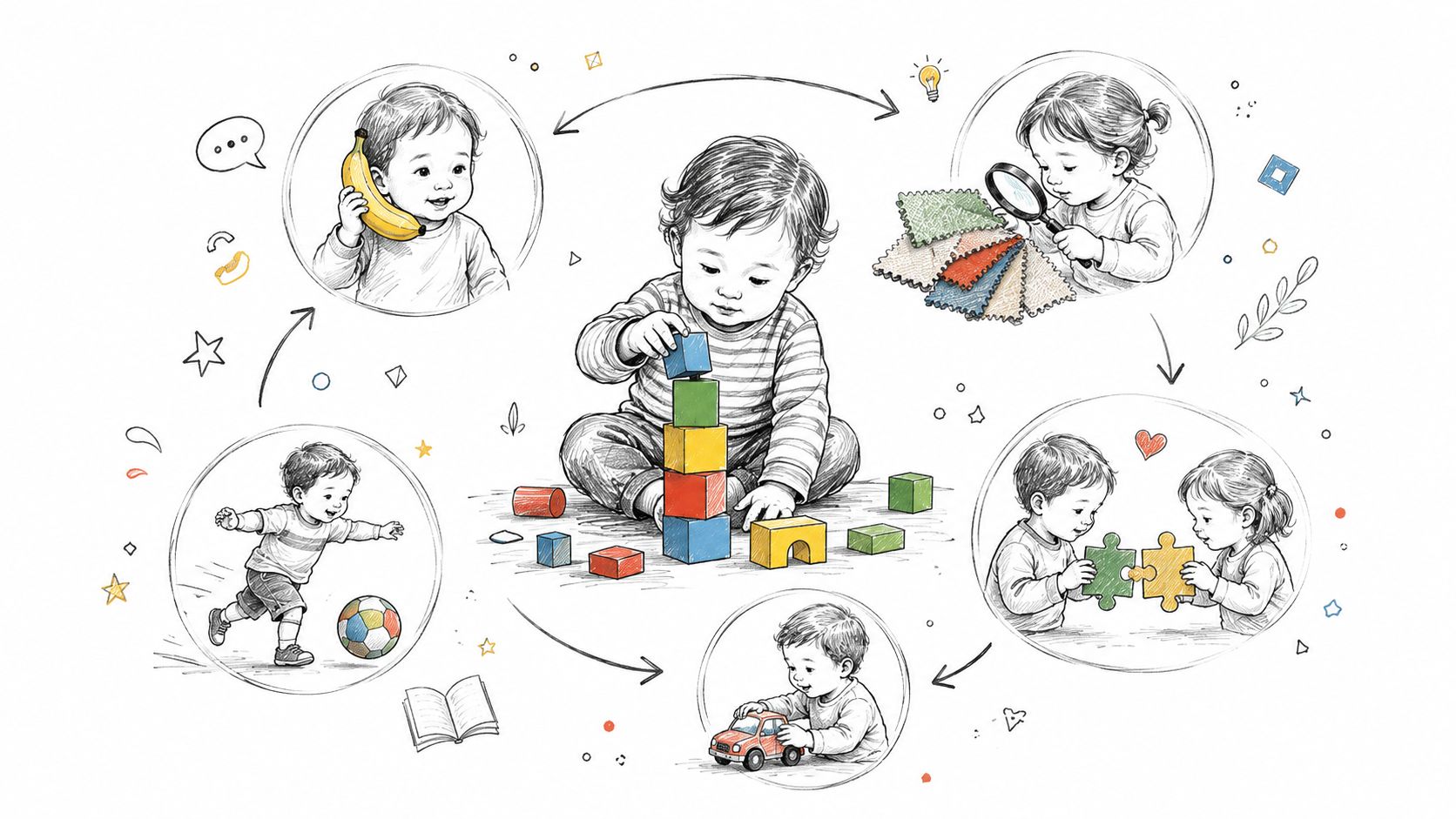
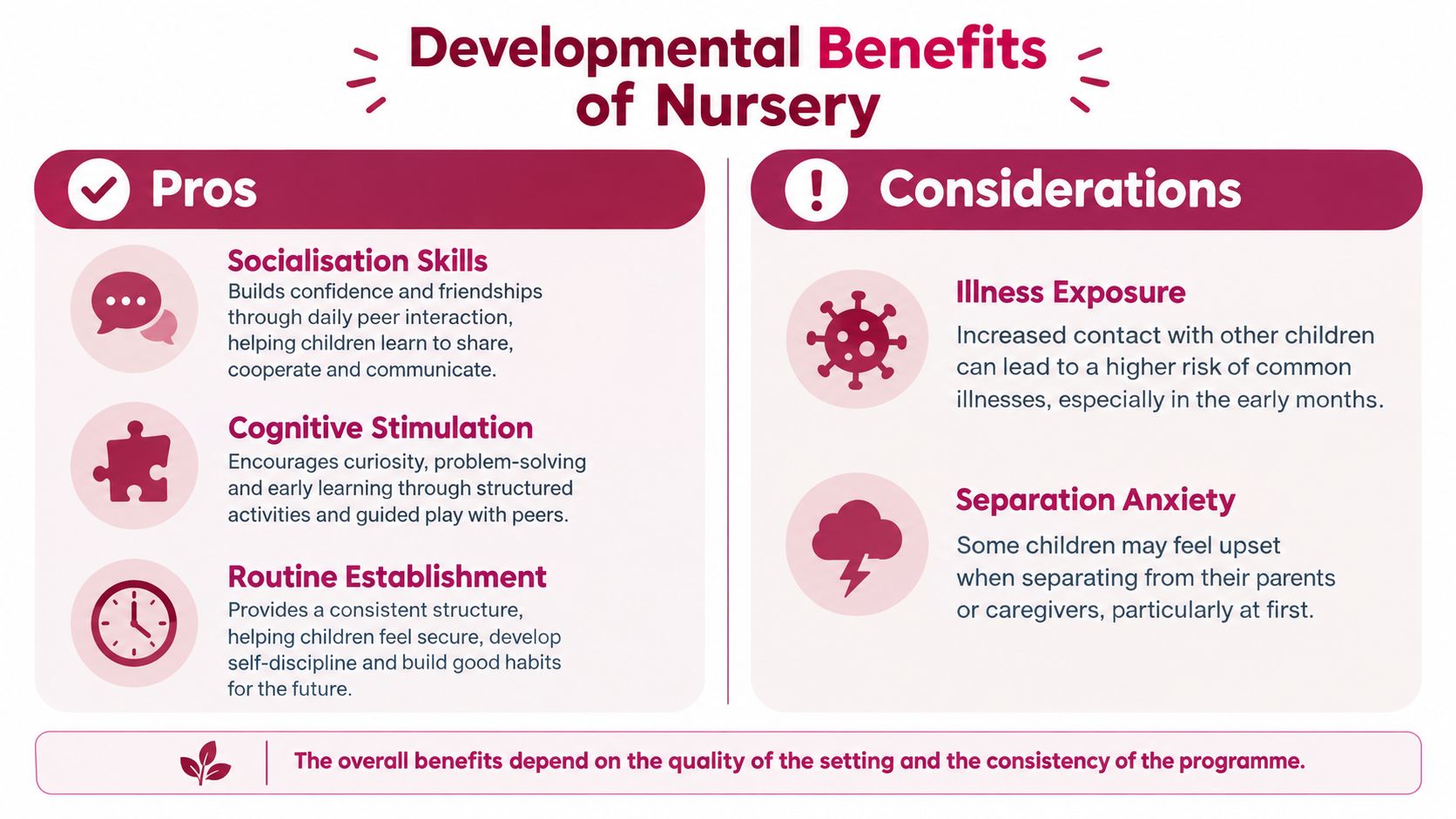
A good nursery gives children repeated opportunities to learn with other people. They practise waiting, joining play, communicating a need, coping with a small disagreement and noticing how someone else feels. These experiences don't make every child outgoing, and they shouldn't be treated as a test of confidence. They provide supported practice in the social skills children gradually use at home, in groups and at school.
Language can grow through ordinary moments. A practitioner might name what a baby is reaching for, pause to allow a toddler to respond or help two children find words for a disagreement. Rich conversation is more important than a long list of formal activities. Play-based learning can also support physical coordination, curiosity, early problem-solving, self-help and independence.
The strongest benefits depend on what children experience, not on registration at a nursery. Attendance can be helpful when children encounter responsive adults, consistent routines and opportunities that match their developmental stage. A setting with limited interaction or frequent disruption may offer a different experience.
Quality deserves more attention than appearance
Evidence summarised by Save the Children's analysis of early years childcare linked high-quality childcare with children starting school around three months ahead in literacy and language compared with children who attended low-quality settings, and around eight months ahead compared with children who attended no childcare. The same source reported that attending a setting with highly qualified staff at age three was associated with a child being 9% less likely to reach a good level of development than attending a nursery without a highly qualified member of staff. The wording of that finding is easy to misread, so ask about the staff qualification mix and how adults use their knowledge in practice.
These findings don't promise that nursery will produce a particular result for an individual child. Home life, siblings, playgroups, libraries, relatives and community activities can also support communication and social development. Nursery is one possible context, not the only route.
What school-readiness data can and can't tell you
England's early years measures show that, in 2024/25, 68.3% of children reached a good level of development at the end of the Early Years Foundation Stage, while 66.9% met the expected level across all 17 early learning goals, including communication, physical development, literacy and mathematics in the government's Early Years Foundation Stage Profile results. The proportion reaching a good level of development was 65.2% in 2021/22, 67.2% in 2022/23 and 67.7% in 2023/24, using the same government data.
Those figures describe children's outcomes across the system, not the guaranteed effect of one nursery. They do show why early years provision is organised around developmental milestones rather than childcare alone. The practical lesson is simple: the quality of adult-child interaction matters more than the word “nursery” on the sign outside.
Honest Reasons Some Families Wait or Choose Differently
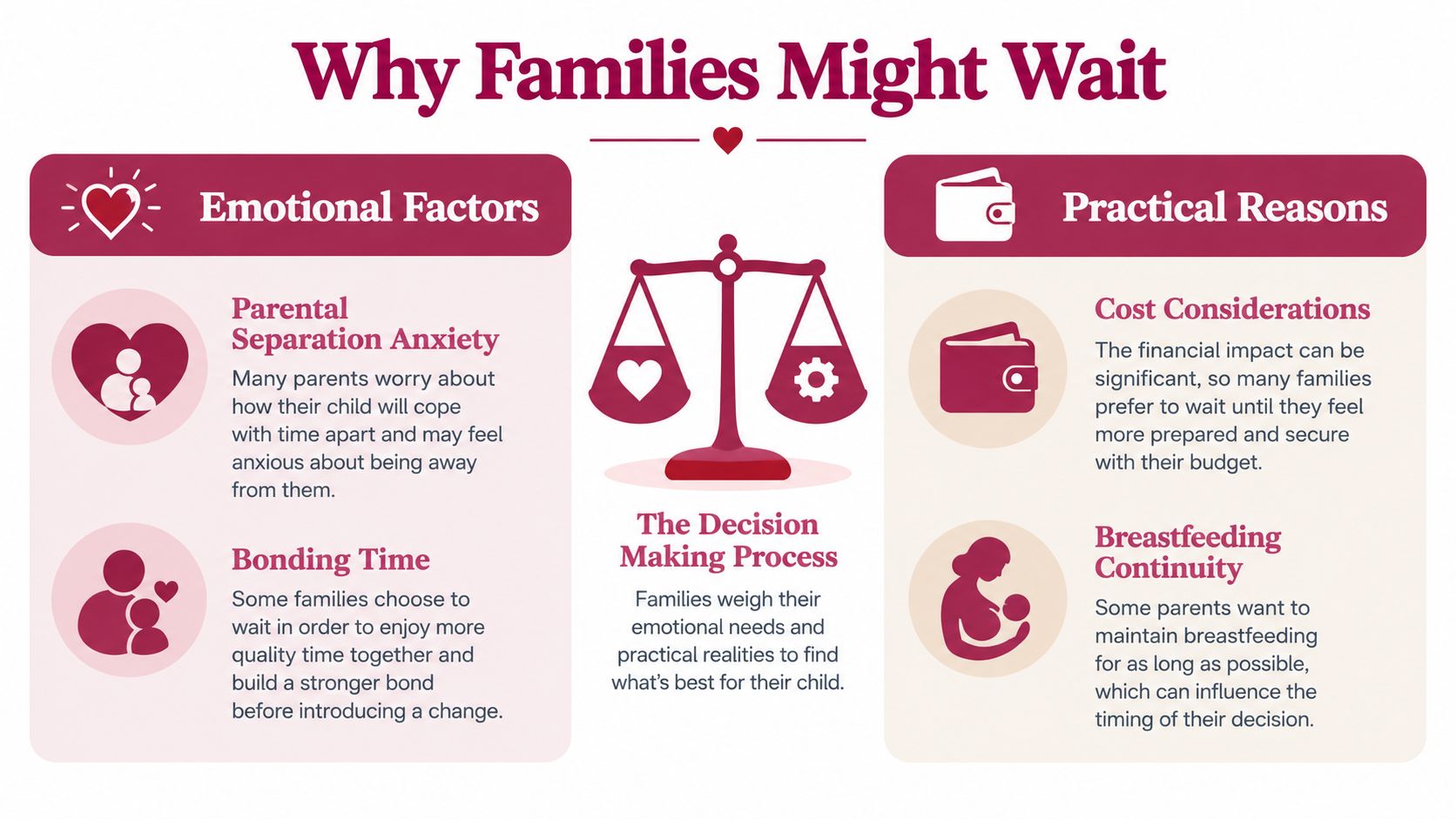
Nursery isn't automatically the right answer for every child or family. Some parents want more time at home during the early years, particularly when a parent's work pattern makes paid childcare unnecessary. Others prefer a grandparent-led arrangement, a childminder, a playgroup or a mixture of care. These choices can offer close relationships and familiar routines when they work reliably for everyone involved.
Separation can be difficult for both sides. A child may cry at drop-off, and a parent may feel unsettled for the rest of the day. That doesn't necessarily mean the arrangement is harmful, but it does mean settling-in support needs to be thoughtful. Some children need a gradual introduction, a familiar comfort object, predictable language and a key person who learns their cues.
Breastfeeding, sleep, health and family culture may also influence timing. Parents can ask how a setting supports expressed milk, feeds, naps and changes in routine rather than assuming that every nursery follows the same approach. Illness exposure is another reasonable concern, especially for a child with medical needs or a household member who is vulnerable.
Availability can decide before preference does
Places aren't equally available in every area. BBC reporting in 2025 described long waiting lists and staff shortages, with government projections indicating that about 70,000 additional childcare places were needed by September 2025 to meet demand in its report on childcare capacity. Treat that figure as a projection reported for that date, not as a guarantee about your local area.
The question is especially complex for children with special educational needs and disabilities. The 2025 UK Parent Survey found that 54% of parents said it was difficult or very difficult to find a local provider able to meet their child's special educational, health or disability needs, according to the Childcare and Early Years Survey of Parents. Coram's 2026 findings also reported that only 44% of local authorities had enough early years SEND places. Ask about adjustments, staff experience, outside professionals, communication and the process for raising concerns.
Waiting isn't a failure if it reflects your child's needs and your available support. It becomes important to review the arrangement if your child seems persistently distressed, lacks stimulation or needs support that carers can't provide.
Funding, Hours and the Real Cost Picture
Begin with eligibility, not the phrase “free childcare”. In England, all three- and four-year-olds are entitled to 15 funded hours a week for 38 weeks a year. Eligible working families can access an additional 15 hours, giving 30 hours a week, and from September 2025 eligible working families can apply from the term after their child turns nine months until school age as explained by Barnet Council's funded childcare information.
The government also reports that 94% of three- and four-year-olds used the universal 15-hour entitlement, while 72% of eligible two-year-olds used the 15-hour offer in the cited response. School-based nurseries account for 23% of registered early education places and are more prevalent in deprived areas. These figures show that funded early education is widely used, but they don't tell you whether a particular provider has space or whether its pattern fits your working day according to the government's school-based nursery provision information.
Build the calculation around your actual week
Ask for:
- Funded hours: Find out whether the provider offers the entitlement as term-time sessions or spreads it across more weeks.
- Paid hours: Check the hourly or session rate for time outside the funded allocation.
- Additional charges: Ask about meals, consumables, registration, deposits, late collection and holiday periods.
- Travel and wraparound care: Include the cost and time of getting your child to and from the setting.
- Workable attendance: Compare the nursery pattern with your shifts, commuting and family support.
| Entitlement or setting | Eligible age | Hours or typical pattern | Indicative cost or top-up |
|---|---|---|---|
| Universal funded early education | Three- and four-year-olds | 15 hours a week for 38 weeks a year | Depends on how the provider delivers funded sessions and any additional hours |
| Expanded funded offer | Eligible working families from the term after nine months, subject to the rules | Up to 30 hours a week for 38 weeks a year | Additional paid hours and provider charges may still apply |
| Two-year-old offer | Eligible two-year-olds | 15-hour offer where the family qualifies | Confirm eligibility, session pattern and any additional charges |
| Day nursery | Varies by provider and child's age | Often a longer day, with part-time or full-time arrangements | Provider's quoted fee, less applicable funding, plus agreed extras |
| Childminder or pre-school | Varies by provider | Home-based or sessional patterns | Local fee structure and any funding-related top-up |
A useful worked example is to ask for two written quotes. One might cover only funded sessions, while the other might cover the hours needed for work. Compare the total weekly invoice, not just the headline funded entitlement. For context, the government reported that a full-time 50-hour place for a child under two fell from about £305 per week to £149 per week compared with 2024, a 52% reduction in its childcare cost announcement. Your local quote may differ, so use the provider's figures for the final calculation.
Parents considering the expanded offer can also read about 30 hours of free childcare, then confirm current eligibility directly through the official guidance and their chosen provider.
How to Choose the Right Nursery for Your Child
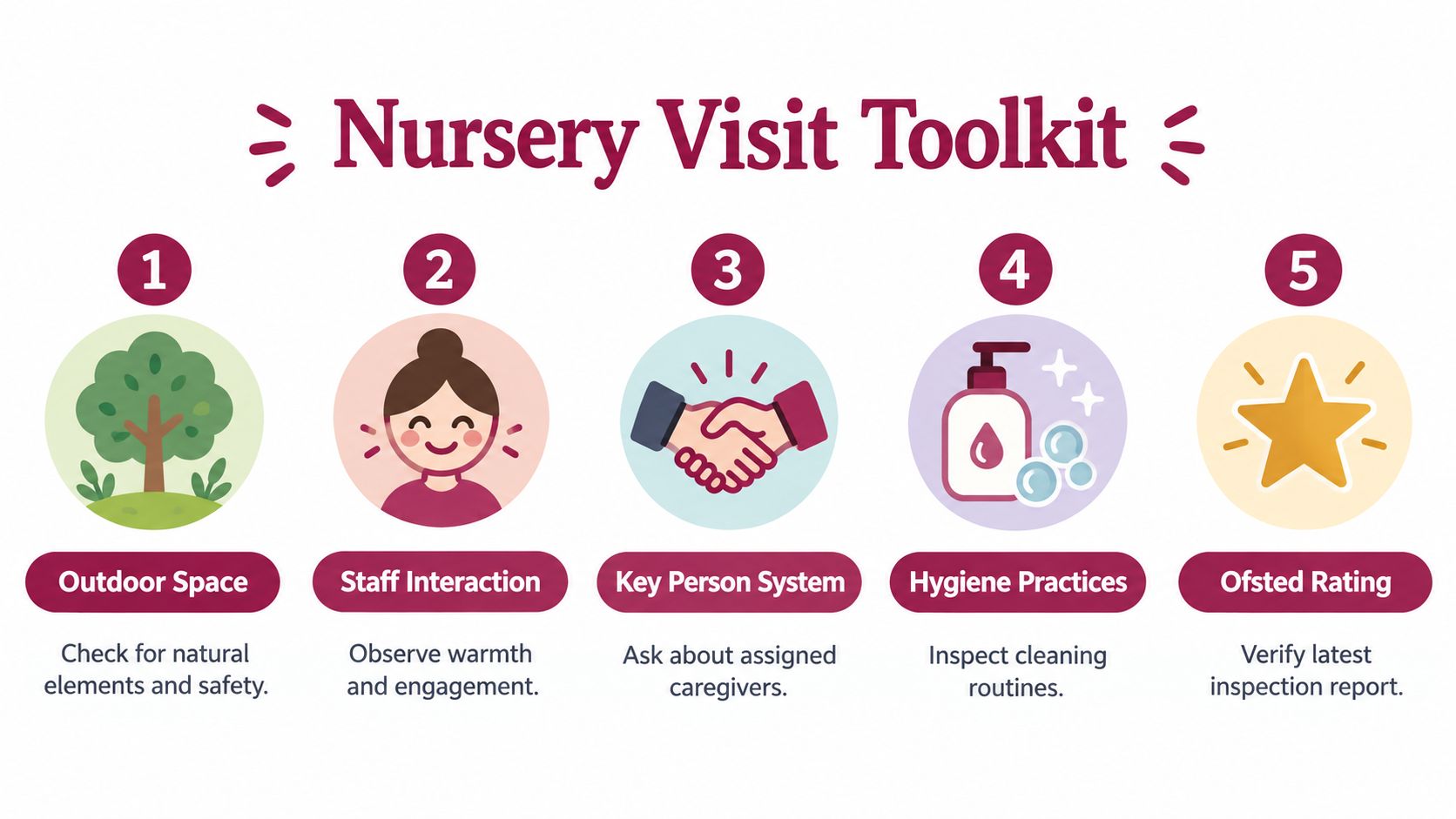
A visit should help you understand how children are treated, not just what the building contains. Notice whether adults get down to children's level, listen to attempts at communication and respond warmly when a child is upset. Watch how staff handle a disagreement between toddlers. Calm explanations and support for turn-taking tell you more than a display board filled with activities.
Ask how the key person system works, who would help your child settle and what happens when that person is absent. Discuss sleep, feeds, allergies, nappies, comfort objects and changes at home. If your child has additional needs, ask for specific examples of adaptations and how the setting works with parents and relevant professionals.
Questions worth taking with you
- Settling in: How are introductory visits arranged, and how do you decide when a child is ready for longer sessions?
- Communication: How will staff share information about eating, sleeping, mood, learning and incidents?
- Safeguarding: How are concerns recorded, escalated and discussed with parents?
- Staffing: How stable is the staff team, and how are absences covered?
- Guidance: How do adults respond to biting, hitting, distress or repeated conflict?
- Learning: How do practitioners use children's interests within the EYFS?
- SEND support: What experience does the setting have with my child's needs, and what support can be arranged?
- Outdoor play: How do children access outdoor exploration, and how does the setting manage safety and changing weather?
- Practicalities: What are the opening hours, notice periods, closure dates and additional charges?
A second visit can reveal a different part of the day. If the provider permits it, a brief unannounced drop-in may show how the setting operates without extensive preparation. You should still respect safeguarding procedures and understand that staff may not be able to offer a full tour at that moment.
Use this guide to choosing a nursery as a prompt, but trust your observations too. A clean room matters, yet so do the quieter details: whether babies are held during feeds, whether children can access adults for comfort and whether staff speak about children with respect.
Making the Decision That Suits Your Family
You can make the decision less overwhelming by working through four questions.
First, describe your child as they are now. Note their communication, temperament, routines, sensory preferences, health and support needs. Don't decide from a general idea of what a “nursery child” should be.
Next, test the practical arrangement. Write down the hours you need, the journey, the likely funded allocation, paid hours, family help and holiday gaps. If the plan only works when everything goes perfectly, it probably needs adjusting.
Then consider your own readiness. Feeling sad about the transition doesn't mean you should stop. Equally, strong discomfort may be telling you to slow down, visit more settings or begin with fewer sessions. Your confidence often grows when you have clear information about who will care for your child and how staff will communicate.
Finally, ask whether you can trial the arrangement before making a long commitment. A short settling period can show how your child responds, how the key person builds trust and whether the daily pattern suits your household. You can also revisit the question at meaningful points such as nine months, eighteen months and two-and-a-half years, because your child's needs and your circumstances may change.
Read the signs a child may be ready for nursery, but don't treat readiness as a pass-or-fail test. Children can need support while settling, and a child who is ready for new experiences may still cry at separation.
Nursery, delayed nursery, family care, a childminder or a blended arrangement can all be thoughtful choices. The strongest decision is the one based on your child's wellbeing, your family's resources and the quality of the care you can realistically secure, rather than pressure from other people.
Happy Tree Academy offers early years care and education for children from three months to five years in Northwood, with information about funded hours and visits available for families comparing childcare options. If you'd like to discuss your circumstances and see whether the setting could suit your child, visit Happy Tree Academy.